
Inquire Now
Key Strategic Points
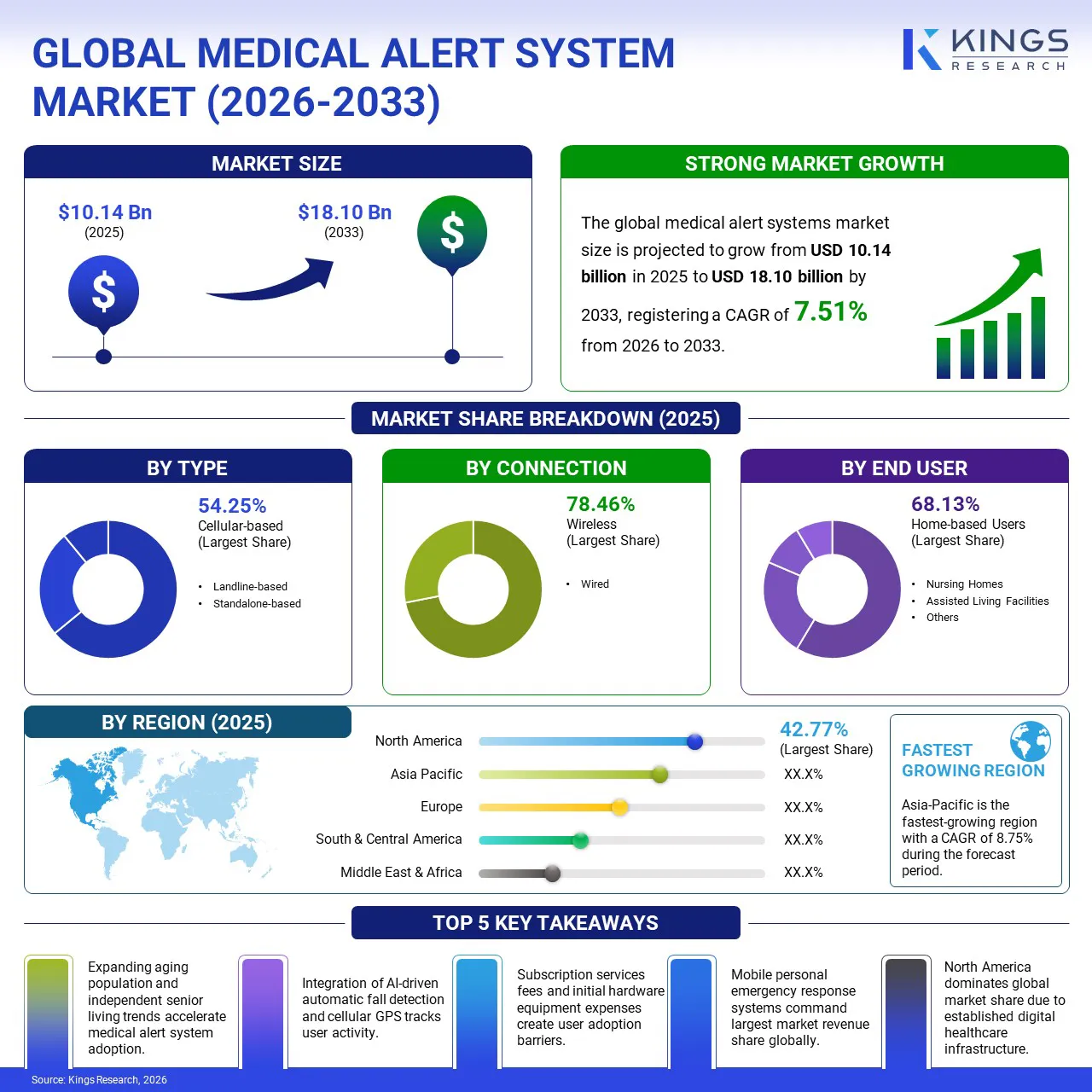
According to Kings Research, the global medical alert systems market was valued at USD 10.14 billion in 2025 and is projected to reach USD 18.10 billion by 2033, growing at a CAGR of 7.51% during the forecast period (2026-2033).
The market includes Personal Emergency Response Systems (PERS), mobile PERS (mPERS), landline units, cellular hubs, and standalone fall-detection wearables designed for senior care, chronic disease management, and independent living. The report explores key drivers of market development, offering detailed regional analysis and a comprehensive overview of the competitive landscape shaping future opportunities.
The market is expanding rapidly, driven by the escalating global aging population, rising prevalence of chronic medical conditions, and growing preference for home-based care models over institutional nursing facilities. Medical alert systems serve as an essential safety tool, enabling rapid communication with healthcare providers or caregivers during health emergencies, which reduces complications and hospital readmissions.
Major companies operating in the medical alert systems market include Connect America, ADT Inc., Bay Alarm Medical, Medical Guardian LLC, MobileHelp, LifeStation, Inc., Koninklijke Philips N.V., Numera (Nortek Control), AlertOne Services, LLC, and LogicMark, Inc.
In December 2025, Medical Guardian completed a large-scale medical alert system installation at Presbyterian Village Cobb in Georgia, marking one of its largest senior living deployments. The project highlights the growing integration of connected emergency response technologies across senior living communities to support resident safety and independent living.
The global medical alert systems market is witnessing strong expansion, driven by the rising demand for advanced safety and monitoring systems among the aging population and individuals with chronic health conditions. This expansion is further supported by increasing awareness of health risks and the need for timely medical intervention.
Furthermore, technological advancements in wearable devices, GPS tracking, and fall detection systems, along with the integration of the Internet of Things (IoT) and artificial intelligence (AI) in healthcare, drive market momentum. In the United States, medical alert systems classified as medical devices are governed by the U.S. Food and Drug Administration's (FDA) Quality System Regulation (21 CFR Part 820), which establishes current good manufacturing practices (CGMP) to ensure consistent design, production, and post-market handling.
In August 2026, Medical Guardian launched Guardian Flex, a next-generation health and safety wearable designed for older adults. The device combines advanced sensing, nationwide connectivity, and 24/7 professional monitoring in a smaller wearable format, highlighting the industry's shift toward more discreet, connected, and proactive personal emergency response solutions.
A primary restraint facing the medical alert systems market involves monthly subscription fees and hardware costs that pose affordability barriers for fixed-income seniors. High recurring service charges can limit adoption in lower-income demographics and developing economies.
Additionally, frequent false alarms generated by uncalibrated automatic fall detection algorithms create alert fatigue among emergency response dispatchers and caregivers. Ongoing phase-outs of legacy 3G telecommunications networks also require costly hardware upgrades to LTE and 5G cellular hubs, straining equipment supply chains.
The market is undergoing a major technological transformation driven by mobile PERS (mPERS) adoption, AI-powered predictive activity monitoring, and integration with consumer smart home platforms (such as Amazon Alexa and Apple Health). Modern mPERS devices combine real-time GPS location tracking, cellular connectivity, and multi-axis accelerometer sensors to provide emergency coverage outside the home.
These features enable immediate emergency detection and rapid communication with caregivers, reducing response times and improving patient safety. Companies are also investing in research and development to create compact, user-friendly devices that comply with healthcare regulations and data privacy standards while offering advanced features such as AI-driven monitoring and real-time communication.
In April 2025, LogicMark's Freedom Alert Max device secured U.S. GSA approval, enabling government healthcare agencies to deploy cellular-enabled, voice-guided medical alert technology across federal veteran care facilities.
|
Segmentation |
Details |
|
By Type |
Landline-based, Cellular-based, and Standalone-based |
|
By Connection |
Wired and Wireless |
|
By End Use |
Home-based users, Nursing homes, Assisted living facilities, and Others |
|
By Region |
North America: U.S., Canada, Mexico |
|
Europe: France, UK, Spain, Germany, Italy, Russia, Rest of Europe |
|
|
Asia-Pacific: China, Japan, India, Australia, ASEAN, South Korea, Rest of Asia-Pacific |
|
|
Middle East & Africa: Turkey, U.A.E, Saudi Arabia, South Africa, Rest of Middle East & Africa |
|
|
South and Central America: Brazil, Argentina, Rest of South and Central America |
Based on type, the medical alert systems market is classified into landline-based, cellular-based, and standalone-based systems. The cellular-based segment held the largest market share of 54.25%, supported by the increasing adoption of landline-independent medical alert systems that use cellular networks to provide flexible and reliable emergency connectivity. Medical Guardian offers cellular-based systems with 4G LTE connectivity and 24/7 monitoring.
Based on connection, the medical alert systems market is classified into wired and wireless systems. The wireless segment held the largest market share of 78.46% in 2025, supported by the growing availability of wireless medical alert systems that provide flexible, mobile connectivity and 24/7 emergency monitoring. For instance, Medical Guardian offers cellular and on-the-go systems with wireless connectivity, GPS, and fall-detection capabilities.
Based on end use, the medical alert systems market is classified into home-based users, nursing homes, assisted living facilities, and others. The home-based users segment is expected to dominate the market with a market share of 68.13% in 2025, supported by the growing preference for aging in place, independent living, and remote monitoring solutions that enable seniors to receive timely assistance during emergencies.
Based on region, the market has been classified into North America, Europe, Asia Pacific, Middle East & Africa, and South & Central America.
The North America medical alert systems market share stood at around 42.77% in 2025. This dominance is attributed to the region’s well-established healthcare infrastructure, high healthcare expenditure, and widespread adoption of advanced medical technologies.
Furthermore, increasing investments in remote patient monitoring and aging-in-place initiatives, along with growing awareness of senior safety and chronic disease management, are propelling market expansion.
The region’s strong regulatory environment, including data privacy and medical device standards, supports the development and adoption of innovative medical alert solutions. Additionally, the presence of major market players and ongoing advancements in wearable and IoT-enabled alert systems strengthen the regional market in North America.
The Asia-Pacific medical alert systems industry is estimated to grow at a CAGR of 8.75% over the forecast period. This growth is propelled by increasing healthcare awareness and a rapidly expanding elderly population, particularly in emerging economies such as China and India.
Government initiatives aimed at improving healthcare infrastructure and promoting digital health adoption are further fueling market expansion. Additionally, improving economic conditions and greater smartphone penetration are accelerating the demand for advanced, affordable medical alert solutions.
Moreover, a growing preference for home-based care models and the entrance of both global and local players offering innovative, cost-effective products are intensifying market competition and driving technological advancements across the region.
According to Kings Research, Europe accounts for a major share of the global market, supported by strong state-funded social care systems, widespread public health reimbursement for PERS devices in countries like Germany and the UK, and strict EU data privacy (GDPR) and medical device regulations (MDR). The Middle East & Africa region is witnessing steady market expansion, supported by investments in healthcare infrastructure, expanding private health insurance coverage, and rising adoption of digital health solutions across GCC economies. South and Central America is experiencing growing demand for medical alert devices, led by Brazil and Mexico, propelled by expanding private senior care facilities, urban healthcare investments, and rising smartphone penetration supporting mPERS mobile apps.
The medical alert systems industry is characterized by a moderately consolidated competitive landscape, comprising a mix of established multinational healthcare technology firms and specialized medical device manufacturers. Key players are prioritizing strategies such as technological innovation, integration of wearable and IoT-enabled features, and enhancements in user interface design to meet diverse consumer needs and improve system reliability.
Companies are also investing in research and development to create compact, user-friendly devices that comply with healthcare regulations and data privacy standards while offering advanced functionalities such as AI-driven monitoring and real-time communication.
Moreover, strategic collaborations with healthcare providers, along with mergers and acquisitions, are being employed to expand market penetration, enhance service offerings, and strengthen presence across home-based, assisted living, and institutional care segments.
How We Gather This Information
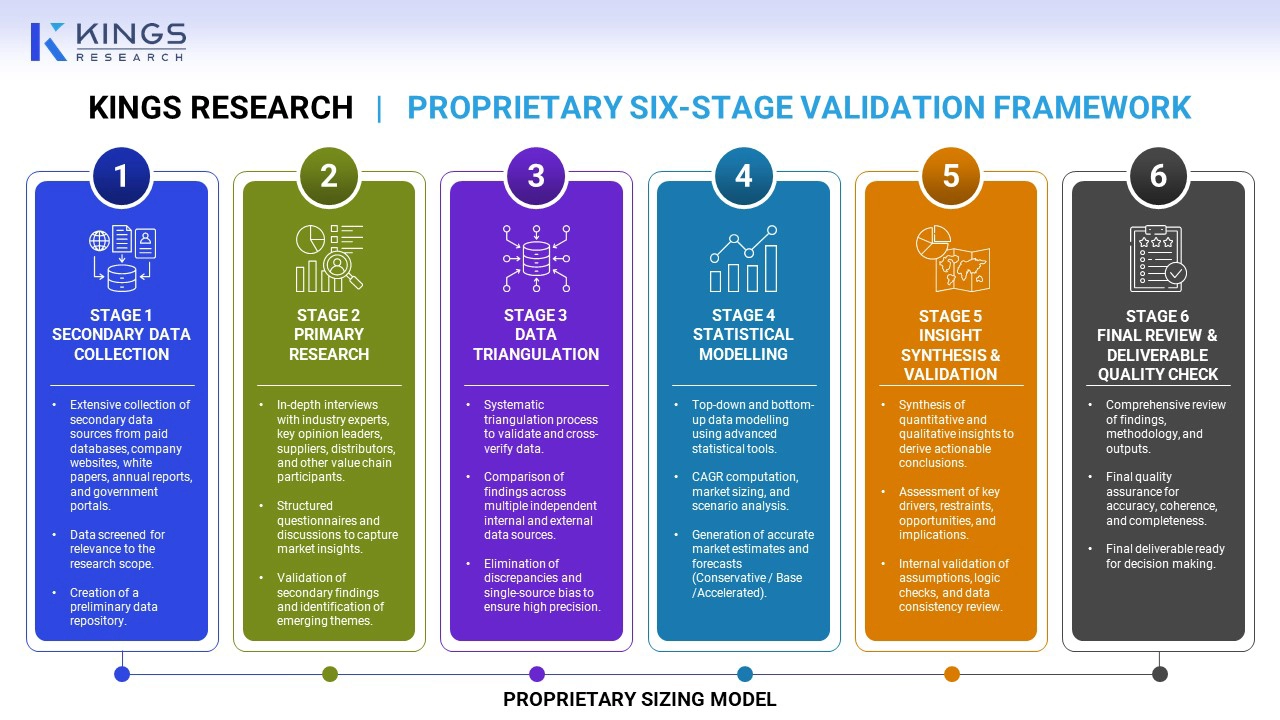
Our methodology triangulates insights from multiple independent and publicly available research databases and is further validated against regulatory filings and public company disclosures. All estimates are cross-verified; no single-source data is presented without validation.
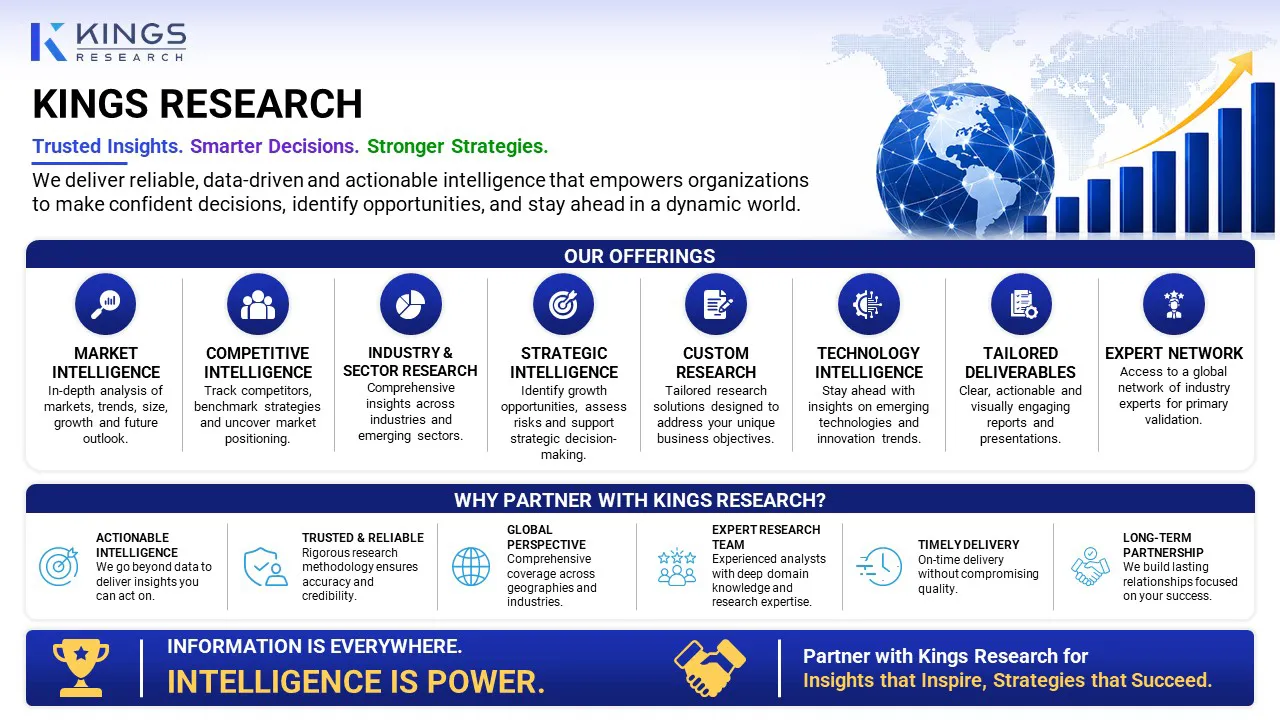
Our custom offerings deliver tailored, data-driven intelligence and strategic guidance to help organizations identify, evaluate, and capitalize on key market opportunities.
Frequently Asked Questions

Omkar is an accomplished research analyst with experience across a wide range of industries, including but not limited to pharmaceuticals, biotechnology, healthcare, chemicals & materials, energy, and consumer goods. His cross-domain expertise allows him to analyze complex market dynamics, uncover actionable insights, and provide high-value research that supports strategic decision-making. Skilled in both qualitative and quantitative analyses, Omkar synthesizes large datasets to create insightful, stakeholder-focused reports. His broad industry knowledge enables him to identify synergies across sectors, adding value to his research. Outside of work, Omkar is a passionate movie enthusiast. His love for cinema fuels his creativity and enhances his ability to think critically-skills that complement his research capabilities. Omkar’s data validation skills and cross-industry expertise make him a partner. He translates complex findings into strategic narratives. His commitment to continuous learning keeps him ahead of evolving markets, while his collaborative nature strengthens team synergy, driving stakeholder confidence and impactful outcomes.
With many years of consulting experience across global pharma, biotech, and MedTech markets, Minaz brings deep domain expertise, strategic clarity, and analytical rigor to every engagement. She has led 130+ consulting assignments spanning market entry, competitive landscaping, and portfolio prioritization, helping clients navigate complex, high-stakes decisions with confidence. Known for her ability to synthesize primary and secondary research into executive-ready recommendations, Minaz has built forecasting models and market sizing frameworks that have informed multi-million dollar investment decisions in oncology, diagnostics, and peptide therapeutics. Beyond her analytical strength, Minaz is a trusted client partner, translating complex datasets into clear, actionable insights for senior stakeholders. She currently leads a team of research analysts, driving business expansion, and shaping client engagement strategy.



.webp&w=128&q=75&dpl=dpl_DPva2LrvfsBdTJm1XZj67UTrvMHL)
