
Inquire Now
Key Strategic Points
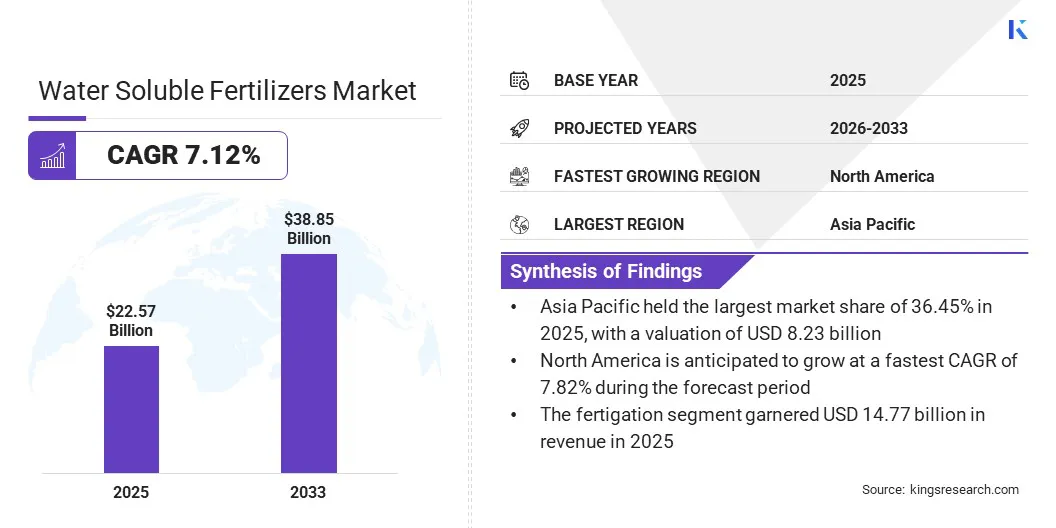
According to Kings Research, the global water-soluble fertilizers market size was valued at USD 22.57 billion in 2025 and is projected to grow from USD 24 billion in 2026 to USD 38.85 billion by 2033, registering a CAGR of 7.12% during the forecast period. The market is experiencing significant growth due to rising demand for high crop yields, increasing adoption of precision agriculture, expansion of fertigation and greenhouse cultivation, and growing emphasis on efficient nutrient management.
The market is characterized by the presence of major fertilizer manufacturers and specialty fertilizer companies, including Yara, The Mosaic Company, ICL, SQM SA, Haifa Negev Technologies Ltd., EuroChem Group, Coromandel International Ltd., IFFCO, CF Industries Holdings, Inc., COMPO EXPERT GmbH, PhosAgro Group, OCP Group S.A., Hebei Monband Water Soluble Fertilizer Co., Ltd., Grupa Azoty S.A., and DFPCL.
Increasing adoption of modern irrigation systems, expansion of protected agriculture, and growing awareness regarding nutrient-use efficiency are expected to create new growth opportunities for market participants.
The rising demand for high crop yield and productivity is a major factor fueling market expansion. The growing world population and surging demand for food production are pressuring farmers to produce as much as possible using the available arable land. Water-soluble fertilizers facilitate accurate and timely nutrient availability to plants, thereby increasing nutrient uptake and accelerating growth rates. This effective nutrient control leads to increased yields and better quality and consistency of crops.
Growers are embracing the use of water-soluble fertilizers in an effort to achieve optimum production, correct nutrient deficiencies in soil, and ensure sustainable farming practices. Meeting the challenge of food security requires solutions that boost both yield and efficiency, making water-soluble fertilizers an essential tool for modern agriculture.
The requirement for specialized infrastructure presents a major challenge to the development of the water-soluble fertilizers market. The appropriate use of these fertilizers depends on sophisticated irrigation systems such as drip irrigation or a fertigation system, whereby nutrients are delivered to crops in a precise and efficient manner. These systems require significant economic investment and technical expertise to install and maintain, making them less available to small and medium-scale farmers, particularly in developing countries.
To overcome this obstacle, improved rural infrastructure and government subsidies can help make modern irrigation systems more affordable. Additionally, fostering public-private cooperation and promoting low-cost technology solutions can support increased utilization and help maximize the benefits of water-soluble fertilizers.
Rapid adoption of precision agriculture is a defining market trend. The use of technologies such as GPS, remote sensing, drones, and data analytics has enabled precision agriculture to monitor and regulate crop health, soil conditions, and nutrient requirements with unprecedented accuracy. These tools support farmers in managing both the amount and schedule of fertilizer use for greater effectiveness. This practice improves nutrient use efficiency and reduces unnecessary waste.
This method maximizes crop yields and quality and supports sustainable farming practices by minimizing environmental impact. Precision farming is transforming traditional farming by integrating it with water-soluble fertilization, making it data-driven, efficient, and responsive to the requirements of modern-day farming.
|
Segmentation |
Details |
|
By Product |
Nitrogenous, Potassium, Micronutrients, Phosphatic, and Secondary Nutrients |
|
By Crop |
Horticultural Openfield, Horticultural Greenhouse, Field Crops, Turf & Ornamental, and Other Crop Types |
|
By Application |
Fertigation, Foliar, and Raw Material/Industrial Use |
|
By Region |
North America: U.S., Canada, Mexico |
|
Europe: France, UK, Spain, Germany, Italy, Russia, and the rest of Europe |
|
|
Asia-Pacific: China, Japan, India, Australia, ASEAN, South Korea, Rest of Asia-Pacific |
|
|
Middle East & Africa: Turkey, U.A.E., Saudi Arabia, South Africa, Rest of Middle East & Africa |
|
|
South & Central America: Brazil, Argentina, and the rest of South & Central America |
The market is segmented into nitrogenous, potassium, micronutrients, phosphatic, and secondary nutrients. The nitrogenous segment generated USD 10.94 billion in 2025, making it the largest product segment. Nitrogen is an essential nutrient required for plant growth, chlorophyll formation, protein synthesis, and overall crop development.
The widespread use of nitrogenous fertilizers across field crops, horticultural crops, greenhouse cultivation, and specialty crop production supports the segment's leading position.
The increasing adoption of fertigation and precision agriculture is further supporting demand for nitrogenous water-soluble fertilizers by enabling accurate and efficient nitrogen delivery.
The market is segmented into Horticultural Openfield, Horticultural Greenhouse, Field Crops, Turf & Ornamental, and Other Crop Types. The horticultural openfield segment accounted for 33.43% of the global market in 2025. The segment's leading position is supported by extensive cultivation of fruits and vegetables, which require precise nutrient management to improve yield, crop quality, appearance, and consistency.
Increasing demand for high-value horticultural products and growing adoption of precision nutrient management are expected to support the continued use of water-soluble fertilizers in openfield horticulture.
The market is segmented into fertigation, foliar, and raw material/industrial use. The fertigation segment is projected to reach USD 25.15 billion by 2033. Fertigation enables fertilizers to be delivered directly to the root zone through irrigation systems, improving nutrient absorption and allowing farmers to precisely control application rates and timing.
The growing adoption of drip irrigation, sprinkler irrigation, greenhouse farming, and precision agriculture is supporting the expansion of fertigation-based fertilizer application. The foliar segment is expected to have the fastest CAGR of 7.74% during the forecast period because it can quickly provide nutrients and fix nutrient deficiencies during crop development.
Based on region, the global market is classified into North America, Europe, Asia-Pacific, the Middle East & Africa, and South & Central America.
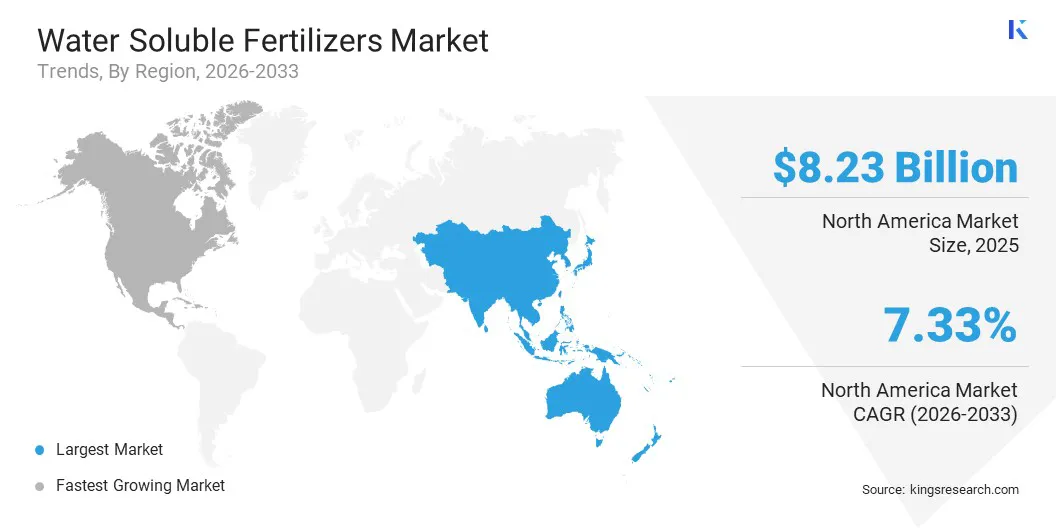
According to Kings Research, the Asia-Pacific water-soluble fertilizers market share stood at 36.45% in 2025, valued at USD 8.23 billion. This dominance is attributed to the rapid growth of agricultural practices, where there has been a strong focus on increasing crop yields to meet the needs of a rising population. The use of modern irrigation methods, including drip and sprinkler systems, has further increased the application of water-soluble fertilizers across various crop types.
Market growth has also been facilitated by government efforts to encourage sustainable agricultural practices and the availability of a significant number of smallholder farmers who have been using high-efficiency fertilizers. Increasing awareness of the benefits of water-soluble fertilizers is also driving their widespread adoption throughout the region.
The North America water-soluble fertilizers market is set to grow at a CAGR of 7.82% over the forecast period. This expansion is propelled by the extensive use of innovative agricultural technologies and the region’s strong focus on maximizing crop yields and resource efficiency. Farmers are also increasingly adopting water-soluble fertilizers to complement specialty crops, greenhouse production, and premium horticultural crops.
Regional market expansion is further facilitated by the availability of well-established distribution channels and continuous research on the development of new formulations of fertilizers. Additionally, increased awareness of sustainable farming practices and stringent environmental regulations are encouraging the adoption of fertilizers that offer precise nutrient delivery and minimize runoff.
The European market is supported by increasing adoption of precision agriculture, sustainable farming practices, greenhouse cultivation, and efficient nutrient-management technologies. The Middle East & Africa market is supported by increasing investment in modern irrigation systems and protected agriculture. South & Central America represents an important agricultural market due to its extensive cultivation of field crops and increasing adoption of modern agricultural technologies.
The competitive landscape of the water-soluble fertilizers market is marked by the presence of both multinational and regional manufacturers, each striving to differentiate itself through product quality, innovation, and service. The competitive companies strive to expand their product lines through diversification, concentrate on customized nutrient formulations, and invest in research and development to create more efficient and environmentally friendly formulations.
Market participants are also enhancing their distribution networks and forming strategic partnerships to widen their reach, particularly in emerging economies. Mergers, acquisitions, expansions, and partnerships are common strategies used to enhance technological capacity and strengthen market dominance. Additionally, an increased focus on sustainability and environmental regulations is influencing innovation and competition in the industry.
How We Gather This Information
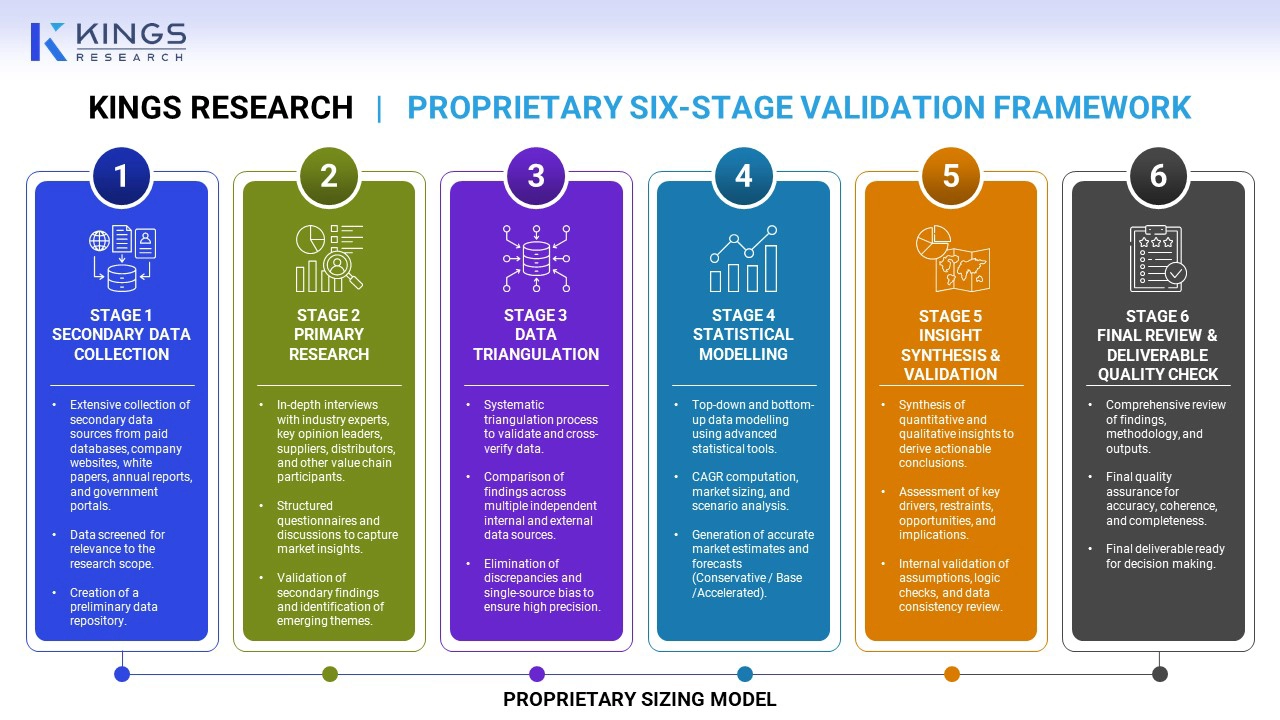
Our methodology triangulates insights from multiple independent and publicly available research databases and is further validated against regulatory filings and public company disclosures. All estimates are cross-verified; no single-source data is presented without validation.
Our custom offerings deliver tailored, data-driven intelligence and strategic guidance to help organizations identify, evaluate, and capitalize on key market opportunities.
Frequently Asked Questions

Ashim Lakhera is a market intelligence professional specializing in the Agriculture and Food & Beverage industry. His work focuses on emerging markets, competitive dynamics, industry trends, and the factors driving market growth and transformation. He has experience in market sizing, forecasting, strategic analysis, and industry research across food, FMCG, and life sciences. His research interests span the broader food and agriculture value chain, with a particular focus on how innovation, changing consumer behavior, sustainability priorities, and evolving production systems are influencing markets. He examines these developments to understand their impact on demand, competition, business models, and growth opportunities across the agri-food ecosystem. His work combines quantitative market analysis with an understanding of the broader industry forces shaping food and agriculture markets. He is particularly interested in the structural changes taking place across global food systems and how businesses are adapting to evolving consumer expectations, technological developments, and sustainability requirements.
Habi is a seasoned research and consulting leader with renowned experience in guiding clients on strategic growth and transformation initiatives across global markets. He has led high-performing research teams that deliver actionable insights on market expansion, M&A strategies, opportunity assessment, new business development, and product launches. His project portfolio spans large petrochemical producers, electronic device manufacturers, lubricants companies, and other leading enterprises across diverse industrial and consumer sectors. He currently heads the research department at Kings Research, where he is responsible for setting the research agenda, mentoring analysts, and ensuring client-ready deliverables that support executive decision-making. With extensive experience in market intelligence, strategic research, and consulting, Habi brings a strong understanding of evolving industry dynamics, competitive landscapes, emerging opportunities, and business growth challenges. His expertise includes developing research frameworks, translating complex market data into actionable strategic recommendations, and working closely with senior stakeholders to address critical business questions. He has also contributed to building research capabilities, strengthening analytical methodologies, and driving a culture of quality and insight-led decision-making within research teams. His cross-industry exposure enables him to connect market trends with broader business implications and provide perspectives that help organizations identify opportunities, mitigate risks, and make informed strategic decisions.