
Inquire Now
Key Strategic Points
The global positron emission tomography market size was valued at USD 1090.7 million in 2024 and is projected to grow from USD 1130.0 million in 2025 to USD 1447.4 million by 2032, exhibiting a CAGR of 3.61% during the forecast period.
The increase in cancer and cardiovascular diseases, coupled with the expansion of precision diagnostics, is accelerating adoption of positron emission tomography systems. Additionally, rising hospital investments, radiotracer innovation, and growing oncology and cardiology applications are creating potential growth opportunities.
Major companies operating in the positron emission tomography industry are GE HealthCare, Siemens Healthineers AG, Philips, Canon Medical Systems Corp., United Imaging Healthcare Co. Ltd., Mediso Ltd., CMR Naviscan Corporation, Bruker Corporation, Positron Corporation, Agfa HealthCare NV, Segami Corporation, SOFIE Biosciences, Iorporation, SOFIE Biosciences, Inc., Eckert & Ziegler Strlzg AG, and Neusoft Medical Systems Co. Ltd..
The accelerating adoption of precision medicine fueled by breakthroughs in novel radiotracers and the emergence of theranostics acts as a significant driver for market growth. As clinical workflows integrate specialized isotopes such as Gallium-68 and Zirconium-89, diagnostic centers can offer superior specificity in oncology and neurology applications compared to traditional modalities.
This technological evolution enables accurate disease staging, directly influencing treatment efficacy and cost-containment strategies. Consequently, the push for value-based care is incentivizing substantial investment in next-generation positron emission tomography (PET) systems to support these advanced diagnostic capabilities.
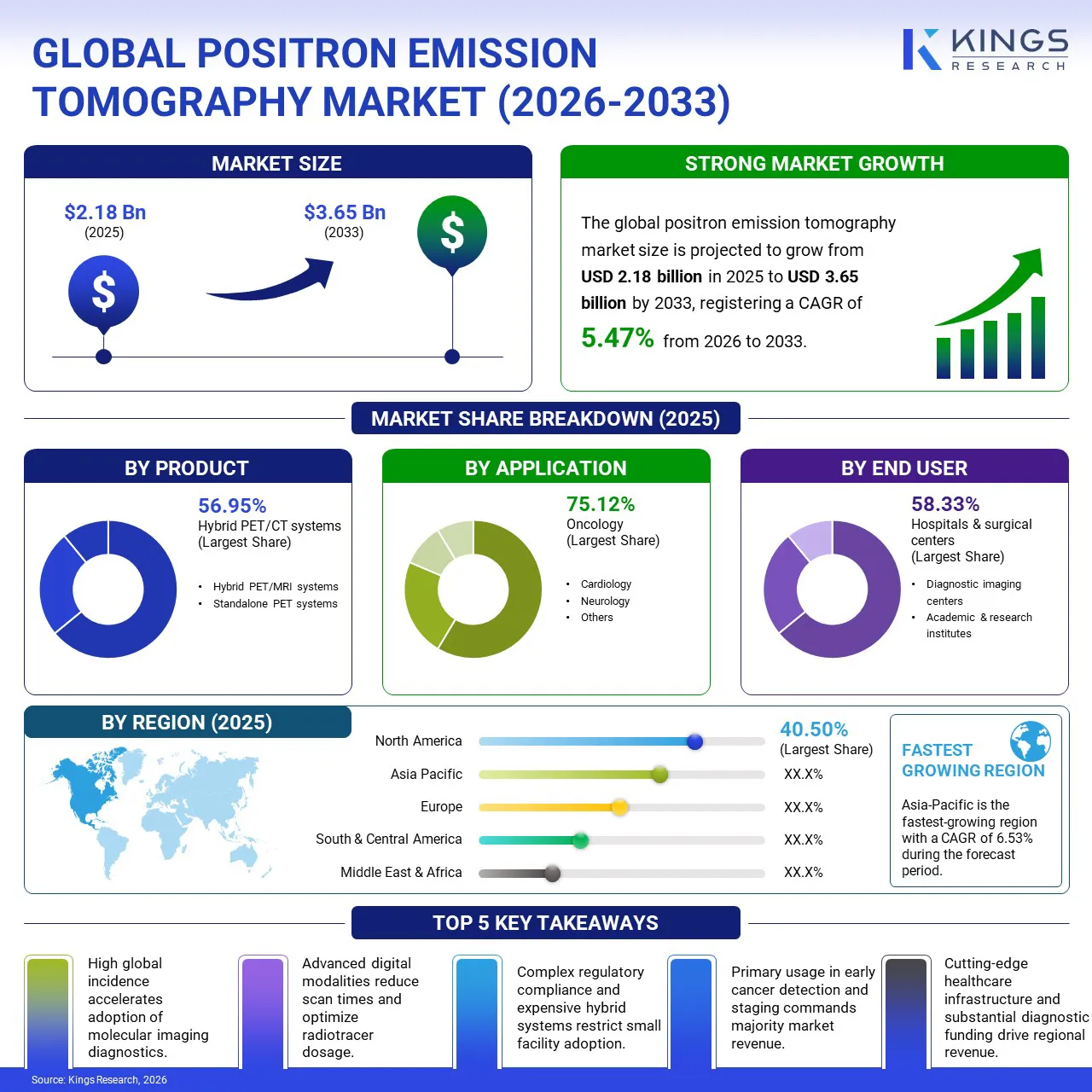
The commercialization of digital PET and total-body scanners offer superior sensitivity compared to traditional analog systems, which is leading to widespread adoption. Reductions in scan time and radiotracer dose enable higher daily exam volumes and better utilization of high-value PET systems, strengthening operational ROI for imaging providers.
This shift is further accelerated by the integration of hybrid PET/MRI modalities, which minimize radiation exposure, making them critical for pediatric and longitudinal studies. Consequently, healthcare providers are prioritizing capital expenditure on these high-efficiency systems to optimize clinical workflows and expand diagnostic service lines.
The substantial capital expenditure required for acquiring hybrid modalities, particularly PET/CT and PET/MRI systems, represents a primary barrier to market scalability. Diagnostic centers face compounded difficulties managing the logistical constraints of short-lived radiotracers, such as 18F-FDG and 68Ga-based agents, alongside stringent regulatory compliance for radioactive materials.
These financial and operational hurdles restrict procurement capabilities in cost-sensitive healthcare segments. Consequently, this infrastructural challenge hinders the widespread application of molecular imaging in oncology and neurology, slowing the long-term adoption of precision diagnostics.
To address financial barriers, manufacturers are prioritizing cost-efficient partial-ring scanner designs and implementing managed service financing models to reduce upfront capital expenditure. The expansion of decentralized cyclotron networks streamlines the distribution of 18F-FDG and 68Ga-based tracers, mitigating supply chain risks.
Simultaneously, embedding AI-driven workflow automation into PET/CT systems maximizes patient throughput, improving economic viability for diagnostic imaging centers and fostering long-term adoption in oncology.
The positron emission tomography market is witnessing a notable shift toward hybrid imaging, integrating PET/MRI and PET/CT modalities to elevate diagnostic granularity. This progression enables healthcare providers to utilize radiotracers such as 68Ga for precise theranostic applications in oncology. Furthermore, the incorporation of AI-driven reconstruction algorithms optimizes scan durations, thereby enhancing operational throughput for hospitals and maximizing revenue potential.
|
Segmentation |
Details |
|
By Product Type |
Full-Ring PET Scanners, Partial-Ring PET Scanners |
|
By Modality |
Stand-Alone PET, PET/CT, PET/MRI |
|
By Radiotracer / Isotope |
18F-Fluorodeoxyglucose (18F-FDG), 68Ga-Based Tracers (DOTATATE, PSMA), 82Rb & 13N-Ammonia (Cardiac), 64Cu & Zirconium-89 Immuno-PET |
|
By Application |
Oncology, Cardiology, Neurology, Inflammation, Others |
|
By End-User |
Hospitals, Diagnostic Imaging Centers, Others |
|
By Region |
North America: U.S., Canada, Mexico |
|
Europe: France, UK, Spain, Germany, Italy, Russia, Rest of Europe |
|
|
Asia-Pacific: China, Japan, India, Australia, ASEAN, South Korea, Rest of Asia-Pacific |
|
|
Middle East & Africa: Turkey, U.A.E., Saudi Arabia, South Africa, Rest of Middle East & Africa |
|
|
South America: Brazil, Argentina, Rest of South America |
Based on region, the positron emission tomography market has been classified into North America, Europe, Asia Pacific, Middle East & Africa, and South America.
North America positron emission tomography market held a share of 36.8% in 2024, valued at USD 401.9 million. This position reflects the region’s advanced healthcare infrastructure and early adoption of hybrid imaging modalities such as PET/CT.
Rising oncological and neurological diseases continues to elevate demand for high-precision diagnostics, supporting growth in full-ring PET scanner deployments. Moreover, substantial capital allocation toward modernizing diagnostic centers and the presence of key industry players reinforce the region’s market position.
The Asia-Pacific positron emission tomography industry is set to grow at a CAGR of 4.5% over the forecast period. This expansion is propelled by rapid economic development and increasing healthcare expenditure across key economies such as China and India.
Government initiatives aimed at improving cancer care infrastructure are also stimulating the demand for cost-effective, high-performance imaging solutions. Additionally, the increase in the geriatric population and the modernization of hospital frameworks by local healthcare providers are catalyzing the broad uptake of positron emission tomography solutions in the long term.
The positron emission tomography industry is highly competitive and fragmented, featuring players ranging from established corporations to emerging vendors. Major participants such as GE HealthCare, Siemens Healthineers AG, and Philips leverage extensive imaging ecosystems to offer scalable solutions.
Meanwhile, players comprising United Imaging Healthcare Co. Ltd., Mediso Ltd., and Bruker Corporation emphasize high-performance clinical capabilities. This diverse landscape fosters rapid innovation, strategic partnerships, and continuous product developments.
How We Gather This Information
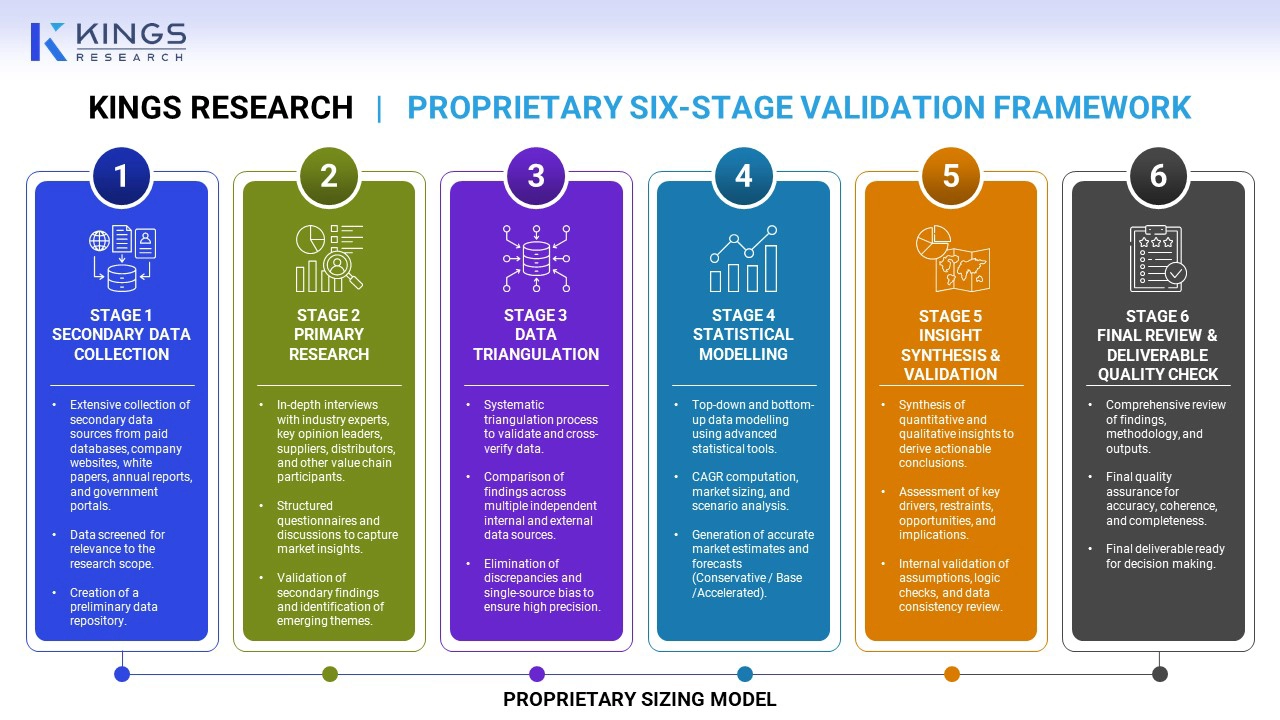
Our methodology triangulates insights from multiple independent and publicly available research databases and is further validated against regulatory filings and public company disclosures. All estimates are cross-verified; no single-source data is presented without validation.
 Why Kings Research?
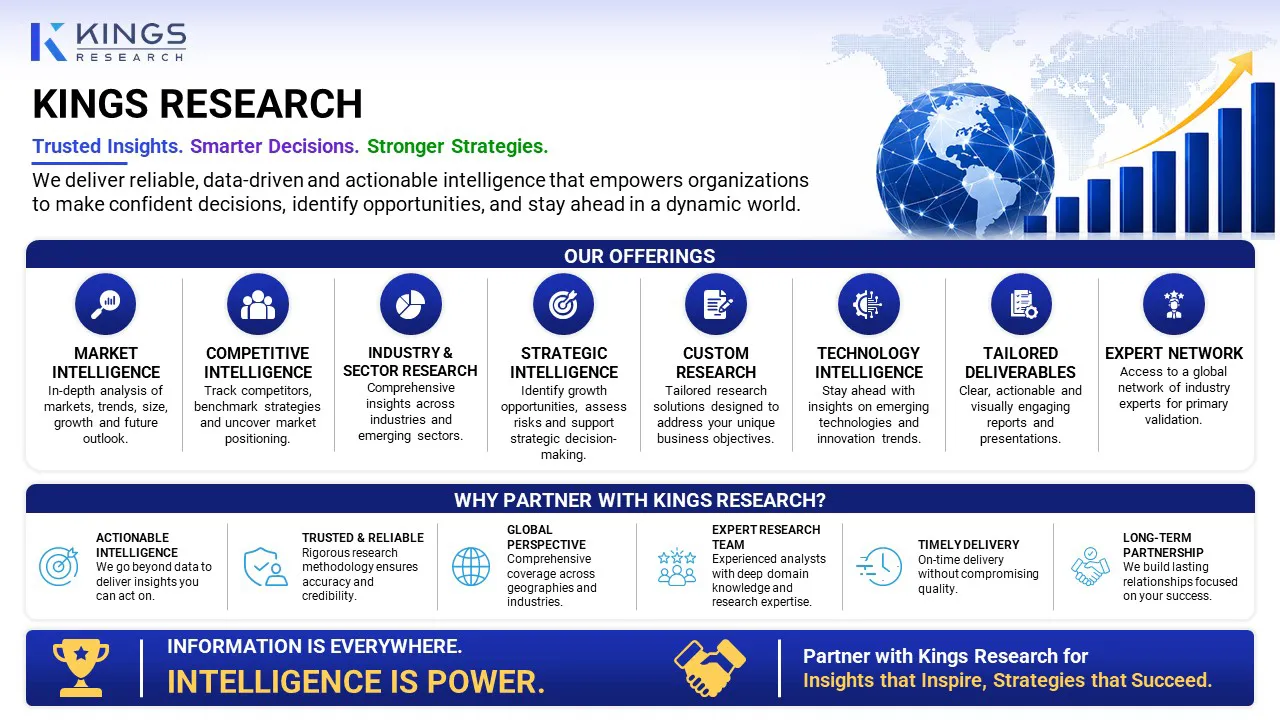
Our custom offerings deliver tailored, data-driven intelligence and strategic guidance to help organizations identify, evaluate, and capitalize on key market opportunities.
Frequently Asked Questions

Ashim Lakhera is a market intelligence professional specializing in the Agriculture and Food & Beverage industry. His work focuses on emerging markets, competitive dynamics, industry trends, and the factors driving market growth and transformation. He has experience in market sizing, forecasting, strategic analysis, and industry research across food, FMCG, and life sciences. His research interests span the broader food and agriculture value chain, with a particular focus on how innovation, changing consumer behavior, sustainability priorities, and evolving production systems are influencing markets. He examines these developments to understand their impact on demand, competition, business models, and growth opportunities across the agri-food ecosystem. His work combines quantitative market analysis with an understanding of the broader industry forces shaping food and agriculture markets. He is particularly interested in the structural changes taking place across global food systems and how businesses are adapting to evolving consumer expectations, technological developments, and sustainability requirements.
Habi is a seasoned research and consulting leader with renowned experience in guiding clients on strategic growth and transformation initiatives across global markets. He has led high-performing research teams that deliver actionable insights on market expansion, M&A strategies, opportunity assessment, new business development, and product launches. His project portfolio spans large petrochemical producers, electronic device manufacturers, lubricants companies, and other leading enterprises across diverse industrial and consumer sectors. He currently heads the research department at Kings Research, where he is responsible for setting the research agenda, mentoring analysts, and ensuring client-ready deliverables that support executive decision-making. With extensive experience in market intelligence, strategic research, and consulting, Habi brings a strong understanding of evolving industry dynamics, competitive landscapes, emerging opportunities, and business growth challenges. His expertise includes developing research frameworks, translating complex market data into actionable strategic recommendations, and working closely with senior stakeholders to address critical business questions. He has also contributed to building research capabilities, strengthening analytical methodologies, and driving a culture of quality and insight-led decision-making within research teams. His cross-industry exposure enables him to connect market trends with broader business implications and provide perspectives that help organizations identify opportunities, mitigate risks, and make informed strategic decisions.