
Inquire Now
Key Strategic Points
According to Kings Research, the global multi-walled carbon nanotubes market size was USD 821.69 million in 2025 and is projected to grow from USD 872.41 million in 2026 to USD 2,360.75 million by the end of 2033, exhibiting a CAGR of 15.28% during the forecast period (2026–2033).
Market growth is driven by rising electric vehicle battery production, as lithium-ion batteries use multi-walled carbon nanotubes (MWCNTs) as conductive additives to reduce electrode resistance and accommodate more active material per cell. Growing installations of stationary energy storage systems and wider applications in conductive plastics, coatings, and tires further support demand.
The market is transitioning from small-batch research powders to large-scale battery-grade dispersions supplied under long-term contracts with cell manufacturers. Producers compete on purity, dispersion quality, and cost, while stricter regulations and competition from single-walled grades influence market dynamics. Increasing MWCNT adoption in lithium-ion battery electrodes creates opportunities for suppliers offering consistent quality, efficient dispersion, and reliable large-scale production.
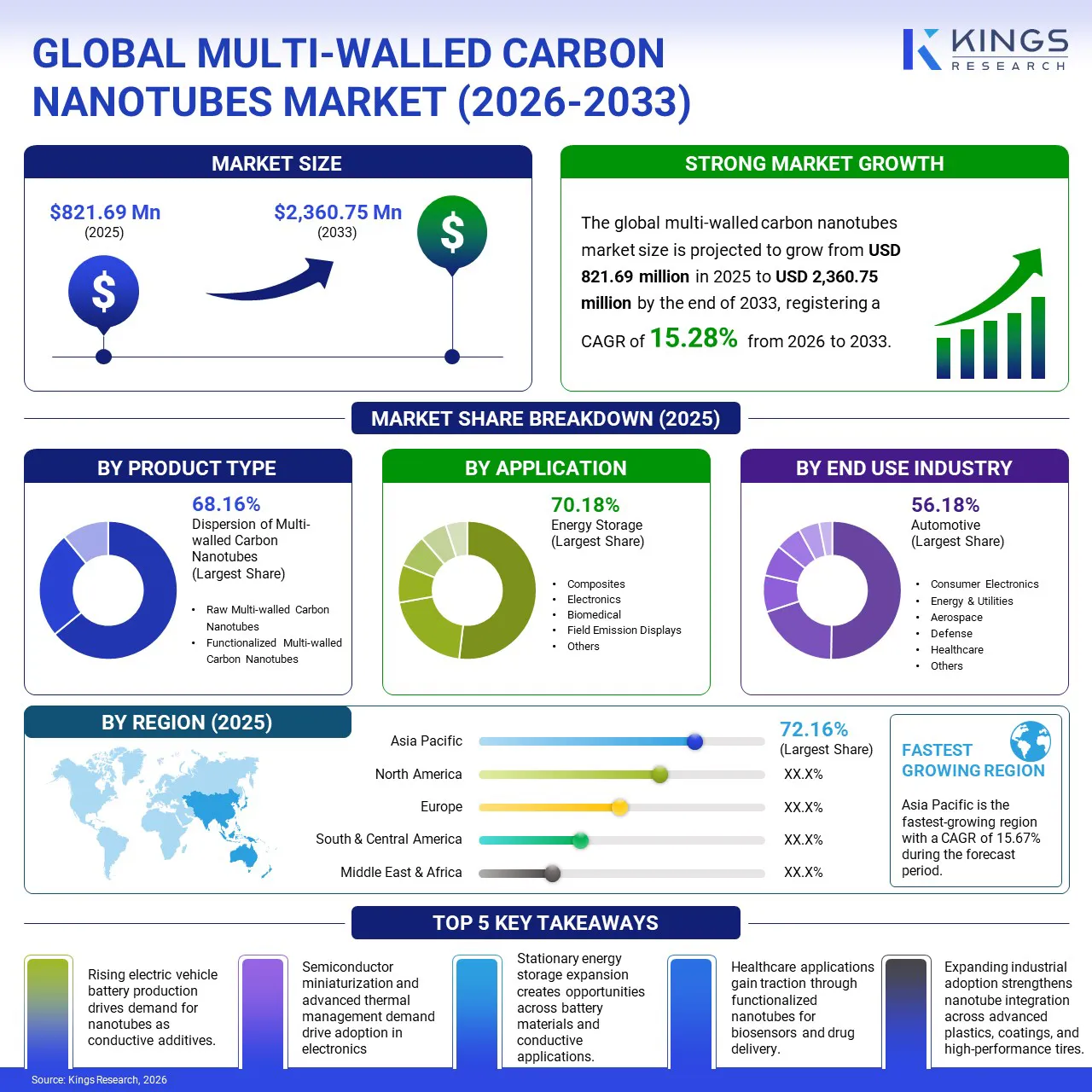
The growing adoption of MWCNTs in EV batteries is driven by their high electrical conductivity, aspect ratio, and ability to form efficient conductive networks at lower additive loadings. These properties enhance battery energy density, charging speed, and cycle life. MWCNTs further maintain electrode structural integrity, particularly in silicon-based anodes, while offering lower production costs and better scalability than SWCNTs.
According to the International Energy Agency (IEA), global electric car sales rose by 20% to exceed 20 million in 2025, accounting for a quarter of new car sales. Sales are expected to reach 23 million in 2026. Rising EV sales increase demand for battery cells, and consequently, conductive additives such as MWCNTs. In response, conductive carbon producers are expanding regional manufacturing capacity to serve EV battery and energy storage applications while strengthening localized supply chains.
In September 2026, Cabot Corporation announced a modified USD 50 million U.S. Department of Energy (DOE) grant, alongside approximately USD 75 million in company investment, to expand its battery materials production facilities in Louisiana and Texas. The expansion will increase domestic production of advanced conductive additives, including carbon nanotubes and carbon nanostructures, to meet demand from EVs, energy storage systems, and AI infrastructure. Both projects are anticipated to become operational by 2028.
Some MWCNTs can be carcinogenic, particularly long, rigid, straight, and biopersistent fibers. Their asbestos-like morphology can prevent complete engulfment by lung macrophages, causing persistent inflammation through frustrated phagocytosis. A September 2026 report by the German Society of Toxicology notes that long-term animal studies have linked certain MWCNT types to mesotheliomas. Subsequent research indicates that carcinogenic potential varies with fiber diameter, rigidity, and morphology. These findings underscore the need to control occupational exposure and prevent respirable MWCNT fiber release and inhalation during manufacturing, processing, and recycling.
Regulatory oversight of select multi-walled carbon nanotubes (MWCNTs) has tightened in Switzerland following the September 1, 2025, revision to the Chemicals Ordinance (ChemO). The revision incorporates the 22nd Adaptation to Technical Progress (ATP) under the EU CLP Regulation (Delegated Regulation (EU) 2024/2564).
The harmonized classification covers multi-walled carbon tubes, including MWCNTs, with a geometric tube diameter of ≥ 30 nm to < 3 μm, a length of ≥ 5 μm, and an aspect ratio > 3:1. These materials are classified as Carcinogenicity Category 1B (H350i) and Specific Target Organ Toxicity, Repeated Exposure Category 1 (H372, lungs, inhalation).
Following the transition period ending April 30, 2026, manufacturers, importers, and suppliers of affected grades must reflect these classifications in product labels and safety data sheets and meet applicable product register reporting requirements. These obligations may increase compliance costs and influence affected suppliers' product portfolios and market access strategies.
In July 2026, the U.S. Environmental Protection Agency (EPA) announced that it would issue a final Significant New Use Rule (SNUR) under the Toxic Substances Control Act (TSCA) for a specific multi-walled carbon nanotube formulation (PMN P-22-163), effective September 22, 2026. The rule establishes prior notification, workplace safety, hazard communication, and environmental release requirements while limiting the substance primarily to use as an additive in battery manufacturing.
Multi-walled carbon nanotubes are used in energy storage systems as conductive additives to enhance electrical conductivity and as active components in anodes. Their structural and morphological properties improve electrochemical performance and energy storage efficiency, supporting their use in supercapacitors and other energy storage and conversion systems.
In September 2025, AnteoTech Ltd. finalized a Joint Development and Sales Agreement with U.S.-based Black Diamond Structures (BDS) to commercialize a combined Anteo X and MOLECULAR REBAR product for lithium-ion batteries in the U.S. market. The solution combines AnteoTech’s binder cross-linking technology with BDS’s single- and multi-walled carbon nanotube dispersion technology to enhance silicon anode conductivity, mechanical stability, and battery performance. The collaboration targets demand for higher energy density, faster charging, and longer-lasting batteries, with prototype development and customer trials underway.
|
Segmentation |
Details |
|
|
By Product Type |
Raw Multi-Walled Carbon Nanotubes, Functionalized Multi-Walled Carbon Nanotubes, and Dispersion of Multi-Walled Carbon Nanotubes |
|
|
By Application |
Energy Storage, Composites, Electronics, Biomedical, Field Emission Displays, and Others |
|
|
By End-Use Industry |
Automotive, Consumer Electronics, Energy & Utilities, Aerospace, Defense, Healthcare, and Others |
|
|
By Region |
North America |
U.S., Canada, and Mexico |
|
Europe |
France, UK, Spain, Germany, Italy, Russia, and Rest of Europe |
|
|
Asia Pacific |
China, Japan, India, Australia, ASEAN, South Korea, and Rest of Asia Pacific |
|
|
Middle East & Africa |
Turkey, U.A.E., Saudi Arabia, South Africa, and Rest of Middle East & Africa |
|
|
South & Central America |
Brazil, Argentina, and Rest of South & Central America |
|
The dispersion of multi-walled carbon nanotubes segment held the majority share of 68.16% in 2025, driven by the higher value-added pricing of pre-formulated conductive pastes compared with raw powders. These formulations overcome nanotube agglomeration and ensure uniform distribution in battery electrodes and other energy storage components. Improved dispersion enhances electrical conductivity, electrode uniformity, and overall battery performance, supporting demand across battery energy storage systems and supercapacitors. Cell manufacturers increasingly favor ready-to-use conductive pastes as they disperse evenly in electrode slurries, reduce mixing times, and limit airborne dust and associated regulatory exposure risks.
The healthcare segment is expected to record a CAGR of 20.28% over the forecast period. MWCNTs offer nanoscale dimensions, high surface area, and functionalization potential, enabling chemical modification for targeted drug delivery. Their electrical conductivity and structural strength also support applications in biosensors, including the detection of tumor cell sensitivity to antitumor drugs, along with tissue and bone regeneration.
The energy storage segment held the majority share of 70.18% in 2025, supported by the use of multi-walled carbon nanotubes as conductive additives in lithium-ion battery cathodes and anodes for electric vehicles and stationary storage. According to the International Energy Agency (IEA), electric vehicle battery deployment reached 1.2 TWh in 2025, with electric vehicles accounting for more than 70% of total battery deployment. The expansion of battery manufacturing reinforces the role of energy storage applications in driving MWCNT demand.
The global multi-walled carbon nanotubes market is segmented into North America, Europe, Asia Pacific, Middle East & Africa, and South & Central America.
Asia Pacific
Asia Pacific held the largest share of 72.16% in 2025 and is expected to register the highest CAGR of 15.67% over the forecast period. China dominates regional demand, supported by its extensive lithium-ion battery manufacturing capacity and established carbon nanotube production base. Domestic manufacturers supplying conductive pastes directly to battery cell producers and an integrated local supply chain strengthen the region's ability to meet growing demand for multi-walled carbon nanotubes across battery applications.
South Korea and Japan contribute through major battery manufacturers and specialty carbon material producers. Expanding battery and electric vehicle manufacturing in India and ASEAN countries is expected to create additional demand for conductive additives. Governments in the region are incorporating carbon nanotubes into national battery supply chain strategies.
Europe
Europe was the second-largest regional market, accounting for 14.18% of MWCNT demand in 2025. Germany, France, and the UK lead regional demand, driven by battery cell plant expansions, diverse automotive industries, and established carbon nanotubes and conductive carbon producers. Composites, conductive plastics, and coatings provide additional demand beyond battery applications. Producers are further adapting to the new EU classification requirements, which favor dispersed and masterbatch forms over loose powder. Public funding for domestic battery manufacturing is expected to support regional conductive additive suppliers.
In December 2025, the European Commission proposed the Battery Booster strategy, outlining EUR 1.8 billion (about USD 2.10 billion) in facility funding and investments. This includes EUR 1.5 billion (about USD 1.75 billion) in interest-free loans for European battery cell producers during ramp-up. The initiative is expected to increase local cell production and demand for battery materials, including MWCNTs.
North America, Middle East & Africa, and South & Central America
In North America, the U.S. leads demand through new battery cell plants, expanding stationary storage, and established conductive carbon and specialty nanotube producers. Canada and Mexico contribute through battery material projects and automotive manufacturing linked to U.S. supply chains. Federal and state incentives are encouraging domestic battery material production, including nanotube capacity, to reduce dependence on imported conductive additives.
In July 2025, SkyNano announced a USD 1.6 million Phase II contract from the U.S. Department of Energy (DOE) to scale MWCNT production using electrochemical CO₂ capture and conversion technology. The project aims to develop an MWCNT synthesis process integrated with carbon black production emissions, creating a blended MWCNT/carbon black additive designed to outperform either material used individually.
In the Middle East & Africa, Saudi Arabia, the U.A.E., and Turkey are investing in electric vehicle assembly, grid storage, and industrial diversification. These initiatives are expected to gradually increase demand for battery materials and conductive composites, which improve the capacity, conductivity, and overall performance of supercapacitors and lithium-ion batteries. Investments in sustainable infrastructure and low-carbon construction are further expected to support demand for advanced conductive materials, including carbon nanotubes.
In December 2025, CHASM Advanced Materials and Saudi Readymix Concrete Company completed a field demonstration of low-carbon, MWCNT-enhanced concrete at Saudi Readymix's headquarters in Dammam. The project used CHASM’s patented NTeC-C technology and 100% locally sourced materials, demonstrating a lower-carbon concrete solution without imported supplementary cementitious materials. The CNT-enhanced mix maintained workability under standard batching conditions and is expected to support improved strength and long-term durability.
In South & Central America, Brazil and Argentina lead demand through automotive production, tire manufacturing, and lithium mining. Interest in local battery value chains is growing in countries with substantial lithium resources. Government efforts to attract battery and electric vehicle investments are expected to encourage wider adoption of conductive additives in the region.
The global market is moderately consolidated, with major Chinese and South Korean manufacturers accounting for a significant share of global supply, alongside specialized producers in Europe, the U.S., and Japan. Competition centers on product quality, dispersion performance, cost efficiency, technological capabilities, and supply reliability.
Market participants are strengthening their positions through strategic collaborations, technology acquisitions, and expansion of advanced conductive carbon product portfolios. They are focusing on developing battery-grade materials, improving manufacturing processes, and integrating complementary technologies to address evolving requirements across lithium-ion batteries, energy storage, and other high-performance applications.
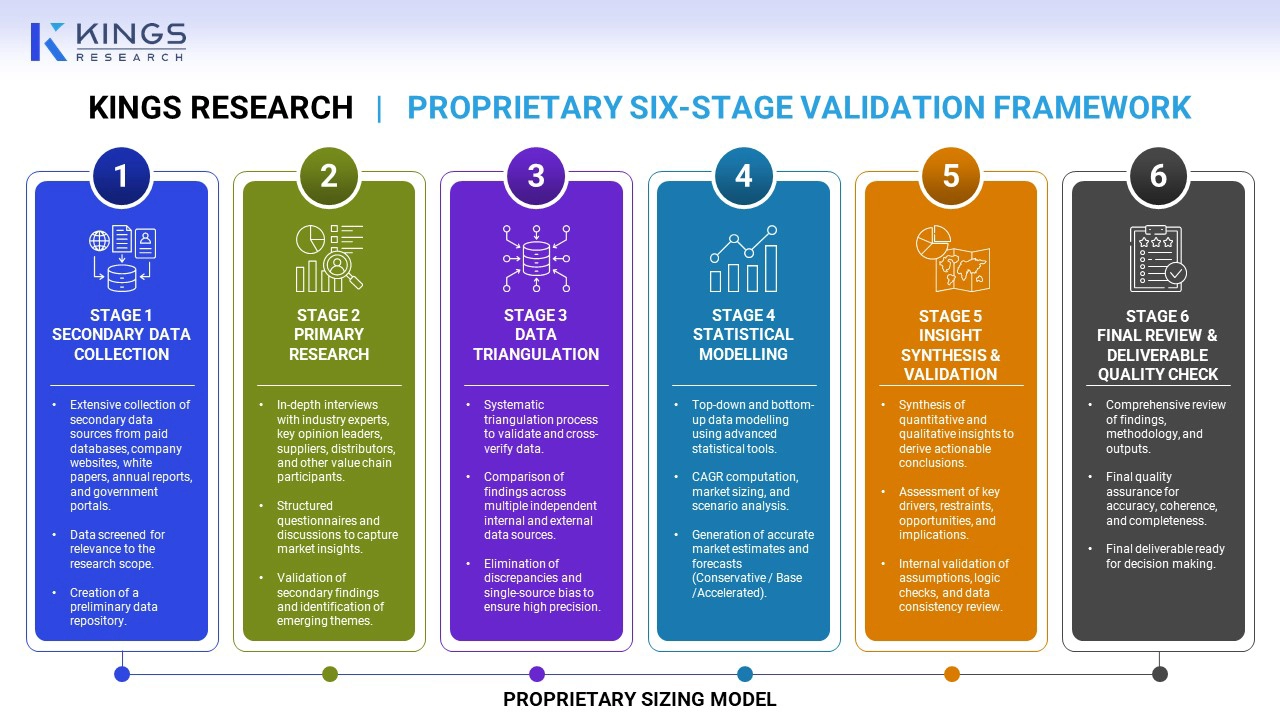
Our methodology triangulates insights from multiple independent and publicly available research databases, validated against regulatory filings and public corporate disclosures. All estimates are cross-verified; no single-source data is published without rigorous validation.
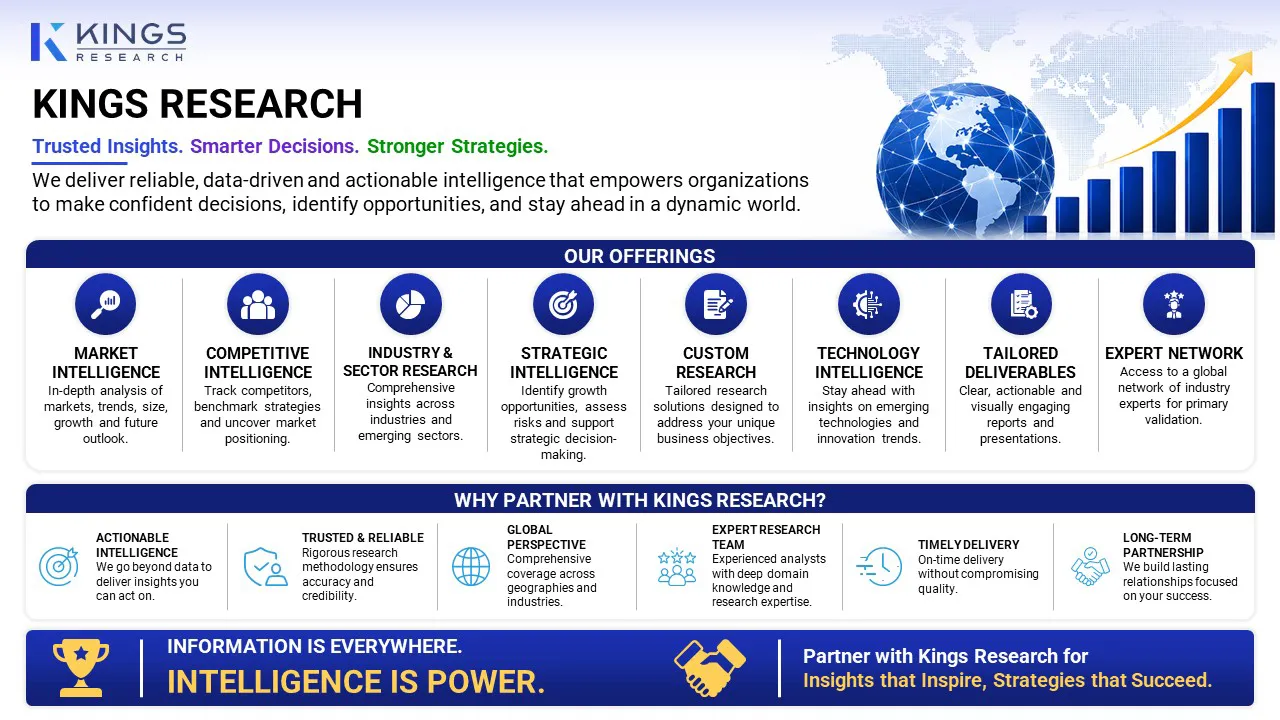
We deliver tailored, data-driven intelligence and strategic guidance to help organizations identify, evaluate, and capitalize on core market opportunities.
Frequently Asked Questions

Faizy brings over four years of experience in market research and consulting, with a proven ability to support strategic engagements across diverse industries and business environments. His work focuses on understanding complex market structures, identifying emerging opportunities, and translating research findings into clear, commercially relevant insights. With strong analytical capabilities and a structured approach to problem-solving, he evaluates industry trends, competitive landscapes, customer dynamics, and evolving business models. His expertise encompasses market research, competitive intelligence, market sizing and forecasting, industry assessment, company benchmarking, and strategic analysis. Faizy combines technical proficiency with a strong research orientation, enabling him to interpret both qualitative and quantitative information effectively. He has contributed to projects that help organizations assess growth potential, strengthen market positioning, and evaluate strategic priorities. His adaptable approach allows him to work across sectors while maintaining a consistent focus on accuracy, relevance, and delivering insights that support informed decision-making for clients and stakeholders.
Habi is a seasoned research and consulting leader with renowned experience in guiding clients on strategic growth and transformation initiatives across global markets. He has led high-performing research teams that deliver actionable insights on market expansion, M&A strategies, opportunity assessment, new business development, and product launches. His project portfolio spans large petrochemical producers, electronic device manufacturers, lubricants companies, and other leading enterprises across diverse industrial and consumer sectors. He currently heads the research department at Kings Research, where he is responsible for setting the research agenda, mentoring analysts, and ensuring client-ready deliverables that support executive decision-making. With extensive experience in market intelligence, strategic research, and consulting, Habi brings a strong understanding of evolving industry dynamics, competitive landscapes, emerging opportunities, and business growth challenges. His expertise includes developing research frameworks, translating complex market data into actionable strategic recommendations, and working closely with senior stakeholders to address critical business questions. He has also contributed to building research capabilities, strengthening analytical methodologies, and driving a culture of quality and insight-led decision-making within research teams. His cross-industry exposure enables him to connect market trends with broader business implications and provide perspectives that help organizations identify opportunities, mitigate risks, and make informed strategic decisions.