
Inquire Now
Key Strategic Points
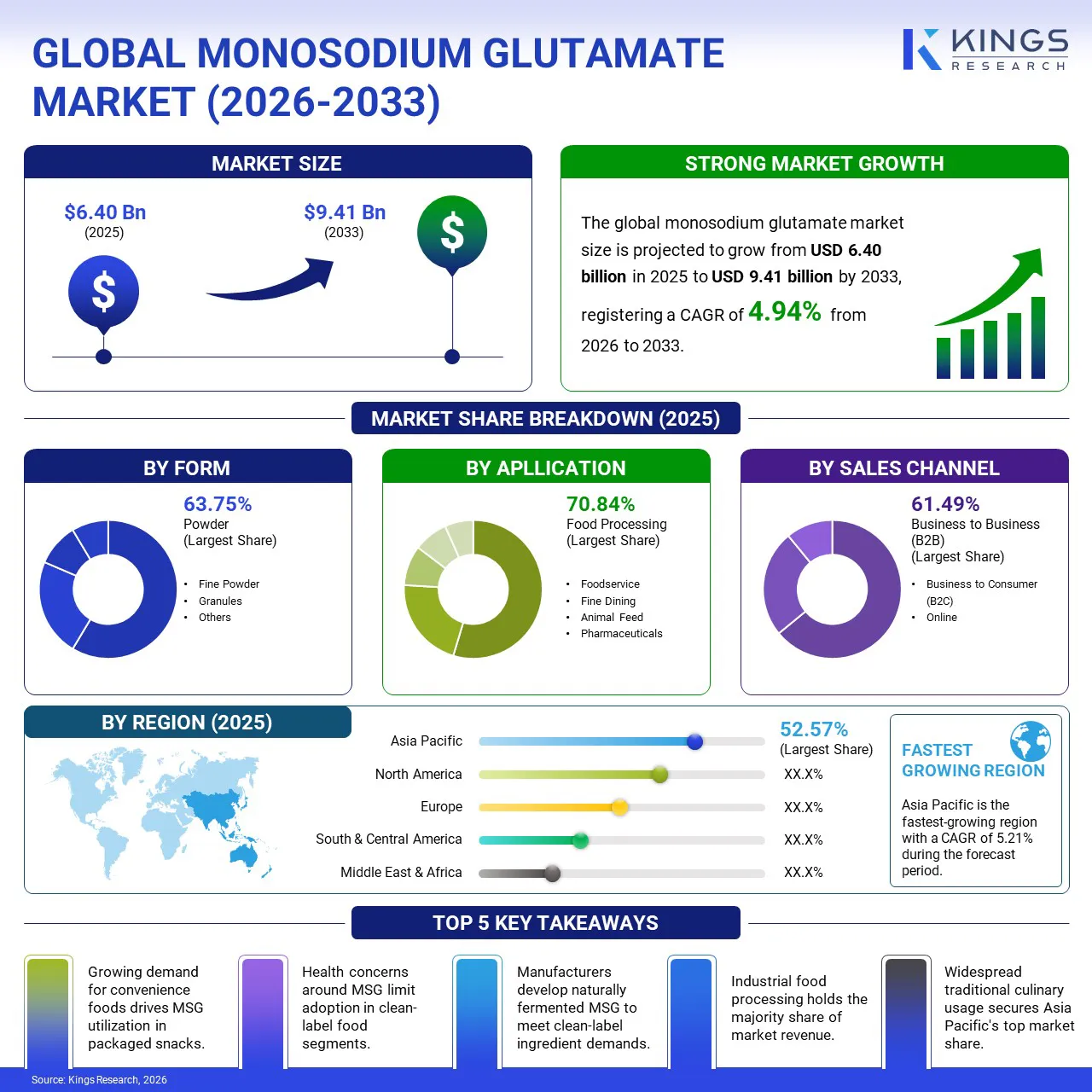
According to Kings Research, the global monosodium glutamate market size was valued at USD 6.40 billion in 2025 and is projected to reach USD 9.41 billion by 2033, exhibiting a CAGR of 4.94% during the forecast period (2026-2033).
The market is witnessing growth driven by the rising demand for packaged and processed foods across urban populations. Growing preference for convenient meal options has led to greater use of MSG to enhance flavor in instant noodles, soups, snacks, and frozen meals.
The expansion of food service sectors, including quick-service restaurants and catering, is also contributing to higher consumption. As these sectors prioritize consistency, taste, and cost-effectiveness, MSG becomes a preferred ingredient to enhance umami flavor in a variety of dishes such as soups, sauces, snacks, and ready-to-eat meals. The growth of global food chains and the increased consumption of processed foods in commercial settings further support the rising usage of MSG, thereby fueling market growth.
Rising consumption of processed and packaged meat products drives the demand for MSG owing to its ability to enhance savory taste profiles, improve overall flavor consistency, and maintain product appeal across large volumes. Its cost-effectiveness and ease of application in industrial meat processing make MSG a preferred additive, as market players scale operations to address rising consumption.
The surge in demand for food items such as sausages, deli meats, and frozen meat-based meals is encouraging manufacturers to incorporate MSG to meet standardized taste expectations. Growth in the global meat industry, particularly across emerging markets, acts as a significant market-catalyzing factor for flavor enhancers, including monosodium glutamate.
Negative consumer perception associated with the safety and health effects of MSG acts as a significant restraining factor for market development. Regulatory authorities across regions are undertaking safety assessments aimed at marking MSG consumption as safe and thus fueling its widespread acceptance.
This perception has limited its use in certain regions and product categories, particularly within clean-label and health-focused segments. To address this challenge, manufacturers are investing in public education initiatives and transparent labeling to clarify MSG’s safety. Additionally, companies are developing reformulated versions derived from natural fermentation processes to meet growing consumer demand for minimally processed and naturally sourced ingredients. These efforts aim to rebuild consumer trust and enable broader acceptance across the food industry.
Reformulation of products to support clean label demand is anticipated to create new growth opportunities for market development. Manufacturers are using naturally derived sources and reducing sodium content to meet growing consumer demand for transparency and minimally processed ingredients.
This is particularly evident in the processed and packaged food segment, where scrutiny of additives is increasing. Companies are adapting product compositions and labeling practices to reflect these preferences while ensuring compliance with evolving regulatory requirements.
|
Segmentation |
Details |
|
By Form |
Powder (Fine Powder, Coarse Powder), Granules (Standard Granules, Micro Granules), Others (Liquid MSG, Encapsulated MSG) |
|
By Application |
Food Processing (Snacks & Savory Products, Instant Noodles, Canned Foods, Frozen Meals, Seasoning Mixes), Foodservice (Quick-Service Restaurants (QSRs), Fine Dining, Cafeterias), Animal Feed (Aquaculture Feed, Poultry Feed, Livestock Feed), Pharmaceuticals (Tablet Binders, Taste Masking Agents) |
|
By Sales Channel |
Business to Business, Business to Consumer, Online |
|
By Region |
North America: U.S., Canada, Mexico |
|
Europe: France, UK, Spain, Germany, Italy, Russia, and the rest of Europe |
|
|
Asia-Pacific: China, Japan, India, Australia, ASEAN, South Korea, Rest of Asia-Pacific |
|
|
Middle East & Africa: Turkey, U.A.E., Saudi Arabia, South Africa, Rest of Middle East & Africa |
|
|
South and Central America: Brazil, Argentina, and the rest of South and Central America |
The powder segment earned USD 4.08 billion in 2025 due to its high solubility, ease of use, and widespread adoption in packaged and instant food products. The longer shelf stability, cost-effectiveness, and compatibility with large-scale food processing act as significant contributors to segment growth.
The business-to-business segment is projected to reach USD 5.88 billion by 2033. The high growth rate is attributed to the consistent demand from food manufacturers, catering services, and institutional buyers for MSG for producing diverse food products. The long-term procurement contracts and bulk purchasing of MSG products act as significant propellers for B2B segment growth, ensuring a steady and predictable demand over the forecast interval.
Based on region, the market is classified into North America, Europe, Asia Pacific, the Middle East & Africa, and South and Central America.
The Asia Pacific monosodium glutamate market share stood at around 52.57% in 2025, with a valuation of USD 3.36 billion. The region is forecasted to register the fastest CAGR of 5.21% over the forecast period. The high share and growth rate are attributable to high consumption in China, Vietnam, Indonesia, and Thailand, where MSG is widely used in both home cooking and industrial food production. China, as the largest producer and exporter of MSG, dominates the supply landscape through domestic production and overseas expansion.
In April 2025, China’s Fufeng Group began constructing a USD 800 million agro-industrial park in Kazakhstan, with a planned annual processing capacity of 1 million tons of corn and production of monosodium glutamate for export to Europe, North Africa, and the Middle East.
The move aligns with China’s efforts to increase MSG production overseas, ensure raw material access, and reinforce its role in the global supply chain. Additionally, the growing fast food industry and strong demand from processed food manufacturers across Southeast Asia continue to support stable MSG consumption in the region.
The monosodium glutamate industry in North America is expected to register a steady growth rate, with a projected CAGR of 4.95% over the forecast period (2026-2033). The rise in demand is strongly linked to the growing popularity of Asian and Latin American cuisines across the U.S. and Canada, especially among younger consumers, enabling MSG manufacturers to boost production.
In March 2025, Unilever Food Solutions reported increased demand for South American and Asian cuisines in U.S. professional kitchens, noting a preference for bold, umami-rich flavors that often rely on MSG.
This trend is evident in the increasing use of MSG-based seasonings across foodservice channels, especially by quick-service restaurants and meal kit providers.
In North America, a well-developed food processing sector and rising investments in automation are improving MSG availability through business-to-business distribution platforms such as food ingredient wholesalers, contract manufacturers, and institutional suppliers.
The MSG market in Europe is driven by the rising demand for processed, convenience, and ready-to-eat foods, along with increasing consumer interest in cross-cultural cuisines. The developed food processing and foodservice industries of the region fuel the demand for MSG-based seasonings and flavor enhancers. Additionally, the rising adoption of umami-rich flavors across the eateries and packaged foods industries is poised to drive market growth over the forecast interval.
The Middle East & Africa monosodium glutamate market is driven by the expanding processed food, foodservice, and instant meal sectors, particularly across the Gulf countries and North Africa. Increasing urbanization, changing dietary patterns, and demand for convenient foods are supporting the use of MSG in soups, snacks, sauces, and seasonings.
The South & Central America monosodium glutamate market is benefiting from rising consumption of processed foods, snacks, sauces, and ready-to-eat meals. Increasing urbanization and expansion of quick-service restaurants are increasing demand for cost-effective flavor enhancers such as MSG, with countries such as Brazil, Chile, and Argentina expected to remain key contributors to the market growth.
The monosodium glutamate industry is characterized by strategies focused on innovation, regional expansion, and product differentiation. Leading manufacturers are prioritizing R&D initiatives to develop healthier versions of MSG, focusing on cleaner formulations and reduced sodium content to align with changing dietary preferences.
Moreover, key players are increasingly focusing on operational efficiency to streamline manufacturing processes through fermentation optimization and cost-effective resource management. Geographic expansion is pursued through the setup of production hubs closer to key consumption regions, enabling faster distribution and improved supply chain control.
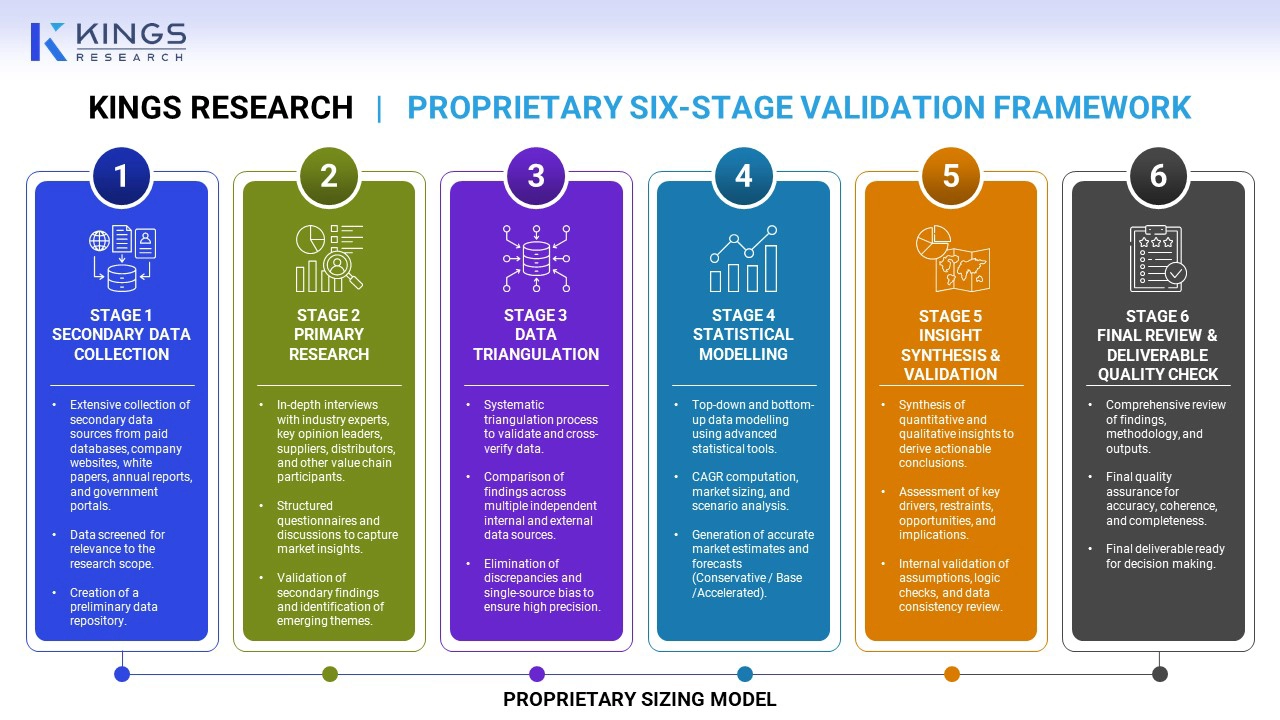
Our methodology triangulates insights from multiple independent and publicly available research databases, which is further validated against regulatory filings and public company disclosures. All estimates are cross-verified; no single-source data is presented without validation.
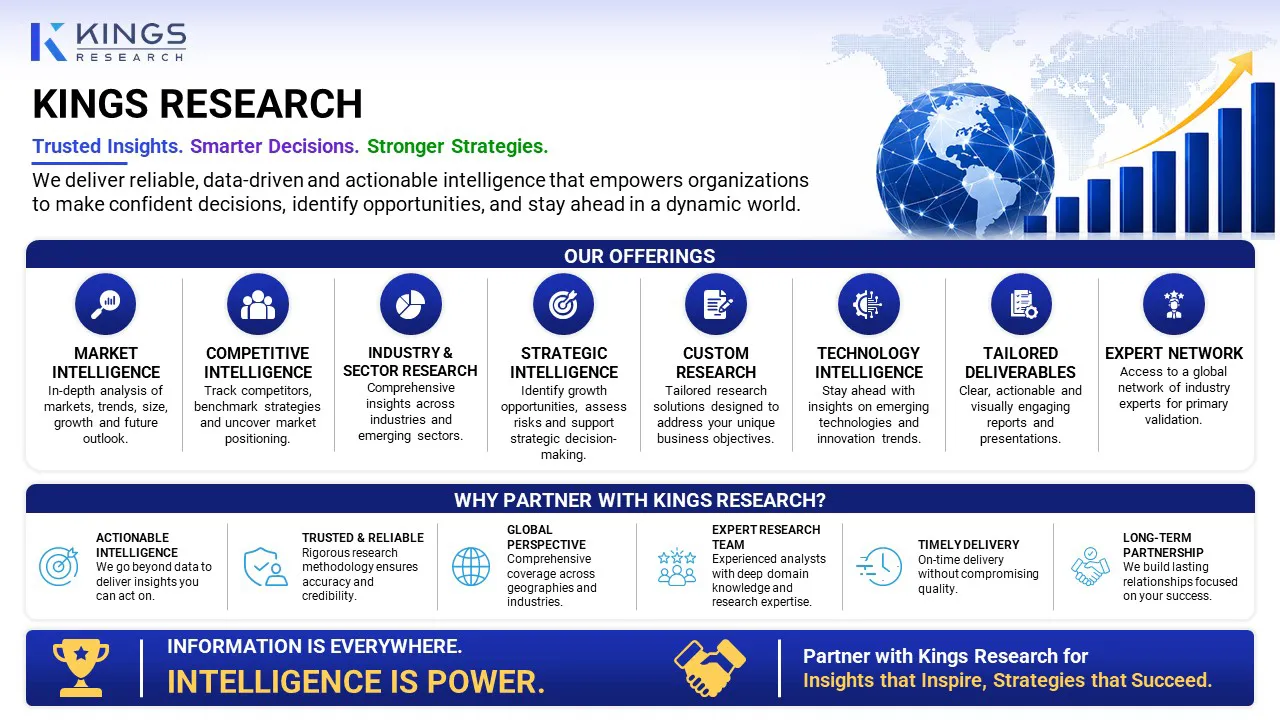
Our custom offerings deliver tailored, data-driven intelligence and strategic guidance to help organizations identify, evaluate, and capitalize on key market opportunities.
Frequently Asked Questions

Over the years, Versha brings over 15 years of experience managing consulting assignments across industries, including Food and Beverage, Consumer Goods, ICT, Aerospace, and more. Her work has spanned diverse sectors. Her cross-domain expertise and adaptability make her a versatile and dependable professional. She is known for her keen business insight and foresight. With sharp analytical skills and a curious mindset, Versha excels at transforming complex data into actionable insights. She has a proven track record of unraveling market dynamics, identifying trends, and delivering tailored solutions to meet client needs. As a skilled leader, Versha has successfully mentored research teams and directed projects with precision, ensuring high-quality outcomes. Her collaborative approach and strategic vision enable her to turn challenges into opportunities and consistently deliver impactful results. Whether analyzing markets, engaging stakeholders, or crafting strategies, Versha draws on her deep expertise and industry knowledge to drive innovation and deliver measurable value.
Smriti Vinodia is a market research and consumer insights professional with expertise in qualitative research, consumer behavior, and strategic market intelligence across the FMCG and FMCD industries. She has experience supporting leading brands by transforming complex consumer and market insights into actionable strategies that inform product development, innovation, positioning, and business growth. Her expertise spans qualitative consumer research, market and competitive intelligence, consumer trend analysis, and AI-enabled insight generation. She has worked across diverse research engagements, helping organizations understand evolving consumer needs, identify emerging market opportunities, and strengthen customer-centric decision-making. Combining analytical rigor with a strong understanding of consumer psychology and market dynamics, Smriti brings a strategic perspective to research and insights. She focuses on connecting consumer behavior with commercial priorities, enabling organizations to make informed decisions, develop relevant products and experiences, and build sustainable growth strategies in rapidly evolving and competitive markets.



.webp&w=128&q=75&dpl=dpl_DPva2LrvfsBdTJm1XZj67UTrvMHL)
