
Inquire Now
Key strategic points
Polycarbonate resin is a high-performance thermoplastic known for its exceptional strength, optical clarity, and impact resistance. It is lightweight, moldable, and offers enhanced thermal stability, making it suitable for demanding engineering applications.
Used widely in molding and extrusion processes, polycarbonate resins are integral in manufacturing electronics, automotive parts, medical devices, construction materials, and optical media. Their versatility in forming durable, lightweight components makes them critical across multiple industries.
The report provides a comprehensive analysis of key drivers, emerging trends, and the competitive landscape expected to influence the market over the forecast period.
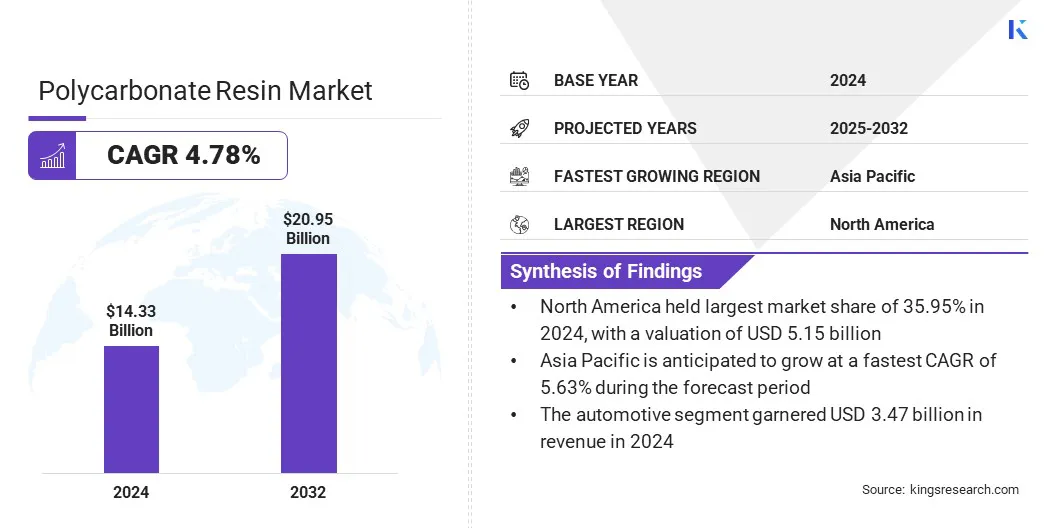
According to Kings Research, the global polycarbonate resin market size was valued at USD 14.33 billion in 2024 and is projected to grow from USD 14.97 billion in 2025 to USD 20.95 billion by 2032, exhibiting a CAGR of 4.78% during the forecast period.
The growth of the market is driven by the rapid expansion of consumer electronics production, where durable and lightweight materials are essential for device components. Additionally, the rising demand for medical-grade plastics, due to their strength, transparency, and biocompatibility, is supporting the broader use of polycarbonate in healthcare applications.
Major companies operating in the polycarbonate resin market are Covestro AG, SABIC, Teijin Limited, Mitsubishi Corporation, LG Chem, CHIMEI, Idemitsu Kosan Co., Ltd., Trinseo, Formosa Chemicals & Fibre Corp., Samyang Corporation, Asahi Kasei Corporation, Bayer AG, LOTTE Chemical CORPORATION., BASF, and Dow.
The shift toward lighter vehicles is accelerating market growth. Automakers are increasingly replacing metal parts with polycarbonate components to reduce weight and improve fuel efficiency. Applications in headlamp lenses, interior trims, and sunroof panels continue to expand due to the resin’s impact resistance and flexibility.
The material’s ability to meet safety standards while supporting lightweight construction is boosting its adoption across both electric and conventional vehicle segments.
The rapid expansion of global consumer electronics production increases the demand for durable and lightweight materials, fueling the growth of the market.
These resins are widely used in manufacturing housings for smartphones, laptops, and other personal gadgets due to their optical clarity, electrical insulation, and toughness. The need for compact, high-performance devices is prompting manufacturers to adopt polycarbonates.
A key challenge limiting the growth of the polycarbonate resin market is the increasing regulatory scrutiny over the use of bisphenol A (BPA), a primary raw material in polycarbonate production. Concerns about BPA’s potential health and environmental impact have led to stricter regulations, particularly in food-contact and medical applications.
In response, key players are investing in R&D to develop BPA-free polycarbonate alternatives and bio-based resins. Strategic collaborations and advancements in chemical recycling are also being explored to improve sustainability and reduce dependency on traditional fossil-based feedstocks, supporting continued market growth amid rising environmental concerns.
The market is expanding due to higher usage in medical devices and diagnostics equipment. Polycarbonate resins meet stringent safety and hygiene standards required in healthcare applications.
Their biocompatibility, impact resistance, and sterilizability support make them ideal for blood reservoirs, IV components, and surgical instruments. The shift toward durable, transparent plastics that withstand repeated cleaning is highlighting the importance of polycarbonate in the global healthcare sector.
|
Segmentation |
Details |
|
By Application |
Automotive, Construction, Electrical & Electronics, Optical Media, Medical, Packaging, Others |
|
By Region |
North America: U.S., Canada, Mexico |
|
Europe: France, UK, Spain, Germany, Italy, Russia, Rest of Europe |
|
|
Asia-Pacific: China, Japan, India, Australia, ASEAN, South Korea, Rest of Asia-Pacific |
|
|
Middle East & Africa: Turkey, U.A.E., Saudi Arabia, South Africa, Rest of Middle East & Africa |
|
|
South America: Brazil, Argentina, Rest of South America |
Based on region, the global market has been classified into North America, Europe, Asia Pacific, Middle East & Africa, and South America.
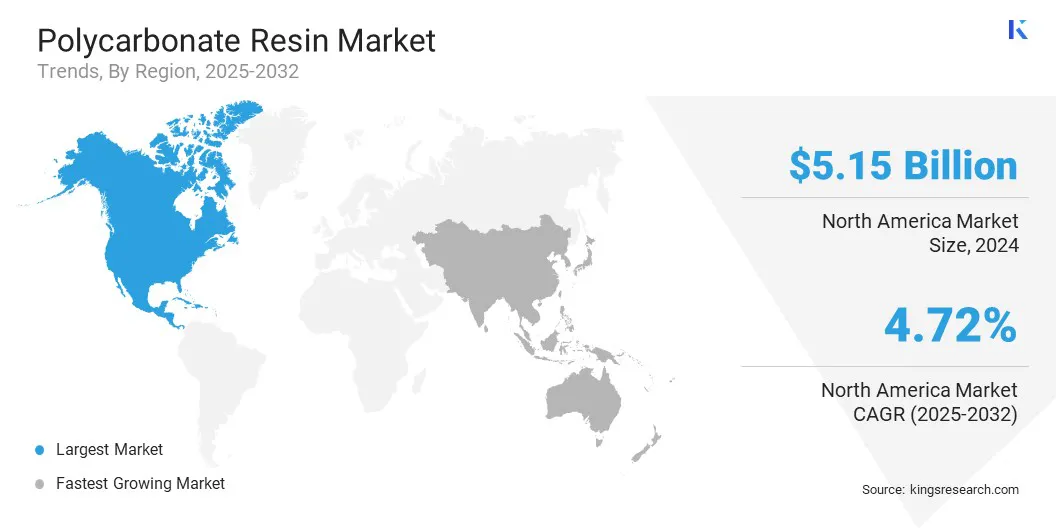
The North America polycarbonate resin market share stood at around 35.95% in 2024, valued at USD 5.15 billion. The North American medical sector emphasizes innovation and precision manufacturing. Growth in healthcare infrastructure, outpatient care, and home-based diagnostics is leading to increased polycarbonate resin usage in medical applications.
Moreover, the region is witnessing a substantial rise in the adoption of energy-efficient lighting solutions, particularly LED systems. The growing number of commercial and industrial LED retrofitting projects is significantly boosting regional market growth.
The Asia-Pacific polycarbonate resin industry is poised to grow at a CAGR of 5.63% over the forecast period. This growth is propelled by the expansion of the automotive sector, with several global and regional manufacturers increasing local production.
The growing focus on fuel efficiency and cost-effective materials is strengthening the role of polycarbonates in automotive applications across the region.
Furthermore, the region's position as a global hub for electronics manufacturing, supported by a dense network of OEMs and component suppliers, is contributing significantly to regional market growth.
Key players in the polycarbonate resin market are increasingly adopting strategies such as joint research and development agreements, product innovation, and the use of bio-based raw materials to enhance the performance and sustainability of polycarbonate resin applications.
Companies are focusing on developing high-performance, eco-friendly materials tailored to specific industries such as renewable energy.
Frequently Asked Questions


Analyst
Sunanda is a proficient research analyst with strong cross-domain expertise, excelling in identifying market trends and delivering insightful analyses across various industries, including consumer goods, food & beverages, healthcare, and more. Her ability to connect insights from diverse sectors enables her to offer actionable recommendations that support strategic decision-making in a range of business contexts. Sunanda's research is driven by thorough data analysis and her commitment to providing relevant, data-driven insights. Her keen eye for patterns allows her to spot emerging opportunities before they become mainstream. Sunanda's synthesis of cross-sector learnings often reveals unconventional solutions that clients find invaluable. She adapts her analytical frameworks to suit each industry's unique nuances, ensuring reports are both accurate and contextually relevant. Clients appreciate her ability to deliver crisp, actionable findings under tight deadlines, consistently exceeding expectations with her thoroughness and insight.

Reviewed By
With over a decade of research leadership across global markets, Ganapathy brings sharp judgment, strategic clarity, and deep industry expertise. Known for precision and an unwavering commitment to quality, he guides teams and clients with insights that consistently drive impactful business outcomes.