

The global shift toward sustainable materials has brought renewed attention to the benefits of hemp fiber. As industries look for durable, low-impact alternatives to conventional fibers, hemp has emerged as a leading contender due to its strength, environmental performance, and diverse industrial applications.
These characteristics make hemp fiber a highly preferred choice in sustainable textiles, eco-friendly materials, biodegradable fibers, industrial hemp applications, and green construction technologies. According to Kings Research, the global hemp fiber market is set to reach $73.55 billion by 2030.
This blog examines how hemp contributes to environmental responsibility, material innovation, and long-term economic value, offering a comprehensive picture of why the benefits of hemp fiber are gathering global attention.
What is Hemp Fiber?
Hemp fiber is obtained from the stalk of Cannabis sativa grown for industrial purposes. Industrial hemp varieties contain negligible tetrahydrocannabinol (THC) and are cultivated under regulatory programs in many countries.
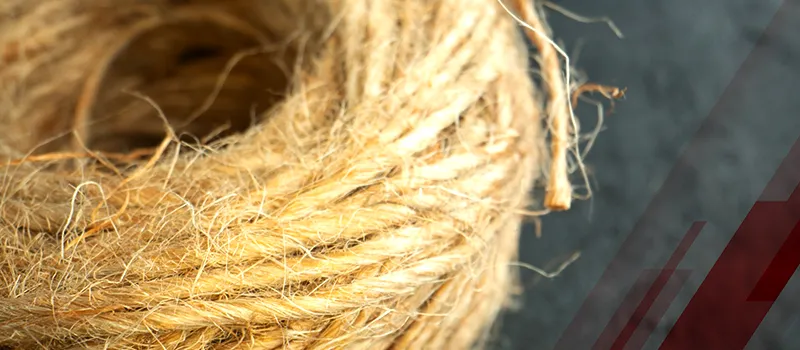
Fiber extraction typically follows retting and decortication steps to separate long bast fibers from the woody core (hurd). The resulting fibers are strong, long, and suitable for both technical and consumer products.
Growing Industrial Importance of Hemp Fiber
In recent years, industrial hemp has transitioned from a niche crop to a mainstream commodity. According to the USDA’s 2024 report, total planted area for all hemp uses reached 45,294 acres, reflecting a 64% increase from 2023.
This expansion underlines hemp’s growing role in supply chains spanning textiles, construction, automotive components, paper, and packaging. As global demand rises for sustainable natural fibers, hemp fiber uses increasingly span multiple sectors, cementing its importance among industrial hemp applications.
9 Key Benefits of Hemp Fiber
1. Superior Strength and Durability of Hemp Fiber
One of the standout hemp fiber advantages is its tensile strength and durability. Research published in the Journal of Cleaner Production showed that industrial hemp fiber can serve as a sustainable and economical alternative to cotton, offering comparable performance in fiber yield and fabric longevity.
This high strength makes hemp suitable for heavy-duty textiles, ropes, geotextiles, and composite reinforcements, applications where durability matters over time. Because hemp textiles and materials often outlast conventional cotton or synthetic counterparts, products made from hemp may require less frequent replacement. This longevity reduces waste over time and enhances the lifecycle value of hemp-based goods.
2. Environmental Benefits of Hemp Fiber and Sustainable Farming Practices
A major environmental benefit is hemp’s comparatively low water requirement. A comparative review across 28 studies published in a peer-reviewed journal shows that hemp has a 60% lower water footprint (WF) than cotton, a 38% lower crop water requirement (CWR), 84% lower crop irrigation requirement (CIR), and 91% lower irrigated water footprint (IRF).
These differences underscore hemp’s role as a water-efficient, eco-friendly material, especially relevant in water-stressed regions. Hemp’s ability to thrive under rainfed conditions, as shown by recent agronomic research, further enhances its value for sustainable agriculture under variable precipitation regimes.
Moreover, a life-cycle assessment in the textile sector found that hemp requires less water, land, and virtually no pesticides compared to cotton, making it significantly more sustainable.
These agronomic and environmental advantages make hemp fiber a promising candidate for sustainable textiles, natural fiber alternatives, and low-impact fiber production.
3. Biodegradable Properties and Zero-Toxicity End-of-Life Cycle
As a cellulose-based natural fiber, hemp is biodegradable. Unlike synthetic fibers (e.g., polyester), which may persist for decades and contribute to microplastic pollution, hemp decomposes naturally without releasing persistent pollutants. This quality supports circular-economy goals, particularly in textiles, biodegradable packaging, and single-use materials.
Recent research also demonstrates that hemp fibers can be used as fillers in biodegradable biocomposites. A 2024 study reported successful incorporation of up to 40% hemp fiber into biopolyester matrices, producing cost-efficient and biodegradable composite films.
Such developments highlight hemp’s promise not just as a traditional fiber, but as a key component in next-generation sustainable materials with environmentally responsible end-of-life behavior.
4. Moisture-Wicking and Breathability Advantages in Hemp Textiles
Hemp fibers naturally lend themselves to breathable, comfortable textiles. Because hemp can absorb moisture and allow air circulation effectively, clothing and fabrics made from hemp stay cool in warm weather and dry relatively quickly.
These textile attributes, strong durability combined with breathability, make hemp a desirable fiber for sustainable clothing, home textiles, and summer garments.
Additionally, hemp’s inherent structure helps in moisture regulation better than many synthetic fibers, enhancing wearer comfort without sacrificing longevity.
5. Natural Antimicrobial and UV-Resistant Qualities of Hemp Fiber
Another often cited advantage in hemp fiber uses is its natural resistance to microbes, mold, mildew, and ultraviolet (UV) degradation. These traits make hemp textiles suitable for outdoor apparel, sun-protective clothing, tents, awnings, and technical fabrics, applications where microbial growth or UV exposure can compromise product integrity or durability.
While further empirical studies are ongoing, these properties position hemp as a versatile, functional natural fiber for both indoor and outdoor uses.
6. Versatility of Hemp Fiber Across Key Industrial Applications
One of the largest benefits of hemp fiber is its versatility. Hemp fiber finds applications in broad industrial domains beyond clothing or textiles:
- In construction, hemp hurds combined with lime produce “hempcrete” and other fiberboard materials, offering insulation, durability, and low environmental impact.
- In automotive, hemp fiber composites are used for lightweight panels and interior components, contributing to lower vehicle weight and improved fuel (or energy) efficiency.
- In packaging and paper, hemp offers stronger paper and biodegradable packaging options, reducing reliance on wood-based or plastic materials.
- In agriculture and landscaping, hemp fibers are used in geotextiles, erosion-control mats, and biodegradable agricultural materials.
- With continued research, hemp fiber is increasingly used in biocomposites and bio-based plastics, blending sustainable materials with performance needs.
This wide range of industrial hemp applications makes hemp fiber a strategic resource for companies seeking eco-friendly materials across multiple sectors.
7. Low Energy Requirements and Processing Efficiency
Compared with many synthetic fibers, hemp fiber production and processing can be less energy-intensive, particularly when mechanical retting and decortication are used instead of energy- and chemical-intensive methods.
A lifecycle analysis comparing hemp and cotton suggests that hemp’s lower resource input, combined with high yield per hectare, leads to a reduction in agricultural activity costs by roughly 77.6% (in favorable scenarios) relative to cotton.
Lower energy demands during cultivation and processing contribute to hemp’s overall environmental benefits, helping make it a viable, eco-friendly material for sustainable textiles and industrial applications.
8. Benefits of Hemp Fiber in Sustainable Fashion and Green Consumer Goods
As consumer awareness grows around environmental impact, sustainable fashion materials are in increasing demand. Hemp fiber, with its durability, breathability, low environmental footprint, and biodegradability, fits this demand very well. Eco-fashion brands and green consumer goods manufacturers are beginning to turn to hemp as a core textile fiber.
Because hemp-based garments and products often last longer and degrade responsibly after disposal, consumers concerned about sustainable consumption find hemp fiber to be a compelling choice. In addition, when hemp is blended with other natural fibers (cotton, linen, etc.), it enhances fabric durability and sustainability while maintaining comfort.
9. Carbon Sequestration Potential of Industrial Hemp Cultivation
An often-overlooked environmental advantage of hemp is its carbon sequestration potential. While exact numbers vary depending on cultivation practices, soil type, and processing methods, some lifecycle and agronomic studies suggest that hemp stores a significant amount of biogenic carbon in its biomass, a benefit when hemp is used in long-lived materials such as construction panels or durable textiles.
When hemp cultivation is combined with sustainable agriculture practices, hemp contributes to regenerative agriculture and can play a role in mitigating climate change, especially when used as a substitute for high-carbon synthetic materials.
Comparing Hemp Fiber to Other Natural Fibers: Cotton, Flax, and Bamboo
● Hemp Fiber vs Cotton: Water Use, Durability, and Sustainability
Compared with cotton, hemp stands out for its water efficiency and lower environmental burden. As noted earlier, hemp’s water footprint can be about 60% lower than cotton’s under comparable conditions.
Moreover, hemp often yields more fiber per hectare than cotton, making it an efficient crop in terms of land use. When combined with lower pesticide and fertilizer needs, hemp becomes a far more sustainable fiber than conventional cotton. Research even suggests that hemp fiber production can cost substantially less in agricultural inputs compared with cotton, while delivering comparable or superior fiber yield.
These factors, including water use, yield, chemicals, and durability, position hemp as a more environmentally responsible and resource-efficient alternative to cotton in the sustainable textiles sector.
● Hemp Fiber vs Flax/Linen: Is Hemp Better Than Flax Fiber?
While flax (linen) is another long-standing natural fiber with strong sustainability credentials, hemp can often outperform flax on yield per hectare under suitable agronomic conditions. The faster growth cycle of hemp and its resilience under variable precipitation make it more adaptable in diverse regions. Hemp’s fiber yield and robustness make hemp a competitive, often superior choice for large-scale fiber cultivation and supply, especially where sustainable fiber supply is important.
● Hemp Fiber vs Bamboo Fiber: Authentic Sustainability and Processing Impact
Bamboo fibers are often marketed as eco-friendly, but many “bamboo fabrics” involve chemical processing (viscose, rayon) that undermines their sustainability advantage. In contrast, hemp can, in many cases, be processed mechanically, avoiding intensive chemical treatments.
This results in genuinely natural fiber with lower environmental impact. When evaluating real-world sustainability rather than marketing claims, hemp often emerges as a more transparent and eco-friendly fiber choice than bamboo-derived regenerated fibers.
Major Industrial Applications of Hemp Fiber in Modern Markets
● Hemp Textiles and Apparel
Hemp fiber is widely used in clothing, from shirts, trousers, dresses, denim, socks, and activewear, to home textiles like bed linens, curtains, and towels. Thanks to hemp’s breathability, strength, moisture-wicking ability, and durability, hemp clothing is often comfortable, long-lasting, and more sustainable than many cotton or synthetic alternatives.
Blending hemp with cotton, linen, or other fibers further optimizes fabric performance. The result is durable, eco-friendly garments that age well, soften over time, and reduce the need for frequent replacement, which in turn reduces the overall environmental footprint of fashion.
● Hemp in Sustainable Construction: Hempcrete and Fiber Panels
Beyond textiles, hemp fiber (and hemp hurd) is increasingly used in construction. Materials such as hempcrete, fiberboard, and insulation panels harness hemp’s structural and insulating properties. Because hemp-based construction materials often require less energy to produce compared with conventional concrete or synthetic insulation, they present a lower-impact, more sustainable option for green building projects.
When used properly, hemp-lime composites can also contribute to carbon storage in the built environment, particularly if the materials remain intact for decades. This intersects with ambitions for regenerative architecture and sustainable building materials.
● Automotive Applications of Hemp Fiber Composites
In the automotive industry, hemp fiber composites are increasingly used for lightweight interior panels, door liners, dashboards, and other components. The use of hemp helps reduce vehicle weight, improving fuel efficiency or energy efficiency, especially relevant in electric or hybrid vehicles, while also offering a biodegradable or recyclable alternative to plastic-heavy components.
These are practical examples of industrial hemp applications in modern manufacturing that meet both performance and sustainability goals.
● Hemp-Based Paper, Packaging, and Bioplastics
Hemp fiber’s strength and biodegradability also make it an excellent candidate for paper, packaging, and bioplastic applications. Hemp-based paper tends to be stronger and more durable than many wood-based papers, with less tendency to yellow over time.
Meanwhile, mixing hemp fiber with biodegradable polymers can yield packaging materials and films that decompose, providing an eco-friendly alternative to traditional plastics. Recent biocomposite research demonstrated hemp’s viability in such applications.
As global legislation and consumer demand favor sustainable packaging, hemp fiber stands out as a viable, scalable option for natural fiber packaging solutions.
● Agricultural and Environmental Uses of Hemp Fiber
In agriculture and landscape management, hemp fibers are used for geotextiles, erosion-control mats, mulch fabrics, and biodegradable horticultural materials. These fiber-based products can help control soil erosion, support plant growth without synthetic plastic mulch, and contribute to more sustainable land use practices. Hemp’s strength, biodegradability, and environmental compatibility make it well-suited for such uses, further diversifying hemp fiber applications beyond traditional sectors.
Environmental and Lifecycle Considerations
While hemp fiber offers significant environmental benefits, it is important to apply cautious, life-cycle-aware evaluation when making sustainability claims. Research comparing hemp with cotton concluded that industrial hemp fiber can be produced with fewer resources and lower costs, but outcomes depend heavily on cultivation methods, processing techniques, and end-use applications.
Moreover, studies on water usage and footprint highlight hemp’s lower demands compared with cotton, but actual water savings depend on local climate, rainfall patterns, and irrigation practices.
For carbon sequestration and regenerative claims, it is important to consider that only carbon stored in long-lived materials (e.g., construction panels, durable textiles) qualifies as permanent removal under standard accounting frameworks. Hemp’s potential for carbon storage is promising when used responsibly.
Finally, processing methods matter: mechanical fiber extraction tends to retain hemp’s environmental advantages, while chemically intensive conversion or finishing can erode them.
By acknowledging these caveats, brands, manufacturers, and consumers can make informed decisions that reflect true sustainability, not merely marketing claims.
Concluding Thoughts
The benefits of hemp fiber, from strength, durability, and biodegradability to water efficiency, lower chemical use, carbon sequestration potential, and wide industrial applicability, make it one of the most compelling natural fibers available today. Supported by government data and academic research, hemp fiber is emerging from niche status into mainstream use across textiles, construction, automotive, packaging, and agriculture.
As global industries and consumers increasingly embrace sustainability and resource responsibility, hemp fiber stands out as a versatile, eco-friendly, and economically viable solution. When cultivated, processed, and used responsibly, hemp fiber has the potential to play a central role in a sustainable-materials future, offering long-term benefits for people, planet, and economies.