
Inquire Now
Key Strategic Points
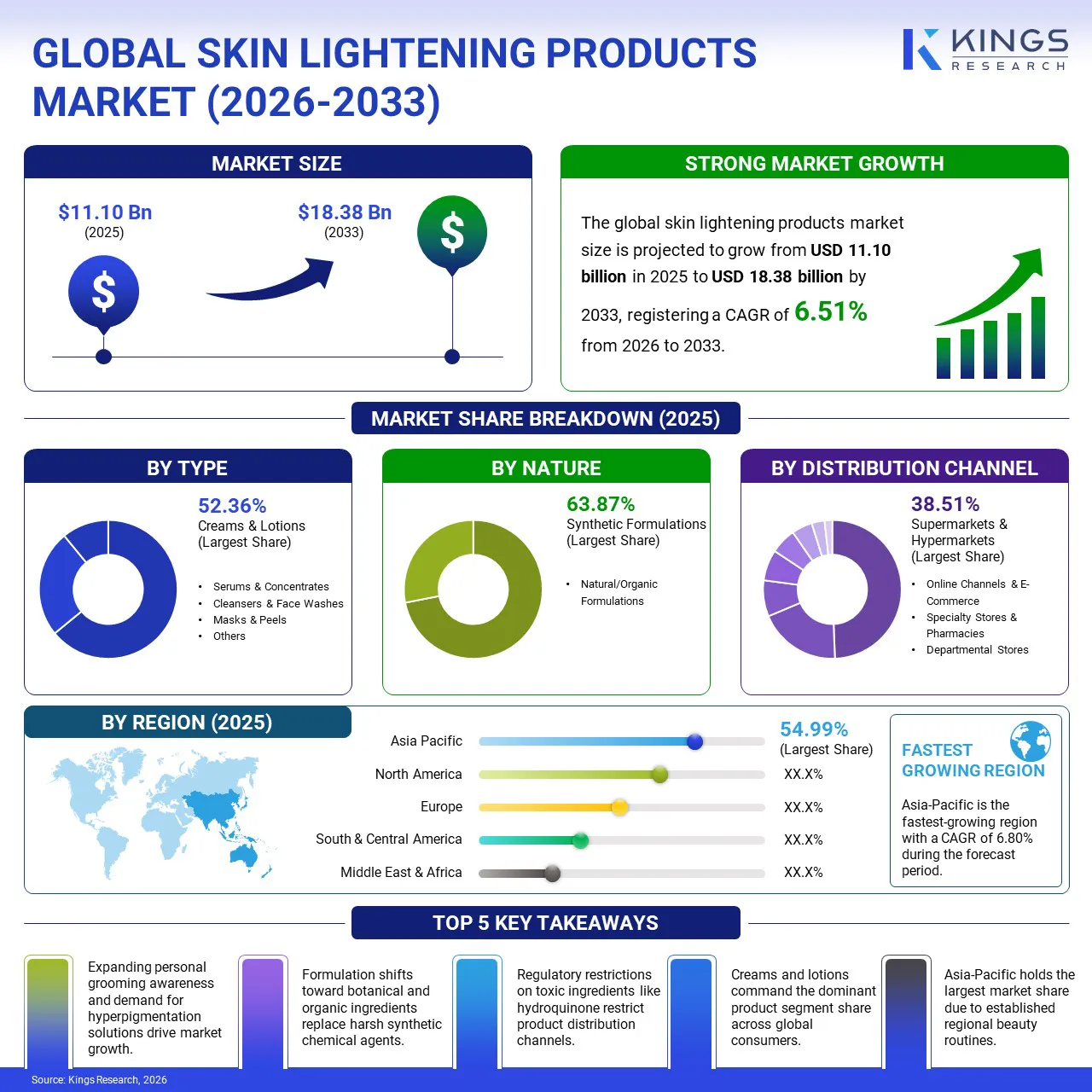
According to Kings Research, the global skin lightening products market size was valued at USD 11.10 billion in 2025 and is projected to reach USD 18.38 billion by 2033, exhibiting a CAGR of 6.51% during the forecast period (2026-2033).
The market serves diverse consumer segments across different regions, skin types, and age groups. The report explores key drivers of market development, offering detailed regional analysis and a comprehensive overview of the competitive landscape shaping future opportunities.
The market is expanding steadily, driven by the increasing global demand for skincare solutions addressing hyperpigmentation, melasma, and post-inflammatory dark spots. Product innovations in natural and botanical formulations, expanding e-commerce distribution channels, and rising personal care awareness among diverse consumer demographics further propel growth.
Key players in the market are L'Oréal Paris, Procter & Gamble, Unilever, Shiseido Co., Ltd., Kao Corporation, Natura & Co., Emami Ltd., Himalaya Wellness Company, VLCC Limited, Lotus Herbals Pvt. Key players in the market include Limited, IN'OYA, Galderma, Clarins, Oriflame Cosmetics AG, and OLIVA CLINIC.
According to dermatological research, consumer preference for multi-functional skincare products that combine brightening benefits with UV protection and anti-aging properties continues to accelerate product adoption across international markets.
For instance, in July 2025, Rohto Pharmaceutical announced a renewed formulation of its MELANO CC lotion, scheduled for launch in Japan in August 2025. The reformulated product uses vitamin C derivatives to address brightness, transparency, and skin smoothness while reflecting consumers’ evolving expectations for multifunctional whitening care. Rohto noted that consumers increasingly seek products that combine visible effectiveness with convenient daily skincare and protection against environmental factors such as UV radiation and air pollution.
The global skin lightening products market is experiencing steady growth, driven by increasing consumer awareness regarding skin health and dermatological conditions such as melasma, sunspots, and post-acne hyperpigmentation. Rising disposable incomes and expanding beauty retail infrastructure across urban centers encourage higher spending on specialized personal care routines.
Additionally, beauty brands are focusing on catering to health-conscious consumers by formulating products enriched with antioxidants, vitamin C, niacinamide, and gentle plant extracts. Multi-functional brightening products that combine skin-tone evening properties with broad-spectrum SPF protection and hydration offer added value, reinforcing daily consumer usage and expanding the overall addressable consumer base.
For instance, in July 2026, L’Oréal Paris launched Revitalift Melasyl Dark Spot Creamy-Serum, featuring the company’s patented Melasyl ingredient developed through nearly two decades of research to address excess pigmentation and uneven skin tone. The formulation combines Melasyl with vitamin C and niacinamide to target dark spots while improving radiance, skin texture, and signs of aging, with a serum-cream format providing additional hydration. The launch highlights continued innovation in multifunctional brightening products that combine pigmentation correction with broader skincare benefits.
A primary restraint facing the market involves stringent regulatory oversight and health safety concerns surrounding harmful synthetic ingredients, such as hydroquinone, mercury, and topical corticosteroids. Regulatory bodies, including the US FDA and the European Commission, enforce strict concentration limits or total sales bans on specific chemical lighteners due to risks of skin thinning, irritation, and long-term toxicity.
Furthermore, rising consumer skepticism toward aggressive skin-bleaching claims and increasing social advocacy for natural skin inclusivity compel manufacturers to reformulate product lines. High compliance costs for clinical safety testing and clinical trial validations also create operational hurdles for smaller cosmetics producers.
The market is undergoing a significant transformation driven by clean-label natural formulations, eco-friendly packaging, and digital beauty technology. Consumers are increasingly shifting toward natural and organic skin-lightening products containing arbutin, kojic acid, licorice root, and AHA/BHA acids, which offer gentle evening tones without harsh chemical side effects.
Simultaneously, the integration of AI-driven skin diagnostic tools and personalized skincare algorithms on e-commerce platforms allows consumers to analyze hyperpigmentation levels and receive custom product recommendations. Direct-to-consumer (DTC) channels and social commerce continue to gain traction, enabling niche clean-beauty brands to reach global audiences efficiently.
|
Segmentation |
Details |
|
By Type |
Creams & Lotions, Serums & Concentrates, Cleansers & Face Washes, Masks & Peels, and Others |
|
By Nature |
Synthetic Formulations and Natural/Organic Formulations |
|
By Distribution Channel |
Supermarkets & Hypermarkets, Online Channels & E-Commerce, Specialty Stores & Pharmacies, and Departmental Stores |
|
By Region |
North America: U.S., Canada, Mexico |
|
Europe: France, UK, Spain, Germany, Italy, Russia, and the rest of Europe |
|
|
Asia-Pacific: China, Japan, India, Australia, ASEAN, South Korea, Rest of Asia-Pacific |
|
|
Middle East & Africa: Turkey, U.A.E., Saudi Arabia, South Africa, Rest of Middle East & Africa |
|
|
South and Central America: Brazil, Argentina, and the rest of South and Central America |
Based on type, the market is classified into creams & lotions, serums & concentrates, cleansers & face washes, masks & peels, and others. The creams & lotions segment dominated the market with a market share of 52.36% in 2025, supported by its ease of daily application, deep moisturizing benefits, and widespread consumer familiarity with day lotions and night creams that contain active brightening ingredients.
Based on nature, the market is classified into synthetic formulations and natural/organic formulations. The synthetic formulations segment held the largest market share of 63.87% in 2025, supported by its cost-effectiveness, longer shelf life, and faster visible results. However, the natural segment is expected to register the fastest growth, driven by increasing consumer preference for chemical-free and non-toxic ingredients.
Based on distribution channel, the market is classified into supermarkets & hypermarkets, online channels & e-commerce, specialty stores & pharmacies, and departmental stores. The supermarkets & hypermarkets segment dominated the market with a market share of 38.51%, supported by high product visibility, immediate availability, and one-stop shopping convenience. Meanwhile, online retailers are expected to witness the fastest growth, driven by expanding e-commerce infrastructure, digital marketing, and subscription-based delivery options.
Based on region, the market has been classified into North America, Europe, Asia Pacific, the Middle East & Africa, and South and Central America.
The Asia Pacific skin lightening products market accounted for a substantial share of 54.99% in 2025. The enduring preference for fairer skin in countries such as India, China, South Korea, and Indonesia has significantly fueled demand for skin-lightening products across urban and rural areas.
In these markets, consumers often associate fair skin with higher social status and beauty ideals. Additionally, the influence of K-beauty trends and the rapid growth of domestic and international skincare brands have expanded consumer access to a wide range of affordable and premium offerings.
The growing presence of beauty-focused retail chains and digital commerce platforms further supports regional market growth, particularly among younger consumers seeking personalized skincare solutions.
The North American skin lightening product industry is expected to have considerable CAGR over the forecast period. This growth stems from increased demand for treatments that address hyperpigmentation, uneven skin tone, and anti-aging benefits rather than solely complexion lightening.
The increasing prevalence of skin discoloration conditions among multi-ethnic populations in the U.S. and Canada has spurred demand for targeted dermatological solutions. Additionally, the region’s high consumer awareness of skincare ingredients, such as niacinamide and kojic acid, has led to a surge in demand for advanced, science-backed formulations.
The dominance of premium skincare brands, along with the growing influence of dermatologist-endorsed product lines and influencer-led marketing, has positioned North America as a major market for skin-lightening products.
According to Kings Research, Europe represents a prominent regional market, supported by strict cosmetics safety regulations from the European Union, growing demand for organic brightening serums, and strong consumer focus on anti-aging and anti-pigmentation skincare in Germany, France, and the UK.
The Middle East & Africa region is witnessing steady market growth, supported by high consumer spending on premium cosmetics in GCC economies, expanding specialty beauty retail networks, and high demand for sun-damage protection formulations.
South and Central America is experiencing gradual market expansion, led by Brazil and Mexico, propelled by expanding urban consumer bases, growing interest in personal grooming, and increasing adoption of affordable daily facial creams.
The skin lightening products industry is characterized by key players focusing on innovation and growth. Companies prioritize developing advanced, safe formulations tailored to various skin types and concerns.
To expand market reach, they utilize digital marketing, including social media influencers and targeted campaigns. Expanding distribution through partnerships with online retailers and physical stores is a common strategy to improve accessibility.
Many players offer higher-quality products that combine skin lightening with additional skincare benefits. Sustainability efforts, including the use of natural ingredients and eco-friendly packaging, are increasingly integrated to meet consumer demand for environmentally responsible options. These strategies help companies differentiate themselves and capture diverse consumer segments globally.
How We Gather This Information
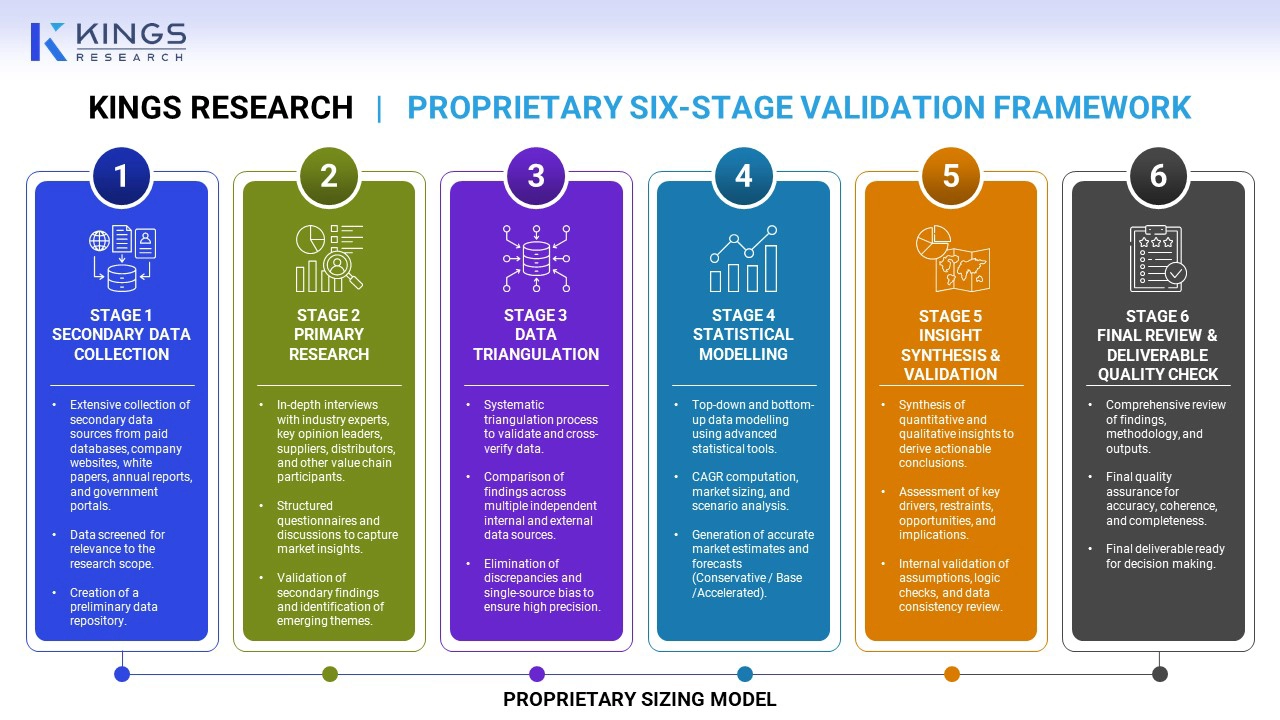
Our methodology triangulates insights from multiple independent and publicly available research databases and is further validated against regulatory filings and public company disclosures. All estimates are cross-verified; no single-source data is presented without validation.
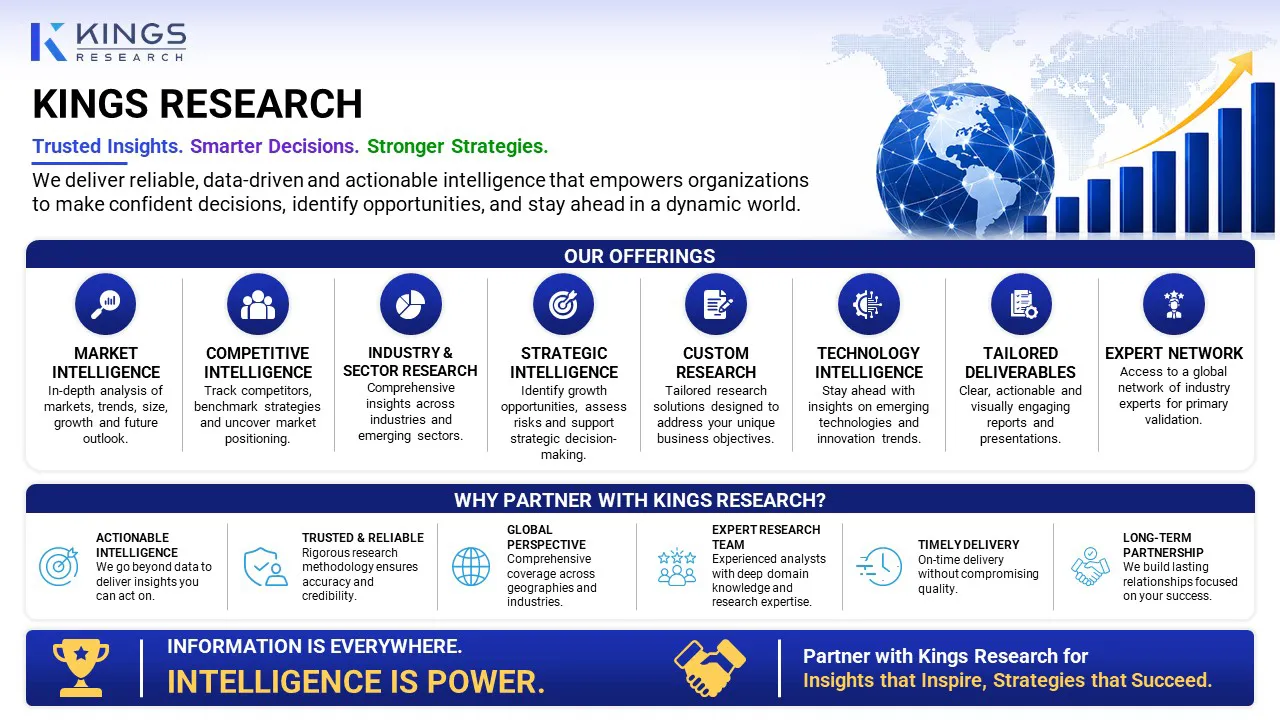
Our custom offerings deliver tailored, data-driven intelligence and strategic guidance to help organizations identify, evaluate, and capitalize on key market opportunities.
Frequently Asked Questions

Antriksh is an experienced analyst specializing in cross-domain research across diverse industries. With a strong foundation in data analysis and statistical interpretation, he delivers insightful market reports that guide strategic decision-making. Antriksh excels in conducting primary research, with a focus on identifying trends and understanding consumer behavior. Thriving in dynamic and high-pressure environments, he combines analytical expertise with a commitment to delivering impactful outcomes. Beyond his professional pursuits, Antriksh's passion for travel fuels his curiosity and broadens his perspectives, enriching his ability to uncover unique insights that enhance his research capabilities. He is equally adept at synthesizing quantitative findings with qualitative context, which allows him to present holistic viewpoints to clients. His disciplined work ethic and intellectual agility make him a trusted partner in navigating market uncertainties. He consistently seeks out new methodologies to refine his analytical toolkit, and his ability to communicate complex insights clearly ensures stakeholders act confidently on his recommendations.
Habi is a seasoned research and consulting leader with renowned experience in guiding clients on strategic growth and transformation initiatives across global markets. He has led high-performing research teams that deliver actionable insights on market expansion, M&A strategies, opportunity assessment, new business development, and product launches. His project portfolio spans large petrochemical producers, electronic device manufacturers, lubricants companies, and other leading enterprises across diverse industrial and consumer sectors. He currently heads the research department at Kings Research, where he is responsible for setting the research agenda, mentoring analysts, and ensuring client-ready deliverables that support executive decision-making. With extensive experience in market intelligence, strategic research, and consulting, Habi brings a strong understanding of evolving industry dynamics, competitive landscapes, emerging opportunities, and business growth challenges. His expertise includes developing research frameworks, translating complex market data into actionable strategic recommendations, and working closely with senior stakeholders to address critical business questions. He has also contributed to building research capabilities, strengthening analytical methodologies, and driving a culture of quality and insight-led decision-making within research teams. His cross-industry exposure enables him to connect market trends with broader business implications and provide perspectives that help organizations identify opportunities, mitigate risks, and make informed strategic decisions.



.webp&w=128&q=75&dpl=dpl_DPva2LrvfsBdTJm1XZj67UTrvMHL)
