
Inquire Now
Key Strategic Points
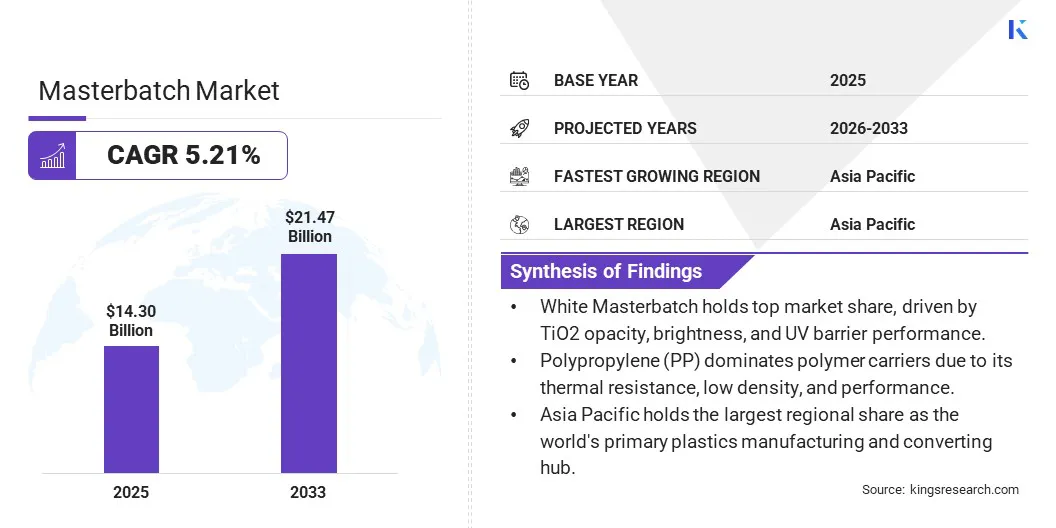
According to Kings Research, the global masterbatch market size was recorded at USD 14.30 billion in 2025 and is projected to reach USD 21.47 billion by 2033, growing at a CAGR of 5.21% from 2026 to 2033. In the scope of work, the report includes solutions offered by companies such as Americhem, Ampacet Corporation, Avient Corporation, Cabot Corporation, Hubron International, LyondellBasell Industries Holdings B.V., Penn Color Inc., Plastiblends, Plastika Kritis S.A., Tosaf Group Ltd., and others.
The growth of the masterbatch market is driven by rising demand for plastic products across industries such as packaging, automotive, and consumer goods. Rapid urbanization and industrialization in emerging economies contribute to higher consumption of plastics, thereby boosting masterbatch demand.
Additionally, the growing focus on sustainability and demand for recyclable and eco-friendly plastic products are also fueling the market growth. Moreover, technological advancements in the production of masterbatch that enhance product performance and offer customization are key factors driving the growth of the market.
The masterbatch market is projected to witness robust growth due to increasing demand for high-performance plastics in diverse end-use industries such as packaging, requiring lightweight and durable plastics; automotive, requiring plastics with specific mechanical properties; and construction, requiring weather-resistant plastics.
Innovations in masterbatch formulations are leading to products with improved functionalities, including UV resistance, antimicrobial properties, and better mechanical strength. Additionally, the growing shift toward sustainable and biodegradable masterbatch solutions is gaining significant traction, aligning with global environmental goals and regulations.
Masterbatch refers to a concentrated mixture of additives and pigments encapsulated during a heat process into a carrier resin, which is then cooled and cut into granules. This product is used to impart color and enhance the properties of plastic products. Masterbatches offer several advantages over raw additives, such as ease of handling, enhanced dispersion of pigments/additives, and improved product consistency.
They are utilized in various manufacturing processes, including injection molding, blow molding, and extrusion. They play a crucial role in the plastic industry by ensuring uniformity and quality in the final products.
The increasing demand for lightweight and durable materials in the automotive industry is contributing to the progress of the masterbatch market. Automakers are increasingly adopting high-performance plastic components to reduce vehicle weight, improve fuel efficiency, and lower emissions compared with conventional metal parts.
Masterbatch additives enhance the properties of these plastics, making them highly suitable for various automotive applications. This is particularly prominent in electric vehicles, where weight reduction is critical. The versatility and cost-effectiveness of masterbatch solutions render them an attractive option for manufacturers aiming to meet stringent environmental regulations and consumer expectations.
The environmental impact of plastic waste poses a key challenge to market development. The growing concern over plastic pollution and stringent regulations are placing pressure on manufacturers to adopt more sustainable practices. To overcome this challenge, industry players are increasingly prioritizing the development and use of biodegradable and recyclable masterbatch solutions.
Investment in research and development to create eco-friendly additives without compromising performance is essential. Additionally, the promotion of the use of recycled plastics and the implementation of efficient recycling systems help mitigate the environmental impact and align with global sustainability goals.
The increasing adoption of sustainable and eco-friendly solutions is a major trend shaping the market landscape. This trend has prompted manufacturers to develop biodegradable masterbatches and solutions that are compatible with recycled plastics to address rising environmental concerns. This shift is further propelled by stringent regulations aimed at reducing plastic waste, along with rising consumer inclination toward greener products.
Companies are investing heavily in research to create high-performance, sustainable additives that maintain the quality and functionality of conventional plastics. This helps align the plastic industry with global sustainability initiatives, thus promoting a circular economy and reducing the environmental footprint of plastic products.
The growing use of advanced technologies in masterbatch production is resulting in innovations such as the integration of nanotechnology and the development of smart additives to enhance the functionality of masterbatches. This leads to improved properties such as increased strength, UV resistance, and antimicrobial effects.
These advanced masterbatches are gaining significant traction in high-demand sectors such as healthcare, automotive, and packaging. The integration of such technologies is enabling manufacturers to meet specific industry requirements and offer tailored solutions, thereby expanding the applications of masterbatches and stimulating market growth.
|
Segmentation |
Details |
|
By Type |
White, Black, Color, Additive and Filler |
|
By Polymer |
Polypropylene (PP), Polyethylene (PE), Polyvinyl Chloride (PVC), Polyethylene Terephthalate (PET) and Others |
|
By Application |
Packaging, Building & Construction, Consumer Goods, Automotive & Transportation, Agriculture and Others |
|
By Region |
North America: U.S., Canada, Mexico |
|
Europe: France, UK, Spain, Germany, Italy, Russia, Rest of Europe |
|
|
Asia-Pacific: China, Japan, India, Australia, ASEAN, South Korea, Rest of Asia-Pacific |
|
|
Middle East & Africa: Turkey, UAE, Saudi Arabia, South Africa, Rest of Middle East & Africa |
|
|
South & Central America: Brazil, Argentina, Rest of South and Central America |
How is the rising demand for white masterbatch in packaging driving growth in the market?
Based on type, the market is categorized into white, black, color, additive, and filler. According to Kings Research, the white masterbatch segment led the market in 2025. White masterbatch maintains strong market demand due to its extensive use in packaging films, food and beverage packaging, injection molding, pipes, and other plastic applications. Its ability to provide high opacity, brightness, and consistent whiteness, primarily through titanium dioxide (TiO₂), makes it a widely adopted masterbatch type.
Additionally, advancements in types such as color masterbatch formulations are enabling greater customization and improved performance, appealing to manufacturers in the consumer goods and automotive industries. This trend is further supported by the increasing use of plastics as alternatives to traditional materials, driving demand for high-quality color masterbatches.
How is rising polypropylene (PP) adoption in automotive and lightweight packaging driving polymer segment growth?
Based on polymer, the market is segmented into polypropylene (PP), polyethylene (PE), polyvinyl chloride (PVC), polyethylene terephthalate (PET), and other carrier polymers. The polypropylene (PP) segment secured the largest market share in 2025. This notable growth is primarily fueled by its widespread use across various applications, such as packaging and automotive components, due to its versatility, cost-effectiveness, and excellent mechanical properties.
Masterbatches offer high chemical resistance and can be easily processed into various forms, contributing significantly to segmental growth. The growing demand for lightweight and durable materials in the automotive and packaging industries is further driving the use of polypropylene, as manufacturers increasingly seek efficient and reliable materials for diverse applications.
Based on application, the market is classified into packaging, building & construction, consumer goods, automotive & transportation, agriculture, and other end-uses. The packaging segment is poised to witness significant growth through the forecast period (2026-2033). The expanding use of plastic packaging across food, beverages, personal care, and consumer products supports this growth. The European Commission’s Joint Research Centre reported that plastic packaging placed on the market in 19 EU Member States reached 5.9 million tonnes in 2025, with plastic being the only packaging material category to increase between 2011 and 2025. This growing packaging demand supports the adoption of masterbatches for coloration, protection, and functional enhancement.
By region, the global masterbatch market is classified into North America, Europe, Asia-Pacific, MEA, and South & Central America.
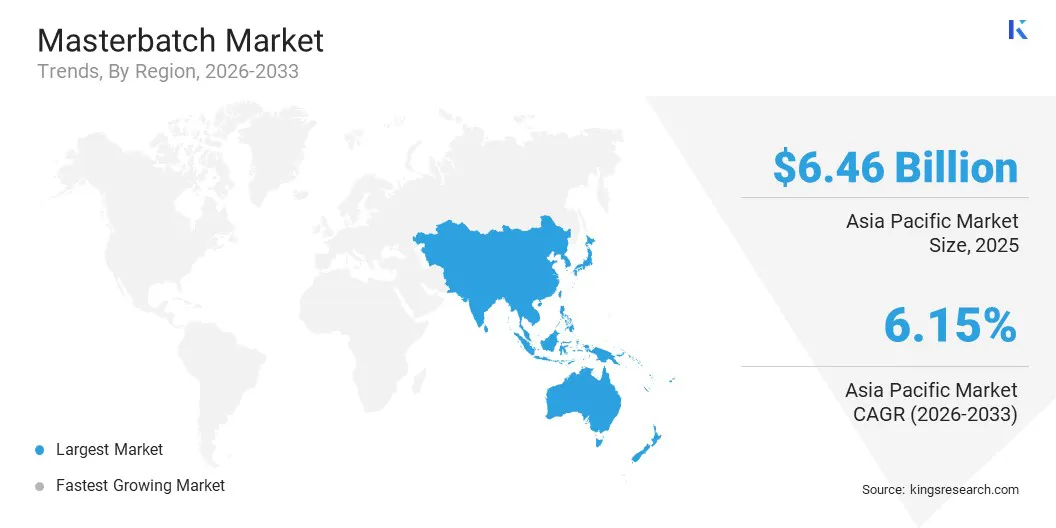
According to Kings Research, the Asia-Pacific region is leading the global masterbatch market in 2025, mainly propelled by its robust industrial growth and high plastic consumption. Rapid urbanization and industrialization in major countries such as China and India are leading to increased demand for plastics across diverse sectors such as packaging, automotive, and construction.
Additionally, the region’s strong manufacturing base and increasing investments in advanced production technologies are enhancing the quality and performance of masterbatch products. The growing focus on sustainable and recyclable plastics further supports the dominance of Asia-Pacific in the global masterbatch market.
Asia-Pacific is set to observe significant growth in the masterbatch market over the forecast period. The region’s expanding plastics, packaging, automotive, and consumer goods industries support this remarkable growth. SCG Chemicals highlights packaging and automotive as key high-growth industries in ASEAN and identifies Asia-Pacific as a major growth center for plastics and polymer solutions.
North America’s established plastics-processing industry and strong demand from packaging, automotive, consumer goods, and other applications support its masterbatch market. LyondellBasell, a major polymer and masterbatch manufacturer, identifies masterbatches as key solutions for packaging, transportation, consumer goods, healthcare, and other applications, while its North American polymer portfolio serves automotive, packaging, and industrial markets.
The global masterbatch market study will provide valuable insights, with an emphasis on the fragmented nature of the industry. Prominent players are focusing on several key business strategies such as partnerships, mergers and acquisitions, product innovations, and joint ventures to expand their product portfolio and increase their market shares across different regions.
Manufacturers are adopting a range of strategic initiatives, including investments in R&D activities, the establishment of new manufacturing facilities, and supply chain optimization, to strengthen their market standing.
How We Gather This Information
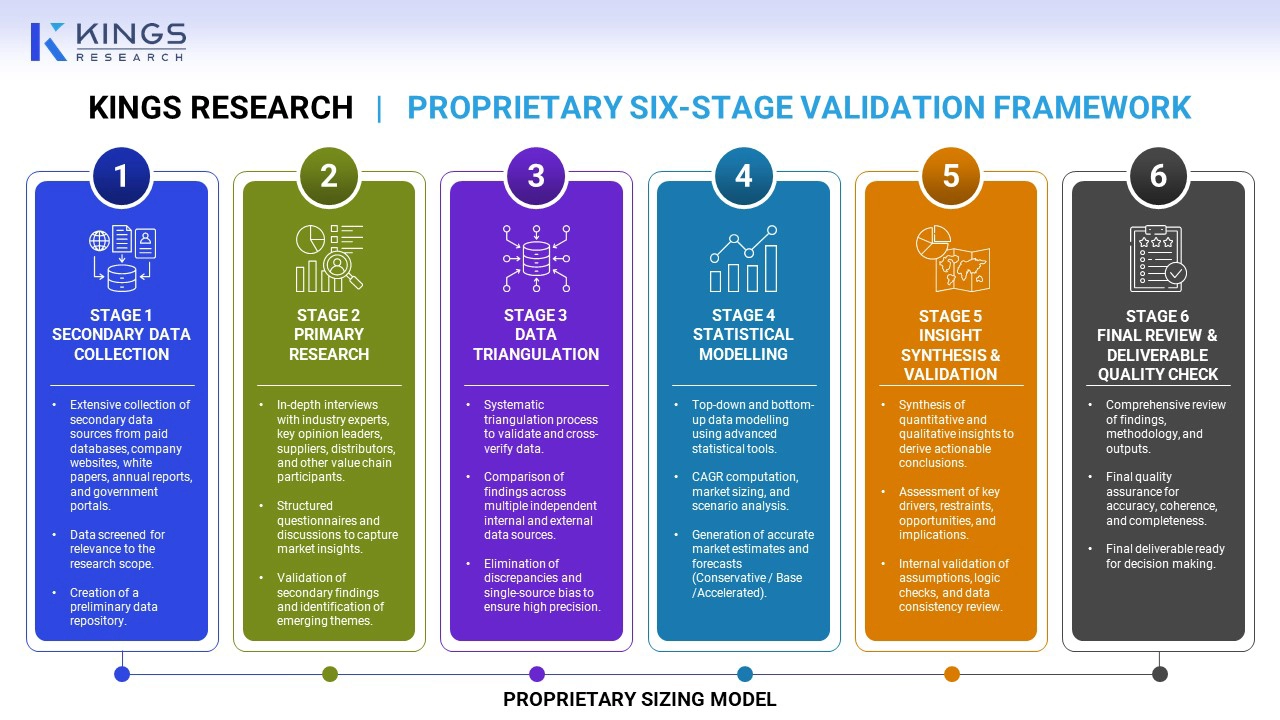
Our methodology triangulates insights from multiple independent and publicly available research databases and is further validated against regulatory filings and public company disclosures. All estimates are cross-verified; no single-source data is presented without validation.
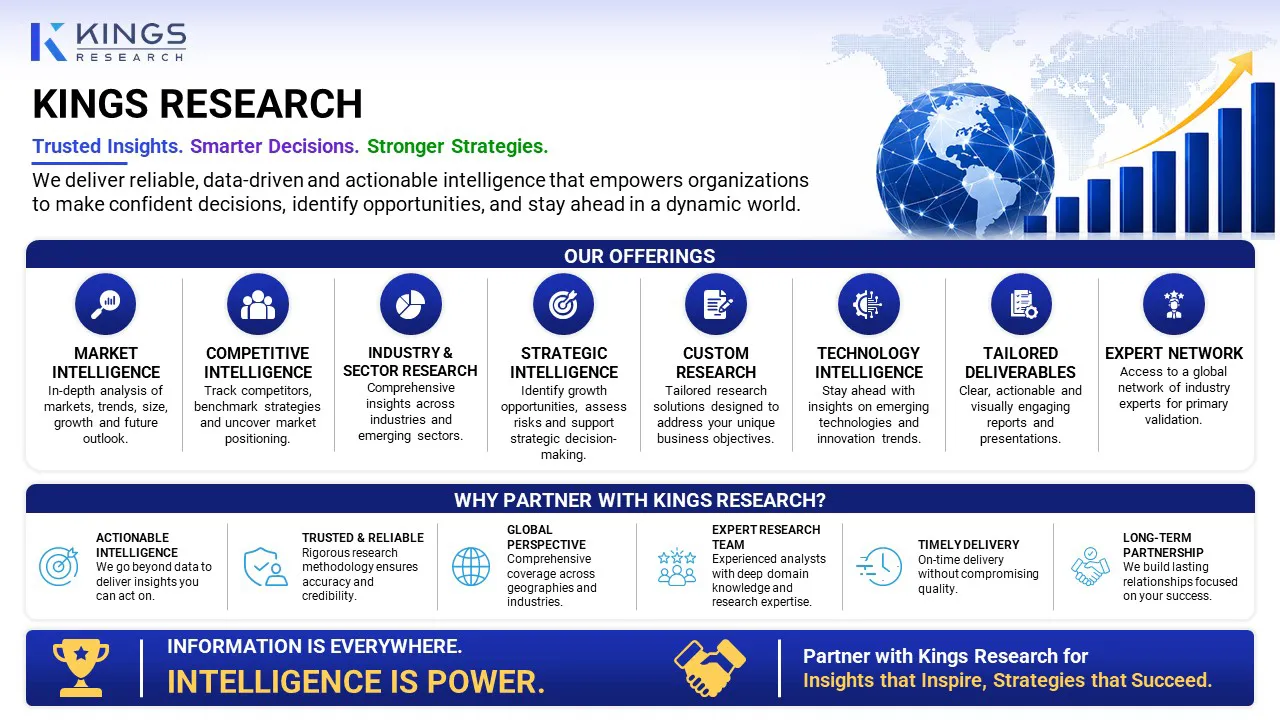
Our custom offerings deliver tailored, data-driven intelligence and strategic guidance to help organizations identify, evaluate, and capitalize on key market opportunities.
Frequently Asked Questions

Ashim Lakhera is a market intelligence professional specializing in the Agriculture and Food & Beverage industry. His work focuses on emerging markets, competitive dynamics, industry trends, and the factors driving market growth and transformation. He has experience in market sizing, forecasting, strategic analysis, and industry research across food, FMCG, and life sciences. His research interests span the broader food and agriculture value chain, with a particular focus on how innovation, changing consumer behavior, sustainability priorities, and evolving production systems are influencing markets. He examines these developments to understand their impact on demand, competition, business models, and growth opportunities across the agri-food ecosystem. His work combines quantitative market analysis with an understanding of the broader industry forces shaping food and agriculture markets. He is particularly interested in the structural changes taking place across global food systems and how businesses are adapting to evolving consumer expectations, technological developments, and sustainability requirements.
Habi is a seasoned research and consulting leader with renowned experience in guiding clients on strategic growth and transformation initiatives across global markets. He has led high-performing research teams that deliver actionable insights on market expansion, M&A strategies, opportunity assessment, new business development, and product launches. His project portfolio spans large petrochemical producers, electronic device manufacturers, lubricants companies, and other leading enterprises across diverse industrial and consumer sectors. He currently heads the research department at Kings Research, where he is responsible for setting the research agenda, mentoring analysts, and ensuring client-ready deliverables that support executive decision-making. With extensive experience in market intelligence, strategic research, and consulting, Habi brings a strong understanding of evolving industry dynamics, competitive landscapes, emerging opportunities, and business growth challenges. His expertise includes developing research frameworks, translating complex market data into actionable strategic recommendations, and working closely with senior stakeholders to address critical business questions. He has also contributed to building research capabilities, strengthening analytical methodologies, and driving a culture of quality and insight-led decision-making within research teams. His cross-industry exposure enables him to connect market trends with broader business implications and provide perspectives that help organizations identify opportunities, mitigate risks, and make informed strategic decisions.