
Inquire Now
Key Strategic Points
According to Kings Research, the global co-packaged optics market size was valued at USD 107.5 million in 2025 and is forecasted to reach USD 786.2 million by 2033, exhibiting a CAGR of 28.01% during the forecast period (2026-2033).
The market is growing with the rising deployment of Artificial Intelligence (AI), driving the demand for high-speed, energy-efficient data transmission. Additionally, advancements in integration, thermal management, and packaging are enabling compact, scalable designs for next-generation data centers and cloud infrastructure.
Major companies operating in the co-packaged optics market include Ranvous Inc., Quanta Computer Inc., Broadcom, Marvell, Molex, LLC, Furukawa Electric Co., Ltd., Lumentum Operations LLC, SENKO, Cisco Systems, Inc., NVIDIA Corporation, IBM, Huawei Technologies Co., Ltd., POET Technologies Inc., Coherent Corp., and Ciena Corporation.
Kings Research estimates that growing demand for high-bandwidth data transmission in data centers to support increasingly data-intensive workloads is driving the market. According to industry analysts, electrical interconnects struggle to meet performance requirements at scale due to signal degradation and power inefficiencies.
This demand for higher-speed, energy-efficient connectivity is driving the development of co-packaged optics in modern high-performance computing and data center environments, with companies like Broadcom and Marvell advancing their own CPO product lines and XPU architectures alongside POET Technologies, showing industry-wide traction beyond a single vendor.
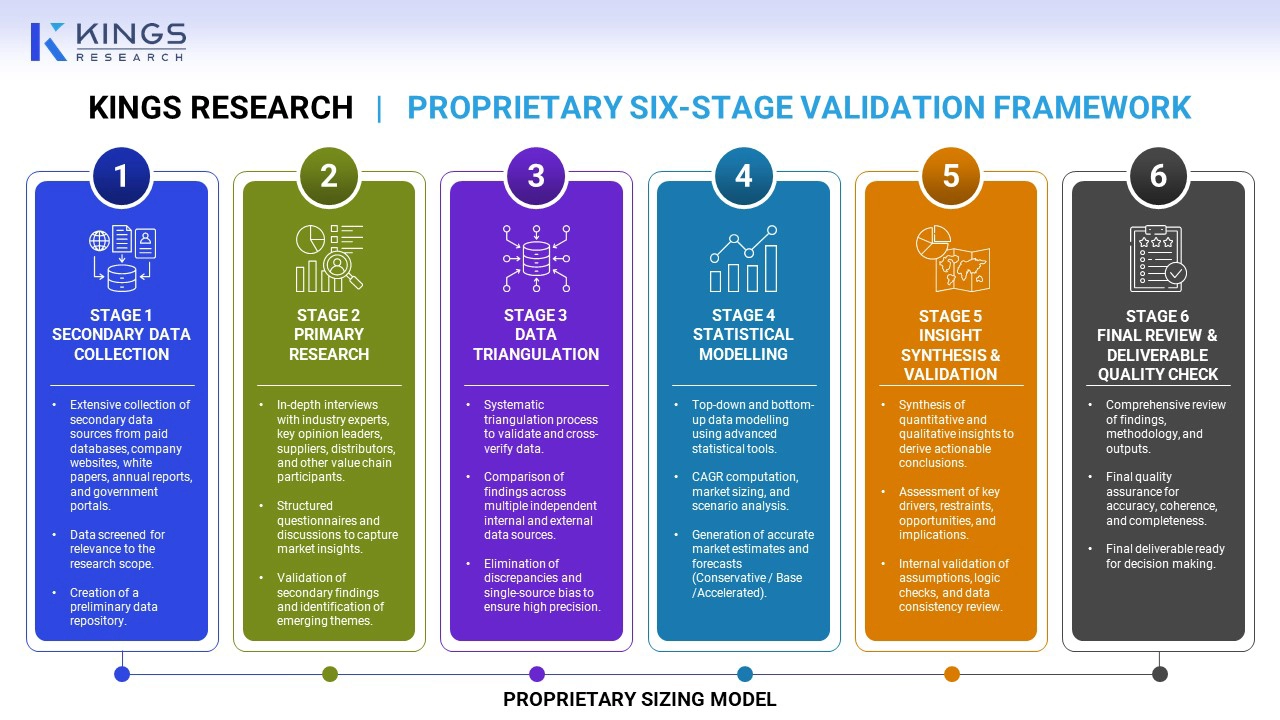
These estimates come from Kings Research’s proprietary research methodology, which combines primary interviews with industry participants, secondary research from published market reports and regulatory filings, and validation against public company disclosures.
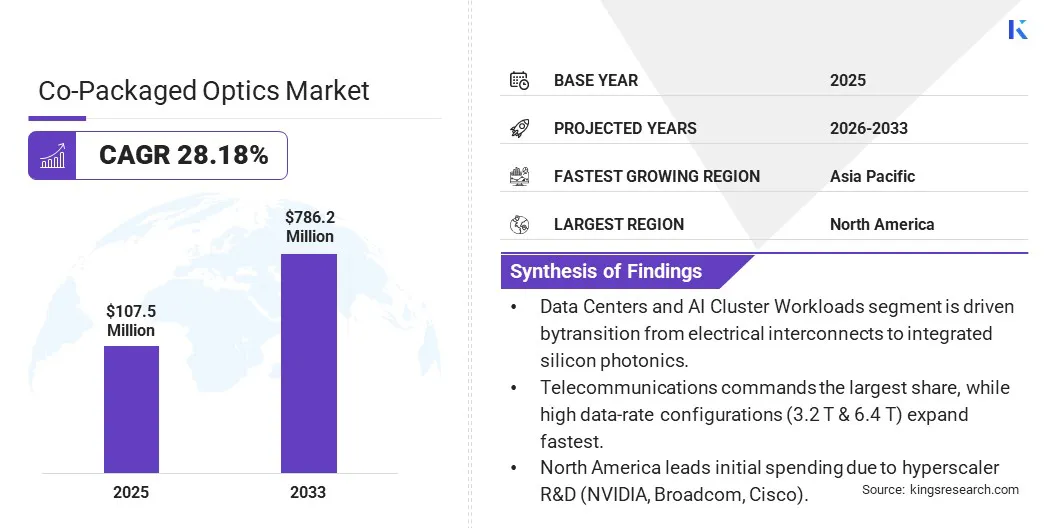
The rising deployment of AI drives the co-packaged optics market, as it demands high-speed, energy-efficient data transmission across massive GPU clusters. Increasing AI workloads require scalable networking solutions that can support rapid data movement with minimal latency.
This growing reliance on AI infrastructure is accelerating the adoption of advanced optical interconnects in data centers and high-performance computing environments, leadingscalers and networking vendors to prioritize CPO in their next-generation infrastructure roadmaps.
The co-packaged optics market faces a significant challenge in the form of increasing fiber count per switch, which complicates system design and integration. The number of required fiber connections rises sharply as data center switches scale to higher bandwidths, creating space, routing, and management issues within the switch package. This complexity increases costs and limits the feasibility of compact, high-performance deployments.
Companies are developing advanced fiber management techniques, high-density optical connectors, and photonic integration solutions. Leading players like Intel, Broadcom, and Cisco are investing in modular CPO architectures and automated fiber alignment technologies to streamline integration and scalability.
The co-packaged optics market is registering a trend of advancement in co-packaged optics technology. This includes a shift to higher data rates, improved integration of optical and electronic components, and enhanced packaging efficiency. Innovations in thermal management, fiber routing, and assembly processes are enabling more compact and scalable designs.
These technological improvements are helping CPO be adopted in high-performance computing environments, showing a shift toward more efficient and future-ready network architectures in data center and cloud infrastructure applications.
|
Segmentation |
Details |
|
|
By Data Rate |
Less than 1.6 T, 1.6 T, 3.2 T, 6.4 T |
|
|
By Application |
Data Centers, Telecommunications, Others |
|
|
By Region |
North America |
U.S., Canada, Mexico |
|
Europe |
France, the UK, Spain, Germany, Italy, Russia, and the rest of Europe |
|
|
Asia-Pacific |
China, Japan, India, Australia, ASEAN, South Korea, Rest of Asia-Pacific |
|
|
Middle East and Africa |
Turkey, U.A.E., Saudi Arabia, South Africa, Rest of Middle East & Africa |
|
|
South & Central America |
Brazil, Argentina, and the rest of South & Central America |
|
The less than 1.6 T segment earned USD 25.4 million in 2025, due to its widespread adoption in legacy systems and cost-sensitive applications requiring moderate bandwidth and lower power consumption.
The telecommunications segment held 38.61% of the market in 2025, due to the increasing demand for high-speed, low-latency optical connectivity to support expanding network infrastructure and 5G deployment initiatives.
Companies operating in the co-packaged optics industry are actively pursuing strategic initiatives to strengthen their market position. Key players are engaging in mergers and acquisitions to expand technological capabilities and accelerate product development. Additionally, firms are consistently introducing next-generation CPO solutions through targeted product launches. These actions show a very competitive environment, where organizations are aligning their resources and partnerships to take advantage of new opportunities and stay leaders in advanced optical interconnect technologies for data centers and high-performance computing.
Based on region, the market has been classified into North America, Europe, Asia-Pacific, the Middle East & Africa, and South & Central America.
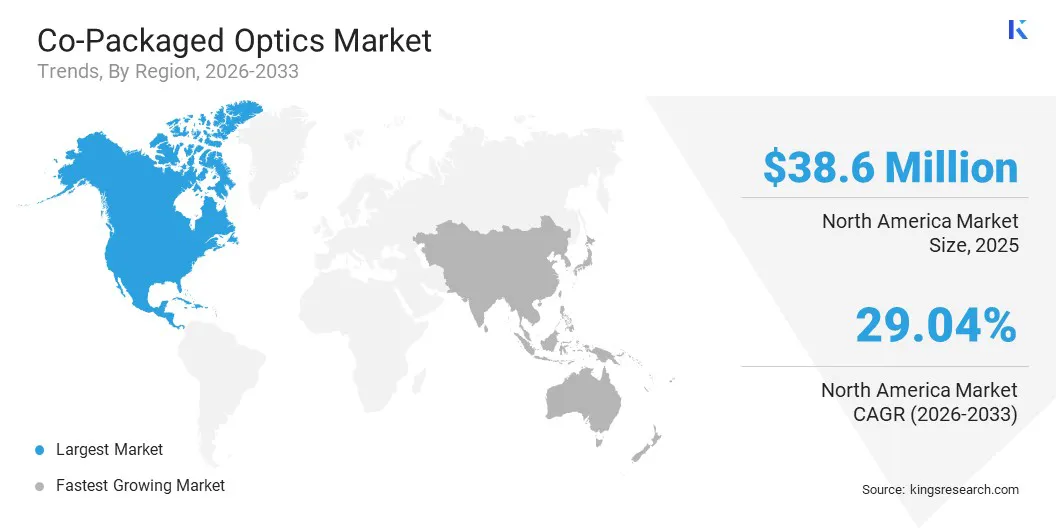
The North America co-packaged optics market share was around 35.95% in 2025, with a valuation of USD 30.4 million. The market is driven by the increasing need for high-performance photonics interconnects to support next-generation computing and data center infrastructure.
The demand for optical solutions that deliver higher bandwidth, lower latency, and greater energy efficiency is growing as data traffic continues to surge, especially in applications requiring massive parallel processing.
CPO enables these capabilities by integrating optical modules with switching silicon, which leads to faster, more reliable data transmission that meets the performance and scalability requirements of modern computing environments.
Asia-Pacific is poised to register the fastest growth rate, with a CAGR of 29.04% over the forecast period. The market growth is mainly due to the rapid expansion of hyperscale data centers in the region, as leading cloud service providers and telecom operators invest heavily in high-performance infrastructure to handle increasing data traffic from accelerating digital transformation. This surge in demand for scalable, energy-efficient, and high-bandwidth interconnect solutions is fostering the widespread adoption of CPO, thus positioning Asia-Pacific as a key contributor to the global optical communication ecosystem.
How We Gather This Information
Our methodology triangulates insights from multiple independent and publicly available research databases, which is further validated against regulatory filings and public company disclosures. All estimates are cross-verified; no single-source data is presented without validation. Data collection includes primary interviews with industry participants and secondary research from published market reports, regulatory filings, and proprietary databases, using a combined bottom-up and top-down approach and additional validation from subject matter experts before final quality review.
Our custom offerings deliver tailored, data-driven intelligence and strategic guidance to help organizations identify, evaluate, and capitalize on key market opportunities.
Frequently Asked Questions

Over the years, Versha brings over 15 years of experience managing consulting assignments across industries, including Food and Beverage, Consumer Goods, ICT, Aerospace, and more. Her work has spanned diverse sectors. Her cross-domain expertise and adaptability make her a versatile and dependable professional. She is known for her keen business insight and foresight. With sharp analytical skills and a curious mindset, Versha excels at transforming complex data into actionable insights. She has a proven track record of unraveling market dynamics, identifying trends, and delivering tailored solutions to meet client needs. As a skilled leader, Versha has successfully mentored research teams and directed projects with precision, ensuring high-quality outcomes. Her collaborative approach and strategic vision enable her to turn challenges into opportunities and consistently deliver impactful results. Whether analyzing markets, engaging stakeholders, or crafting strategies, Versha draws on her deep expertise and industry knowledge to drive innovation and deliver measurable value.
Habi is a seasoned research and consulting leader with renowned experience in guiding clients on strategic growth and transformation initiatives across global markets. He has led high-performing research teams that deliver actionable insights on market expansion, M&A strategies, opportunity assessment, new business development, and product launches. His project portfolio spans large petrochemical producers, electronic device manufacturers, lubricants companies, and other leading enterprises across diverse industrial and consumer sectors. He currently heads the research department at Kings Research, where he is responsible for setting the research agenda, mentoring analysts, and ensuring client-ready deliverables that support executive decision-making. With extensive experience in market intelligence, strategic research, and consulting, Habi brings a strong understanding of evolving industry dynamics, competitive landscapes, emerging opportunities, and business growth challenges. His expertise includes developing research frameworks, translating complex market data into actionable strategic recommendations, and working closely with senior stakeholders to address critical business questions. He has also contributed to building research capabilities, strengthening analytical methodologies, and driving a culture of quality and insight-led decision-making within research teams. His cross-industry exposure enables him to connect market trends with broader business implications and provide perspectives that help organizations identify opportunities, mitigate risks, and make informed strategic decisions.



.webp&w=128&q=75&dpl=dpl_9cT76VEyqA3GYX2gzuuRZBM2Vb4x)
