
Inquire Now
Key Strategic Points
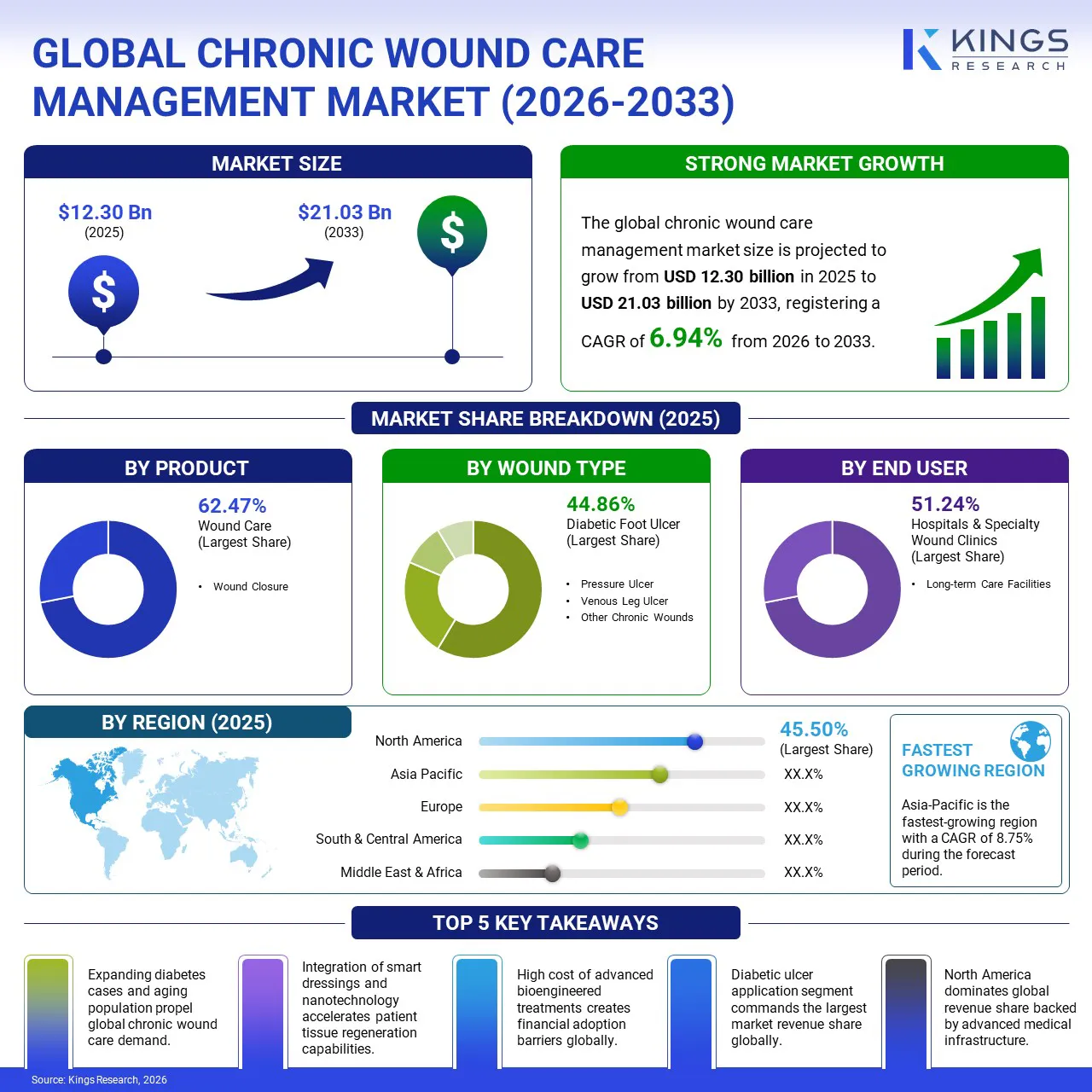
According to Kings Research, the global chronic wound care market size was valued at USD 12.30 billion in 2025 and is projected to reach USD 21.03 billion by 2033, growing at a CAGR of 6.94% from 2026 to 2033.
The global chronic wound care market is experiencing steady expansion, driven by the rising prevalence of diabetes, obesity, aging populations, and other chronic conditions. The rise in the aging population and a surge in the prevalence of diabetes and obesity further act as catalyzing factors, leading to the growth in demand for chronic care.
Market development is further fueled by rising adoption of advanced wound dressings, wound-care devices, regenerative therapies, and innovative wound closure solutions. Hospitals and specialty wound clinics remain important care settings where technological advancements, including artificial intelligence, remote monitoring, and regenerative medicine, are creating new opportunities despite cost and reimbursement challenges.
Diabetes significantly increases the risk of chronic foot ulcers, which pose serious complications and can lead to amputation. Regular foot care, proper nutrition, suitable footwear, and early treatment are essential for healing wounds and preventing recurrence.
According to the International Diabetes Federation, nearly 589 million adults in the age group (20-79 years) are suffering from it. The count of diabetes patients is predicted to rise from 643 million (11.3%) by 2030, to 783 million (12.2%) by 2045, and to 853 million by 2050, thus leading to approximately USD 1 trillion in health expenditure over the last 17 years. Since 15% - 25% of people with diabetes develop a foot ulcer during their lifetime, this expanding patient pool is a primary driver of demand for diabetic foot ulcer care across hospitals and wound care centers.
Advanced dressings, bioengineered skin substitutes, and Negative Pressure Wound Therapy (NPWT) systems carry a significant price premium over conventional wound care products, thus restricting adoption in cost-sensitive and lower-income healthcare systems.
Delay in wound care leads to serious complications, including infections, chronic pain, hospitalization, and even amputation. It further creates significant financial and social burdens for patients and caregivers. According to Essential Health Homecare, a community-based clinical and personal support services provider in the U.S., wound care costs are estimated at USD 28.1 billion – USD 95.6 billion annually, based on Medicare data, where delayed wound care increases costs through hospital stays, long-term care, specialized equipment, and lost productivity, thereby hampering widespread market growth avenues.
The chronic wound care industry is expected to see significant growth and innovation, driven by new therapies, technology, and increased research. Key opportunities include topical debridement agents, regenerative medicine, skin substitutes, stem-cell therapies, and bioengineered tissues. AI, patient-reported outcomes, remote monitoring, and digital tools can improve wound assessment, documentation, and personalized care.
Technologies aimed at accurate identification of chronic wounds across diverse skin tones and populations and the inclusion of research-backed products and clinical evidence for securing reimbursement and encouraging chronic wound care adoption is poised to create new growth opportunities for market development.
|
Segmentation |
Details |
|
|
By Product |
Wound Care (Dressings (Traditional Gauze & Tape Dressings (Dressings), Advanced Dressings), Wound-Care Devices (Negative Pressure Wound Therapy (NPWT), Oxygen & Hyperbaric Systems, Electrical Stimulation Devices, Other Wound Care Devices), Topical Agents, Other Wound Care Products), Wound Closure (Sutures, Surgical Staplers, Tissue Adhesives, Strips, Sealants & Glues)
|
|
|
By Wound Type |
Diabetic Foot Ulcer, Pressure Ulcer, Venous Leg Ulcer, Other Chronic Wounds |
|
|
By End User |
Hospitals & Specialty Wound Clinics, Long-term Care Facilities |
|
|
By Region |
North America |
U.S., Canada, Mexico |
|
Europe |
France, the UK, Spain, Germany, Italy, Russia, and the rest of Europe |
|
|
Asia-Pacific |
China, Japan, India, Australia, ASEAN, South Korea, and the rest of Asia-Pacific |
|
|
Middle East and Africa |
Turkey, U.A.E., Saudi Arabia, South Africa, Rest of Middle East & Africa |
|
|
South and Central America |
Brazil, Argentina, and the rest of South and Central America |
|
Based on product, the chronic wound care market is classified into advanced wound dressings, wound care therapy devices, active/bioactive therapy, and others. Advanced wound dressings lead the market, supported by the growing availability of smart, sensor-enabled wound care technology and the expanding use of artificial intelligence in dressing selection and monitoring.
On the basis of type, the chronic wound care market is divided into diabetic foot ulcer, pressure ulcer, venous leg ulcer, and other chronic wounds. The diabetic ulcer is the most dominant segment with a market value of USD 4.33 billion in 2025. The high share is attributed to the increasing number of diabetic patients across the globe with related ulcers and the availability of technologically advanced wound care products.
Based on end-user, the market is categorized into hospitals & wound clinics and long-term care facilities. The hospitals & wound clinics segment captures the largest share of 51.24% in 2025. The high share is attributable to the availability of specialized wound care professionals, advanced diagnostic and treatment technologies, and comprehensive clinical facilities that support the management of complex chronic wounds.
Based on regional analysis, the global market is classified into North America, Europe, Asia Pacific, the Middle East and Africa, and Central and South America.
The North America chronic wound care market share stood around 45.5% in 2025 in the global market, with a valuation of USD 5.6 billion. The market is forecasted to register a steady growth rate over the forecast period. Rising diabetic population across the U.S. acts as a significant driver of increasing demand for the chronic wound care market across the region.
The Centers for Medicare & Medicaid Services (CMS) identifies chronic wounds, including diabetic foot ulcers, venous leg ulcers, and pressure injuries, as a major driver of Medicare spending in the market. This is enabling market players to develop novel chronic wound care solutions, aimed at capturing significant market share.
Europe represented a substantial share of the global market in 2025. The National Wound Care Strategy Programme in the UK, alongside similar national initiatives in Germany and France, is standardizing wound care pathways and encouraging use of compression therapy and advanced dressings to reduce avoidable amputations.
Asia-Pacific is projected to be the fastest-growing region through 2033. The World Health Organization's Western Pacific regional data on rising diabetes prevalence underscores the region's structural demand for diabetic foot ulcer care, while government investment in wound care infrastructure and telemedicine-based remote monitoring is helping to close access gaps in peripheral areas.
Growth across the Middle East & Africa and South and Central America is comparatively moderate, constrained by limited reimbursement infrastructure and lower per capita healthcare spending, but is supported by expanding hospital networks and rising government focus on chronic disease management.
The global chronic wound care market is highly fragmented, with major players focused on partnerships, mergers and acquisitions, product innovation, and joint ventures to expand their product portfolios and strengthen market share across regions. Investment activity spans R&D, new manufacturing capacity, and supply chain optimization.
How We Gather This Information
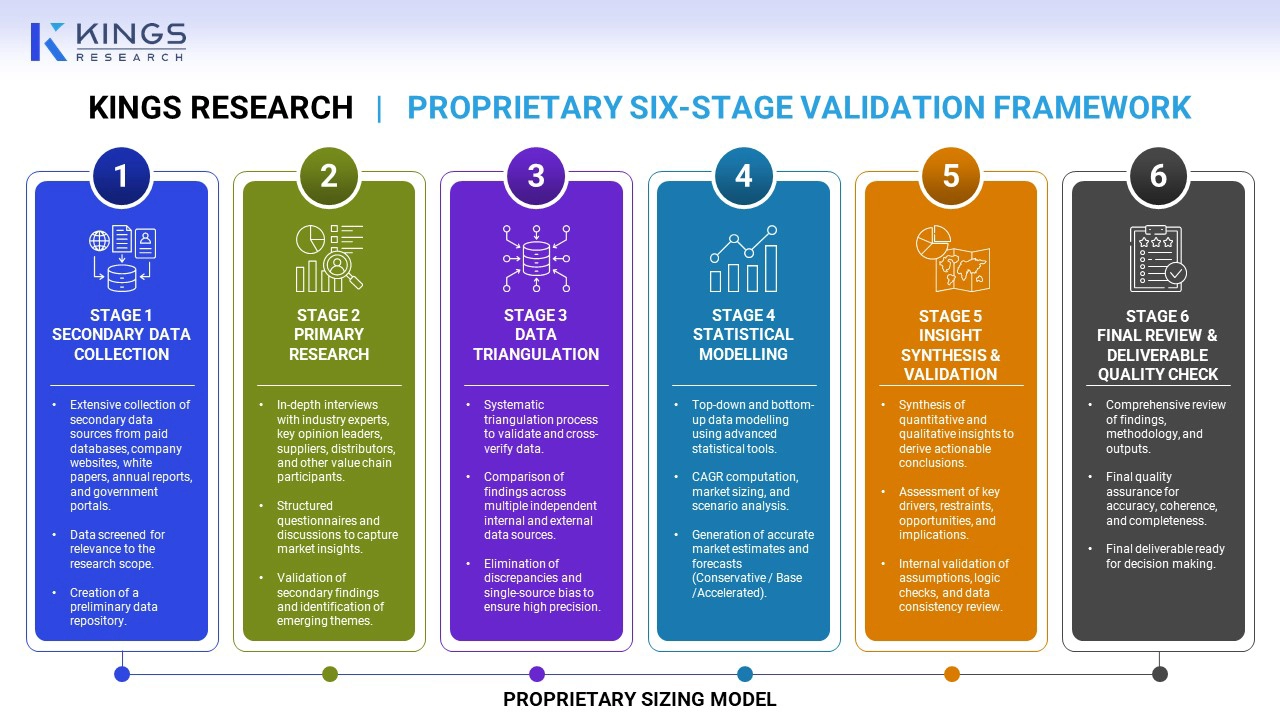
Our methodology triangulates insights from multiple independent and publicly available research databases, which is further validated against regulatory filings and public company disclosures. All estimates are cross-verified; no single-source data is presented without validation.
Our custom offerings deliver tailored, data-driven intelligence and strategic guidance to help organizations identify, evaluate, and capitalize on key market opportunities.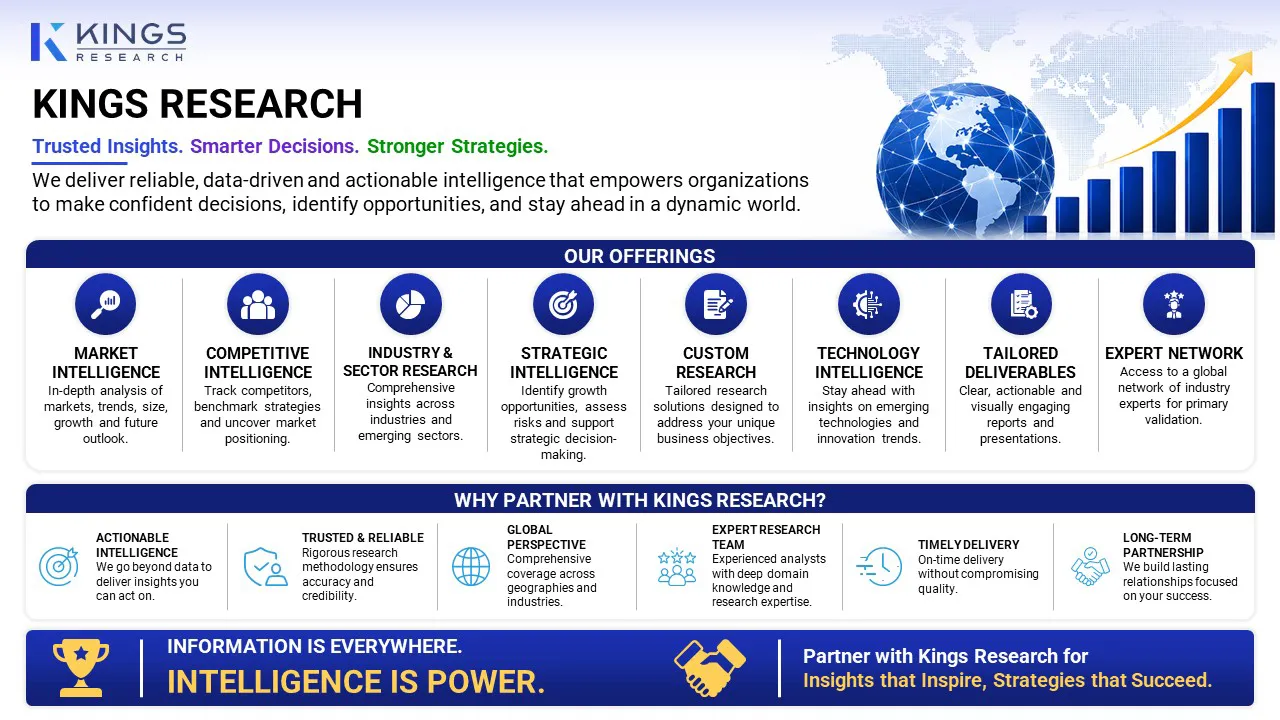
Frequently Asked Questions

Ashim Lakhera is a market intelligence professional specializing in the Agriculture and Food & Beverage industry. His work focuses on emerging markets, competitive dynamics, industry trends, and the factors driving market growth and transformation. He has experience in market sizing, forecasting, strategic analysis, and industry research across food, FMCG, and life sciences. His research interests span the broader food and agriculture value chain, with a particular focus on how innovation, changing consumer behavior, sustainability priorities, and evolving production systems are influencing markets. He examines these developments to understand their impact on demand, competition, business models, and growth opportunities across the agri-food ecosystem. His work combines quantitative market analysis with an understanding of the broader industry forces shaping food and agriculture markets. He is particularly interested in the structural changes taking place across global food systems and how businesses are adapting to evolving consumer expectations, technological developments, and sustainability requirements.
With many years of consulting experience across global pharma, biotech, and MedTech markets, Minaz brings deep domain expertise, strategic clarity, and analytical rigor to every engagement. She has led 130+ consulting assignments spanning market entry, competitive landscaping, and portfolio prioritization, helping clients navigate complex, high-stakes decisions with confidence. Known for her ability to synthesize primary and secondary research into executive-ready recommendations, Minaz has built forecasting models and market sizing frameworks that have informed multi-million dollar investment decisions in oncology, diagnostics, and peptide therapeutics. Beyond her analytical strength, Minaz is a trusted client partner, translating complex datasets into clear, actionable insights for senior stakeholders. She currently leads a team of research analysts, driving business expansion, and shaping client engagement strategy.


