


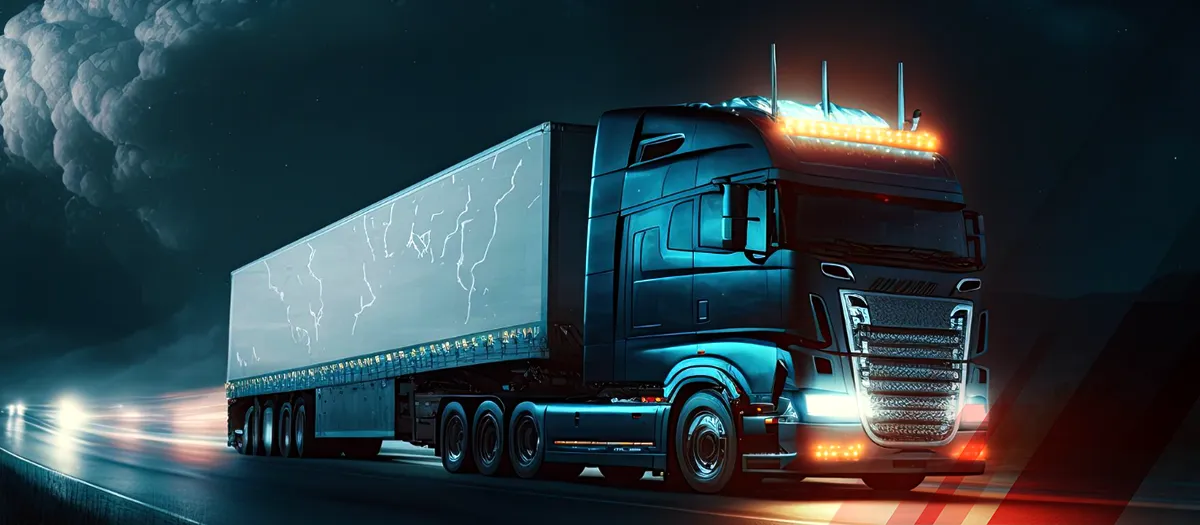
Road freight powers global trade, but it also carries a large environmental footprint. According to the International Energy Agency, road freight trucks account for around 7% of global energy-related CO₂ emissions in the baseline scenario of its trucks analysis. As governments tighten emissions regulations and logistics companies seek lower operating costs, electric trucks are emerging as a major shift in smart transportation and a key lever for cutting freight emissions.
EV trucks replace or supplement traditional diesel engines with electric propulsion systems powered by batteries or hydrogen fuel cells. Their adoption is accelerating across delivery fleets, municipal vehicles, and heavy-duty freight operations. The International Energy Agency’s Global EV Outlook 2024 says that in 2023, about 54,000 units were sold worldwide, which is a 35% increase from 2022.
This is the first time that truck sales have been higher than electric bus sales. Consequently, battery-powered trucks are expected to keep growing and become more important in reducing carbon emissions in transportation.
Kings Research estimates that the global electric truck market will reach USD 337.87 billion by 2031. Keeping in line with this growth, this blog will explore their definition, benefits, and current and future position in 2026 and beyond.
What is an Electric Truck?
An electric truck is a pickup, delivery, or freight vehicle that makes use of electric motors as a main or auxiliary source of propulsion. Unlike most trucks that are powered by diesel or gas engines, they are powered by battery packs or hydrogen fuel cells in a hybrid configuration.
Battery-powered trucks include a wide range of vehicle classes, from light-duty consumer pickup trucks such as the Ford F-150 Lightning to Class 8 heavy-duty freight trucks. The U.S. Department of Energy’s Alternative Fuels Data Center (AFDC) and SAE International categorize them into weight classes, which determine payload capacity and usage.
How Does an Electric Truck Work?
Electric trucks operate through several propulsion architectures. Each design uses smart motors but differs in how electricity is produced or stored.
-
Battery-Electric Trucks (BEV):
BEV uses large packs of lithium-ion batteries installed in the chassis of the vehicle. These battery packs power the electric motor(s) used for driving the vehicle’s wheels. BEVs emit no pollutants and have reduced mechanical complexity compared to diesel-powered trucks. They work well for routes where vehicles can be recharged at depots.
-
Hydrogen Fuel Cell Electric Trucks (FCEV):
Electric fuel cell trucks use hydrogen gas to generate electricity for running the electric motor. Hydrogen gas reacts with oxygen in a fuel cell stack to generate electricity for running the motor. The only emission of hydrogen fuel cell electric trucks is water vapor.
-
Hybrid-Electric Trucks (HEV / PHEV):
The HEV truck is equipped with an internal combustion engine, an electric motor, and a battery. The electric motor assists the engine during acceleration and at low speeds. Regenerative braking is used for energy harvesting during deceleration. HEVs help reduce fuel consumption but still rely on fossil fuels for power. They may serve as a bridge for fleets that cannot support all-electric long-haul solutions.
Key Components in Electric Truck Drivetrains
Regardless of propulsion type, EV trucks share several core components:
- An electric motor that converts electricity into wheel movement
- High-voltage battery pack or fuel cell stack that stores or generates energy
- Motor controller and inverter that regulate electrical power
- A regenerative braking system that captures energy during braking
- Thermal management systems that control battery and motor temperature
- An onboard charger that converts external electricity into battery power
Types of Electric Trucks by Class and Use
- Trucks in the U.S. are classified into different classes ranging from Class 1 to Class 8 depending on weight and payload capacity.
- Light-Duty Electric Pickup Trucks (Class 1-2)
- Light-duty electric pickup trucks are used by private owners and small business owners. They combine the comfort of driving a passenger vehicle with cargo and towing capabilities.
- Medium-Duty Electric Trucks (Class 3-6)
They are used for urban delivery and service fleets. They are ideal for use in urban areas since they start and end at a central hub every night. Therefore, it is easier to recharge and start again in the morning.
- Heavy-Duty Electric Semi Trucks (Class 7-8)
- Electric semi-trucks for heavy-duty use have to cover long distances and thus require large battery packs for use.
- Hydrogen Fuel Cell Heavy-Duty Trucks
- Hydrogen fuel cell heavy-duty trucks solve the challenge of transporting goods over long distances.
Benefits of Electric Trucks
Battery-powered trucks offer several operational and environmental advantages compared to diesel vehicles.
- Electricity generally costs less than diesel fuel.
- Produce zero direct tailpipe emissions.
- Electric drivetrains contain fewer moving parts than internal combustion engines.
- Electric motors provide instant torque, which improves acceleration even when carrying heavy loads.
- Lower noise levels allow cities to schedule nighttime deliveries, reducing daytime congestion and improving urban logistics efficiency.
- Governments worldwide offer incentives to accelerate fleet electrification.
Challenges and Limitations of Electric Trucks
Despite their benefits, EV trucks still face several technical and operational limitations.
-
Range Limitations Under Heavy Load:
Heavy payloads reduce the range of these vehicles significantly. At present, most Class 8 battery-powered trucks are capable of achieving a maximum of 150 to 300 miles on a single charge, compared to over 1,000 miles for diesel-powered trucks.
-
Battery Weight and Payload Impact:
Large battery packs can weigh thousands of pounds. This reduces the payload capacity available for freight. For logistics companies operating on strict weight limits, this trade-off can affect profitability.
-
Charging Time:
Even with high-power DC fast chargers, recharging a large truck battery may take one to four hours, depending on charger power and battery capacity. Long-haul fleets must carefully schedule charging to avoid delays.
-
High Upfront Costs:
EV trucks remain more expensive than diesel models due to battery costs and new technology integration. However, the total cost of ownership may favor them for fleets with high annual mileage.
-
Charging Infrastructure Gaps:
Many highways still lack high-power charging stations designed for heavy trucks.
Top Electric Truck Models to Watch in 2026
Several electric truck models are shaping the industry’s next phase.
- Ford F-150 Lightning: The Ford F-150 Lightning was the best-selling electric pickup in the United States through 2025. It offers standard and extended-range battery options and supports both personal and commercial use cases.
- Rivian R1T: The Rivian R1T features a quad-motor powertrain and more than 300 miles of range. Rivian has also partnered with Amazon to supply electric delivery vans for logistics fleets.
- Chevrolet Silverado EV: General Motors’ Chevrolet Silverado EV runs on the company’s Ultium battery platform. High-end trims promise up to 450 miles of range, making it one of the longest-range electric pickups available.
- Tesla Semi: The Tesla Semi targets long-haul freight operations. Tesla claims a 500-mile range at full load, and early deliveries have already been made to PepsiCo and other fleet operators.
- Volvo FH Electric: The Volvo FH Electric has become one of the leading heavy-duty EV trucks in Europe. It supports regional freight operations and complies with strict European emissions regulations.
- Freightliner eCascadia: The Freightliner eCascadia, produced by Daimler Truck, focuses on regional freight routes in North America. Major logistics companies, including UPS, have begun deploying the truck in commercial fleets.
Electric Truck Market Outlook: 2026 and Beyond
Electric truck adoption is expected to accelerate significantly during the next decade. In Europe, there are regulations in place to reduce new heavy-duty truck CO2 emissions by 90% by 2040, which is effectively equivalent to zero emission propulsion using electric and hydrogen-based power sources. In the U.S., the EPA Phase 3 greenhouse gas standards for heavy vehicles are expected to encourage large-scale fleet electrification by 2032.
EV trucks are shifting from experimental to practical use. Factors like declining battery costs, tightening emission standards, and improving charging networks are speeding up the deployment of battery-powered trucks for delivery fleets, city services, and long-haul freight hauling. They are poised to play an even bigger role in shaping the future of road transport as battery tech and charging networks improve.

.webp&w=3840&q=75&dpl=dpl_DPva2LrvfsBdTJm1XZj67UTrvMHL "Recreational Boating Trends Shaping Outboard Engine Demand")