

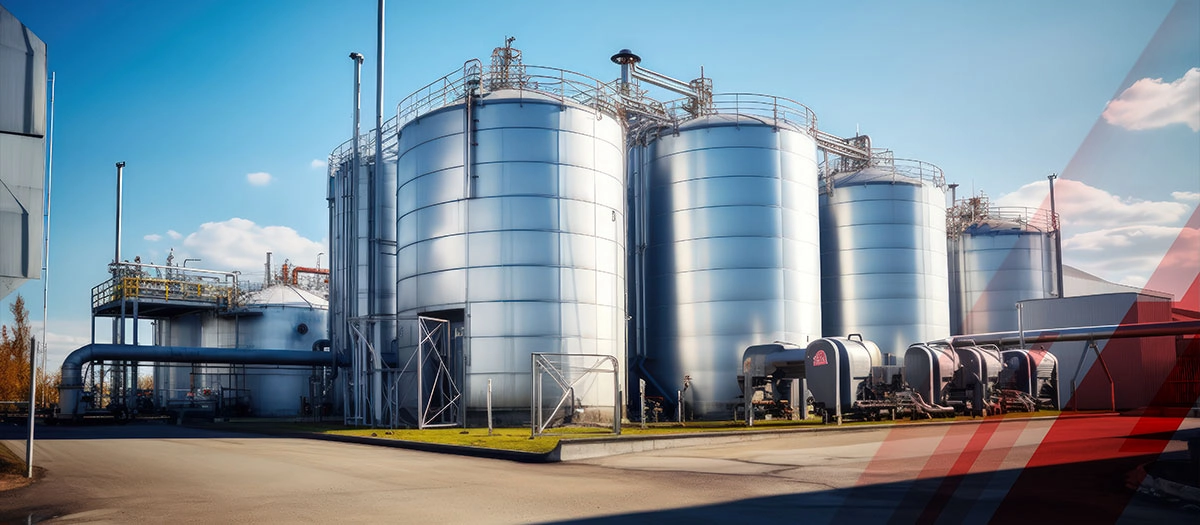
Chemical storage tanks play a very crucial role in the chemical, pharmaceutical, petrochemical, agrochemical, and food-processing industries. They are effective in controlling the containment, processing, dosing, and distribution of both hazardous and non-hazardous materials. However, in order to stay at peak performance, they must be equipped with safety standards that can withstand constant chemical exposure.
This blog, as such, explores the safety in chemical storage tanks. Kings Research also notes that the global chemical storage tank market, which was valued at USD 5.39 billion in 2022, is projected to reach USD 7.48 billion by 2030, at a 4.26% CAGR from 2023 to 2030. This growth is driven by the rise in chemical production volumes, hazardous substances management, and continuous investment across energy and pharmaceutical supply chains.
Regulatory, Environmental, and Worker Safety Imperatives in Hazardous Chemical Storage
Accident, contamination, and exposure risks underscore the need for improved safety in chemical storage tanks. The Coalition to Prevent Chemical Disasters documented over 900 chemical incidents across the United States between January 2021 and late 2023, affecting industrial facilities across multiple sectors. UNEP's 2023 Global Framework on Chemicals emphasizes the urgent need for safe chemical management infrastructure, particularly in developing regions where regulatory safeguards remain inadequate.
Worker safety data also shows the exposure risks. In FY2023, manufacturing companies violated OSHA's Hazard Communication standard 2,888 times. This shows that managing chemical hazards remains a significant issue, as exposure to chemicals can result in respiratory issues, asthma, and skin problems. It can also irritate mucous membranes and cause broader health effects, as noted by NIOSH. This data shows how crucial it is to have strong containment and leak prevention systems in manufacturing facilities.
Environmental contamination further leads to major financial and compliance issues. In response, organizations such as the EPA enforce RCRA hazardous waste spill-prevention programs. This includes tank integrity inspections and secondary containment requirements, as recorded in the FY2023-2024 results. In the EU, the European Chemicals Agency (ECHA) oversees the classification, labeling, and handling of hazardous substances. The organization carries this out under the REACH and CLP frameworks, which influence the design needs for materials and tanks.
Types of Chemical Storage Tanks: FRP vs. Steel vs. Polyethylene Tanks
Determining the right materials is key to compatibility, safety, and cost-effectiveness in chemical storage tanks. Industry leaders consider factors like chemical reactivity, temperature limits, pressure capacities, and abrasion resistance. They also account for UV exposure and site-specific conditions.
- Fiberglass-Reinforced Plastic (FRP): FRP tanks come equipped with corrosion resistance suitable for acids, alkalis, and brine solutions. The choice of resin allows for a broader compatibility range, thus making it possible to replace stainless steel in corrosive environments at a lower cost. Its benefits include weight reduction and life cycle efficiency. On the opposite end, the limitations include the susceptibility to damage from mechanical impact, poor performance at high temperatures, and sensitivity to abrasions.
- Stainless-Steel Tanks: Stainless steel is the preferred choice for harsh chemicals, high temperatures, and clean environments like pharmaceuticals, biotechnology, and food processing. Grades 304 and 316 offer good heat resistance and fit cleaning-in-place (CIP) needs. The initial cost is higher, but the long lifespan, regulatory compliance, and hygiene standards often make it worthwhile.
- Polyethylene (HDPE / LLDPE / XLPE): Polyethylene (PE) tanks have become the primary choice as they weigh less, are inexpensive, and can be used with various chemicals without problems. In situations that require a higher-performance tank, for example, for fertilizer and agrochemical storage, the cross-linked polyethylene (XLPE) type is used, which provides more strength and improved resistance to chemicals. However, PE tanks are not without their disadvantages. They are susceptible to damage by UV rays, are heat-sensitive, and have a lower pressure resistance compared to steel and FRP tanks.
Configuration Variables for Industrial Tanks
The different configuration options, such as vertical, horizontal, jacketed, compartmental, and mobile tanks, are designed to meet the specific needs of applications. Inventory management, batch processing, dosing, and thermal control influence the needs of fittings, mounting, and structural support. Further, the integration with pumps, agitation systems, and dosing controls makes the tank systems in line with the demands of the process.
Industrial Use Cases & Process Integration in Chemical Storage Systems
Industrial tanks have a variety of uses, such as batching, mixing, processing, pre-storage, and distribution. These tanks are essential for chemicals and intermediates, as they provide them with feedstocks and reaction components. For the pharmaceutical and biologics industries, containment must be sterile and temperature-controlled. Likewise, the agriculture and fertilizer industries constantly utilize polyethylene tanks for their distributed and seasonal storage needs.
Food and beverage manufacturers use storage tanks for holding additives, sanitation chemicals, and flavoring agents. On the other hand, the petrochemical and refining sectors are heavily dependent on stainless and FRP tanks, particularly where there is a need for high temperature and pressure resistance. These highly specialized storage facilities lead to significant operational efficiency improvements, lower the risks associated with handling, and contribute to meeting regulatory compliance in a better way.
Leak Detection & Digital Monitoring for EPA & OSHA Compliance
Monitoring technologies are turning the safety of chemical storage tanks into active safety systems. They are using level sensors, modules for leak detection, hydrostatic pressure monitors, vapor sensors, and structural integrity diagnostics to maintain systems and locate problems. The EPA's spill prevention guidelines and OSHA's hazard communication standards encourage these upgrades by associating detection capabilities with compliance requirements. Digital controls help to comply with regulations and minimize exposures to the environment, workers, and operations.
Manufacturers & Vendor Landscape in Industrial Tanks
Vendors differentiate themselves through their knowledge of materials, regulations, and tailored engineering. For instance, GMM Pfaudler, Modern Welding, and Containment Solutions are firms that focus on corrosion-resistant tanks, structural steel tanks, and underground containment systems, respectively. The purchasing criteria are focused on the life cycle cost, chemical compatibility, installation requirements, and integration of monitoring.
By 2030, manufacturers will incorporate digital monitoring and predictive maintenance in compliance-grade tank systems. The pharmaceutical, specialty chemicals, and agrochemicals sectors will be the main drivers of demand. As regulations become stricter, the industry standards for secondary containment, emissions control, and hazardous waste management will continue to be of paramount importance.
The market will be increasingly focused on safety and compliance-related features, as well as the long-term performance of chemical storage tanks, until 2030. Environmental monitoring, occupational health, safety in chemical storage tanks, and digital monitoring will be factors that influence purchasing decisions. Industrial tanks will no longer be seen simply as containers but rather as compliance infrastructure necessary for industrial operations.