

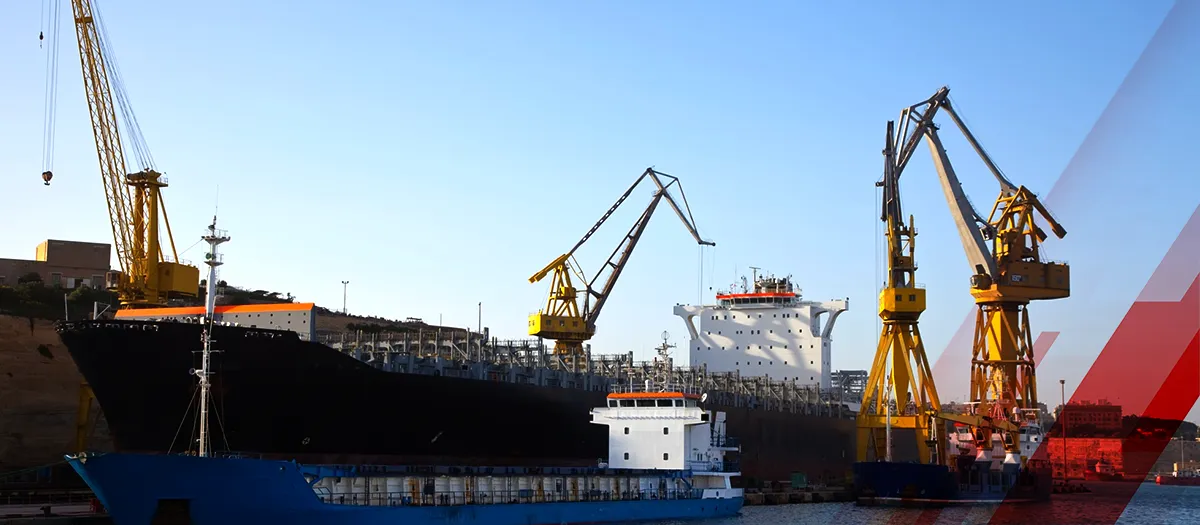
An offshore crane is a critical piece of lifting equipment designed to operate in some of the most demanding environments on earth. Offshore platforms, vessels, and floating structures depend on these cranes for installation, maintenance, and operational continuity. Unlike conventional land-based cranes, an offshore crane must withstand saltwater corrosion, strong winds, heavy waves, and continuous dynamic motion.
These conditions make offshore crane design, operation, and maintenance highly specialized disciplines within offshore engineering. Kings Research forecasts revenue of $42.54 billion for the global offshore crane market by 2031.
This blog explains what an offshore crane is, how it works, and why it is essential for offshore operations. Let’s dive in!
What Is an Offshore Crane?
An offshore crane is a lifting device installed on offshore platforms, drilling rigs, floating production units, or specialized vessels. Its primary role is to move heavy equipment, modules, containers, and supplies between vessels and offshore structures. Offshore cranes are engineered to handle dynamic loads created by wave motion and vessel movement, which makes them fundamentally different from onshore cranes.
The defining characteristic of an offshore crane is its ability to lift safely under variable environmental conditions. Wind speed, wave height, and vessel motion are not secondary considerations; they are core design inputs. As a result, offshore cranes integrate advanced structural design, control systems, and safety mechanisms that are not typically required for land-based lifting systems.
Why Offshore Cranes Are Critical in Offshore Operations
Offshore operations depend on precise coordination and uninterrupted logistics. An offshore crane enables the transfer of equipment, tools, and materials that keep platforms operational. Without reliable lifting systems, offshore installations would face extended downtime and elevated safety risks.
Lifting operations are a significant safety concern in offshore work. According to the U.S. Bureau of Safety and Environmental Enforcement (BSEE) incident data, there were 375 lifting‑related incidents reported in calendar year 2023 on U.S. Outer Continental Shelf facilities, making lifting operations one of the most common incident categories in offshore operations. (Source: www.bsee.gov)
Offshore cranes also play a vital role during platform construction and decommissioning. Large structural components, topsides, and subsea equipment must be lifted and positioned with extreme accuracy. Any error during lifting can result in structural damage, environmental harm, or injury to personnel. This makes offshore cranes central to operational safety and project success.
Key Design Challenges of Offshore Cranes
The marine environment imposes unique engineering challenges on offshore crane systems. One critical challenge is dynamic loading. Unlike land cranes, offshore cranes must account for relative motion between the crane and the load due to wave and vessel motion.
Corrosion resistance is another major design concern. Continuous exposure to saltwater and humidity accelerates material degradation. Offshore crane structures typically use high‑grade steel, specialized coatings, and corrosion protection systems to ensure long service life.
Space constraints also influence offshore crane design. Platforms have limited deck space, which requires compact crane configurations without compromising lifting capacity or operational reach.
Offshore Crane Safety Context
While not limited to offshore conditions, federal workplace safety data provides insight into the hazards associated with crane operations. Between 2011 and 2017, the U.S. Census of Fatal Occupational Injuries (CFOI) found 297 total fatal crane‑related deaths, averaging roughly 42 per year, underscoring the inherent risks involved in lifting and handling loads even in industrial settings. (Source: www.bls.gov)
BSEE’s safety reporting also shows consistently high counts of general offshore injuries. 203 injuries were reported in 2023, and while not all are solely crane‑related, lifting operations remain a safety focus due to their frequency.
Types of Offshore Cranes
Several offshore crane types are used depending on application and installation environment:
- Pedestal‑mounted offshore cranes are the most common type used on fixed platforms and jack‑up rigs. These cranes are mounted on a fixed pedestal and provide rotational lifting capability. They are known for stability and high lifting capacity.
- Knuckle boom offshore cranes offer greater flexibility in confined spaces. Their articulated boom design allows precise load positioning and efficient storage when not in use.
- Lattice boom offshore cranes are typically used for heavy lifting in construction or decommissioning. Their trussed boom structure provides strength while minimizing weight.
Offshore Crane Components and Their Functions
An offshore crane consists of several integrated components that work together to ensure safe lifting operations.
- The boom structure provides reach and geometry for lifts under dynamic motion.
- The hoisting system includes wire ropes, winches, and sheaves that control vertical lifting and are engineered for redundancy.
- The slewing system allows the crane to rotate the load horizontally.
- Modern control systems now provide operators with real‑time feedback on load weight, boom angle, and environmental conditions, improving decision‑making during lifts.
Offshore Crane Safety Systems
Safety is a primary design driver for any offshore crane. Load moment indicators and anti‑collision systems help prevent overload and mitigate the risk of multiple cranes operating in proximity. Emergency shutdown systems ensure rapid response in case of unsafe conditions.
Operator cabins are designed for visibility and ergonomic control, and many offshore crane systems include options for remote operation to reduce exposure during hazardous lifts.
Dynamic Lifting and Motion Compensation
One of the most advanced features of offshore cranes is their ability to manage dynamic lifting. Motion compensation systems reduce relative movement between the crane hook and load, which is essential when lifting between vessels and platforms in rough seas.
Active heave compensation uses sensors and hydraulics to counteract wave motion, while passive systems rely on mechanical energy absorption. These technologies improve load control and safety during lifting operations in dynamic environments.
Installation and Commissioning of Offshore Cranes
Installing offshore cranes requires careful structural integration with the platform or vessel, accounting for load transfer and stability. Commissioning includes functional testing, load testing, and safety system verification.
Offshore cranes must be tested under simulated operational conditions before entering service. Proper documentation and certification are mandatory to comply with regulatory safety and performance requirements.
Offshore Crane Maintenance and Inspection
Regular maintenance ensures offshore crane reliability. Inspections focus on structural integrity, wire ropes, hydraulic systems, and control components.
Non‑destructive testing methods detect early signs of fatigue or material degradation.
Maintenance procedures follow international offshore standards and are documented to support operational transparency and compliance with safety regulations.
Regulatory Standards Governing Offshore Cranes
Offshore cranes are subject to strict international regulations enforced by classification societies and maritime authorities. These standards govern design, testing, inspection, and operation.
Safety alerts issued by the Bureau of Safety and Environmental Enforcement (BSEE) highlight crane and lifting hazards, with multiple alerts related to crane equipment failures and lifting risks documented in recent years.
Training and certification of offshore crane operators are also regulated to ensure competency and safety during complex lifts.
Offshore Crane Applications Across Offshore Environments
Offshore cranes are used across fixed platforms, floating production units, and offshore energy installations, including wind farms. In oil & gas and offshore wind projects, cranes support the installation of turbines, subsea equipment, and structural components.
Maintenance operations rely on offshore cranes for logistics support and replacement of critical components, while decommissioning projects use heavy‑lift offshore cranes to dismantle aging structures safely.
Human Factors and Operator Expertise
While technology is essential, human expertise remains central to offshore crane operations. Experienced operators understand environmental conditions and operational risks.
Training programs emphasize situational awareness, emergency response, and equipment familiarity. Proper training and documented experience are key to safe offshore crane operations.
Future Engineering Trends in Offshore Crane Technology
Offshore crane technology continues to evolve. Automation, enhanced motion compensation, and digital monitoring systems improve safety and efficiency. Data‑driven maintenance strategies support early fault detection and reduce unplanned downtime.
Sustainability considerations are also influencing crane design, with energy‑efficient systems and advanced materials being integrated without compromising structural integrity.
Concluding Thoughts
An offshore crane is far more than a lifting machine. It is a highly engineered system designed to operate safely in unpredictable marine environments. From structural design to operator expertise, every aspect of an offshore crane reflects the need for precision, reliability, and safety.
Understanding offshore crane principles helps engineers, operators, and project stakeholders appreciate the complexity behind offshore lifting operations. As offshore activities continue to expand into deeper and harsher waters, offshore cranes will remain essential to safe and successful operations.