
Inquire Now
Key Strategic Points
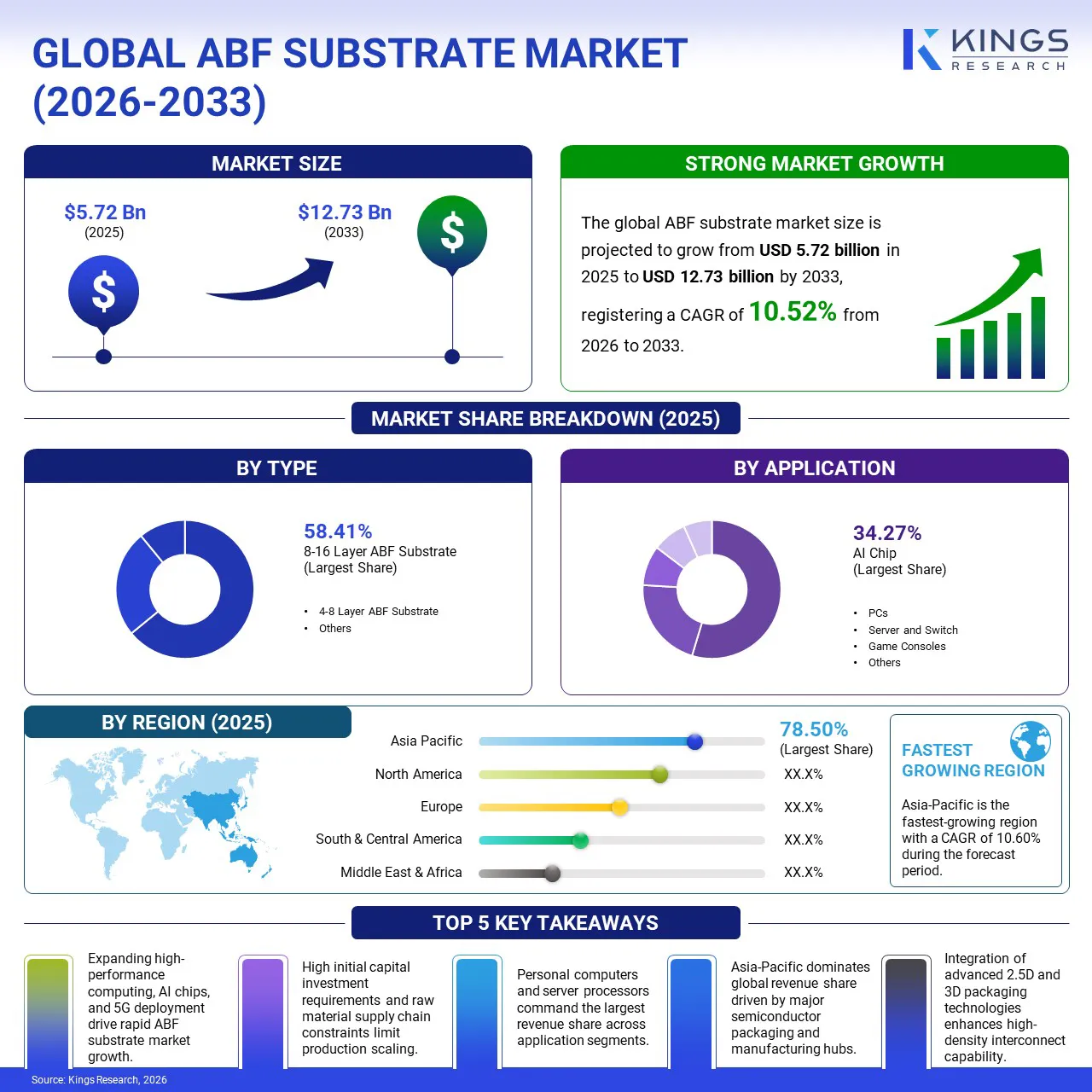
According to Kings Research analysis, the global ABF substrate market size was valued at USD 5.72 billion in 2025 and is projected to reach USD 12.73 billion by 2033, growing at a CAGR of 10.52% from 2026 to 2033.
The market growth is driven by increasing demand for high-performance computing, AI chips, advanced processors, and sophisticated semiconductor packaging. The rapid expansion of data centers, AI infrastructure, 5G networks, and consumer electronics is further increasing the need for substrates that provide high interconnect density, excellent signal integrity, and reliable electrical performance. Miniaturization and the integration of greater functionality into compact electronic devices are further supporting adoption of ABF substrates in advanced semiconductor packages.
Additionally, technological advancements in chiplet architectures, high-density packaging, and heterogeneous integration are enabling manufacturers to develop ABF substrates with improved thermal management, dimensional stability, and high-frequency performance.
The growth of artificial intelligence, cloud computing, 5G, and electric vehicles (EVs) is fueling demand for semiconductors, which necessitates the demand for critical insulating and interconnection materials for high-performance substrates, driving growth of the ABF substrates market. The shift from traditional consumer electronics toward enterprise applications, particularly AI, cloud computing, data centers, and high-performance computing, requiring complex semiconductor designs and advanced substrate technologies, acts as a major propeller for ABF substrates.
The market is further supported by the expansion of 5G and digital technologies, which are driving demand for faster and more powerful computing capabilities. At the supply level, limited advanced ABF manufacturing capacity and the technical expertise required for high-end substrates create significant barriers to entry. Strategic partnerships and capacity investments by leading semiconductor companies are also supporting the expansion of ABF substrate production and strengthening the market outlook.
ABF substrate shortages act as a major challenge for the global semiconductor supply chain. The rising demand from AI, 5G, electric vehicles, and advanced electronics is increasing the demand for ABF substrates, where complex production and quality-testing processes create bottlenecks for suppliers to increase production capacity.
Rising AI/HPC demand is tightening supply across the semiconductor chain, with wafer utilization approaching maximum levels while HBM and ABF substrates remain critical downstream constraints. This indicates that capacity additions at one stage alone may not resolve overall AI chip supply, as shortages can migrate upstream or downstream across the chain.
Additionally, the complex ABF substrate manufacturing process, requiring advanced equipment and highly skilled personnel, further creates a barrier for smaller manufacturers that lack necessary production expertise. The development of new ABF substrates equipped with improved thermal conductivity and flexibility, and the requirement of substantial investment in research and development, further hampers market growth avenues.
The ABF substrate market has an opportunity to focus on the development of next-generation substrates with finer line/space dimensions, higher layer counts, improved thermal performance, and greater packaging density. As semiconductor designs become increasingly complex, conventional substrate technologies face limitations in supporting larger die sizes, higher I/O counts, and advanced packaging architectures. Manufacturers that can develop ABF substrates compatible with 2.5D/3D packaging, chiplet architectures, and heterogeneous integration can gain a competitive advantage.
Another opportunity lies in improving substrate manufacturing efficiency through advanced materials, process automation, and yield-enhancement technologies, which can help reduce production costs and address manufacturing challenges. This creates opportunities for ABF substrate companies to differentiate through technology innovation, miniaturization, higher reliability, and improved manufacturing yields, rather than relying solely on market demand growth.
|
Segmentation |
Details |
|
|
By Type |
4-8 Layer ABF Substrate, 8-16 Layer ABF Substrate, Others |
|
|
By Application |
PCs, AI Chips, Servers and Switches, Game Consoles, Others |
|
|
By Region |
North America |
U.S., Canada, Mexico |
|
Europe |
France, the UK, Spain, Germany, Italy, Russia, and the rest of Europe |
|
|
Asia Pacific |
China, Japan, India, Australia, ASEAN, South Korea, and the rest of Asia-Pacific |
|
|
Middle East and Africa |
Turkey, U.A.E., Saudi Arabia, South Africa, Rest of Middle East & Africa |
|
|
South and Central America |
Brazil, Argentina, and the rest of South and Central America |
|
The 8–16 layer ABF substrate segment held the largest market share of 48.05% in 2025, driven by increasing demand for high-density and high-performance semiconductor packaging. Its ability to support complex circuitry, improved signal integrity, and greater functionality makes it widely suitable for advanced computing, consumer electronics, and automotive applications.
The AI chips segment is forecasted to register the fastest growth rate in the ABF substrate market, driven by the rapid adoption of AI accelerators and high-performance computing systems. The increasing demand for advanced packaging solutions capable of supporting high-density interconnections, faster data processing, and improved thermal and electrical performance is fueling the adoption of ABF substrates in AI chip applications.
Based on regional analysis, the global ABF substrate market is classified into North America, Europe, Asia Pacific, the Middle East and Africa, and South and Central America.
The Asia Pacific ABF substrate market share stood at around 78.5% in 2025 in the global market, with a valuation of USD 4.49 billion. The region's strong position is primarily attributed to rapid industrialization and the expansion of semiconductor and electronics manufacturing in countries across China, Japan, South Korea, and Taiwan. The increasing production of consumer electronics, semiconductors, computing devices, and advanced electronic components across these economies further creates strong growth opportunities for ABF substrates in the region.
Additionally, the rapid growth of digitalization, cloud computing, artificial intelligence (AI), and the IT industry further supports ABF substrate demand across the region.
The strong focus of Asia Pacific on technological development and the rapid deployment of 5G networks for high-performance communication infrastructure, networking equipment, and advanced semiconductor components fuel the demand for ABF substrates.
Moreover, the growing adoption of electric vehicles (EVs), automotive electronics, renewable energy systems, and energy-storage technologies is further poised to create novel growth opportunities for semiconductor packaging and substrate manufacturers over the forecast interval.
The global ABF substrate industry is consolidated, with production concentrated among select players in the global market.
The market is dominated by notable players from Japan, Taiwan, China, and South Korea, with major manufacturers including Unimicron, Ibiden, Nanya PCB, Shinko Electric Industries, Kinsus, AT&S, Semco, and Kyocera, accounting for more than 80% of the global market share. Key players are focusing on strategic partnerships, mergers and acquisitions, product innovations, and joint ventures to expand their product portfolio and increase their respective market shares across different regions. Expansion & investments involve a range of strategic initiatives, including investments in R&D activities, new manufacturing facilities, and supply chain optimization.
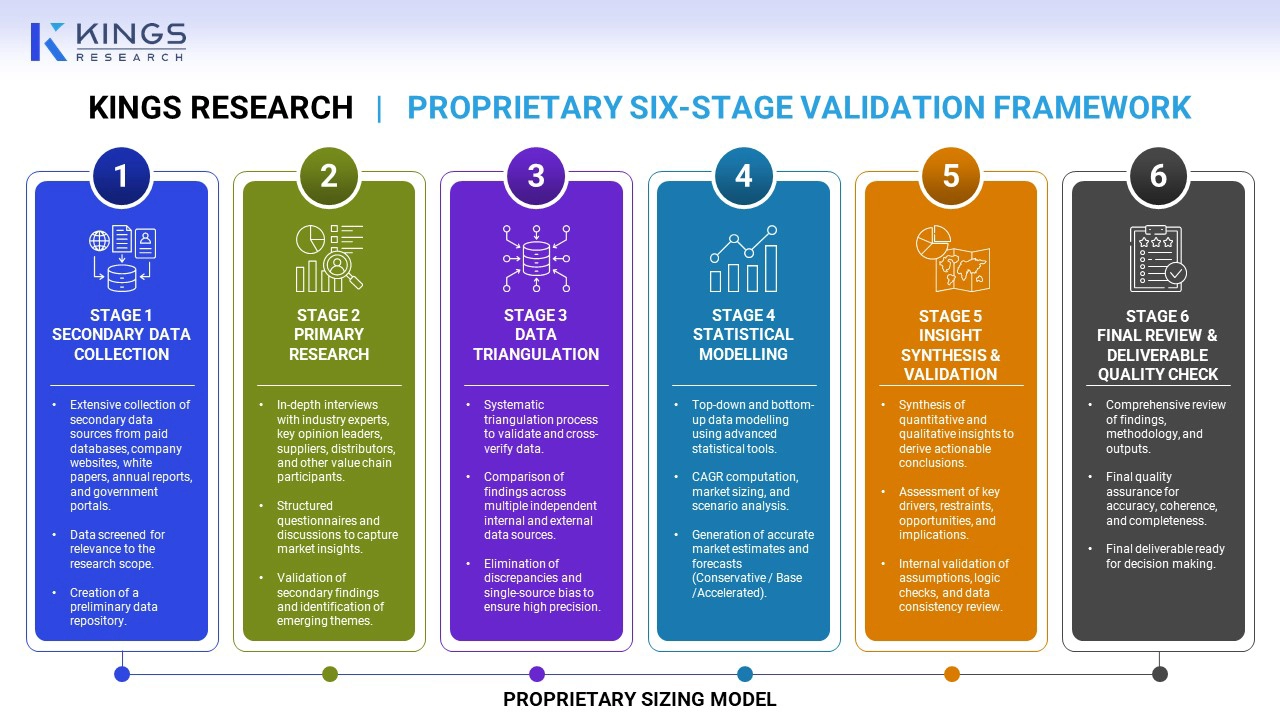
Our methodology triangulates insights from multiple independent and publicly available research databases and is further validated against regulatory filings and public company disclosures. All estimates are cross-verified; no single-source data is presented without validation.
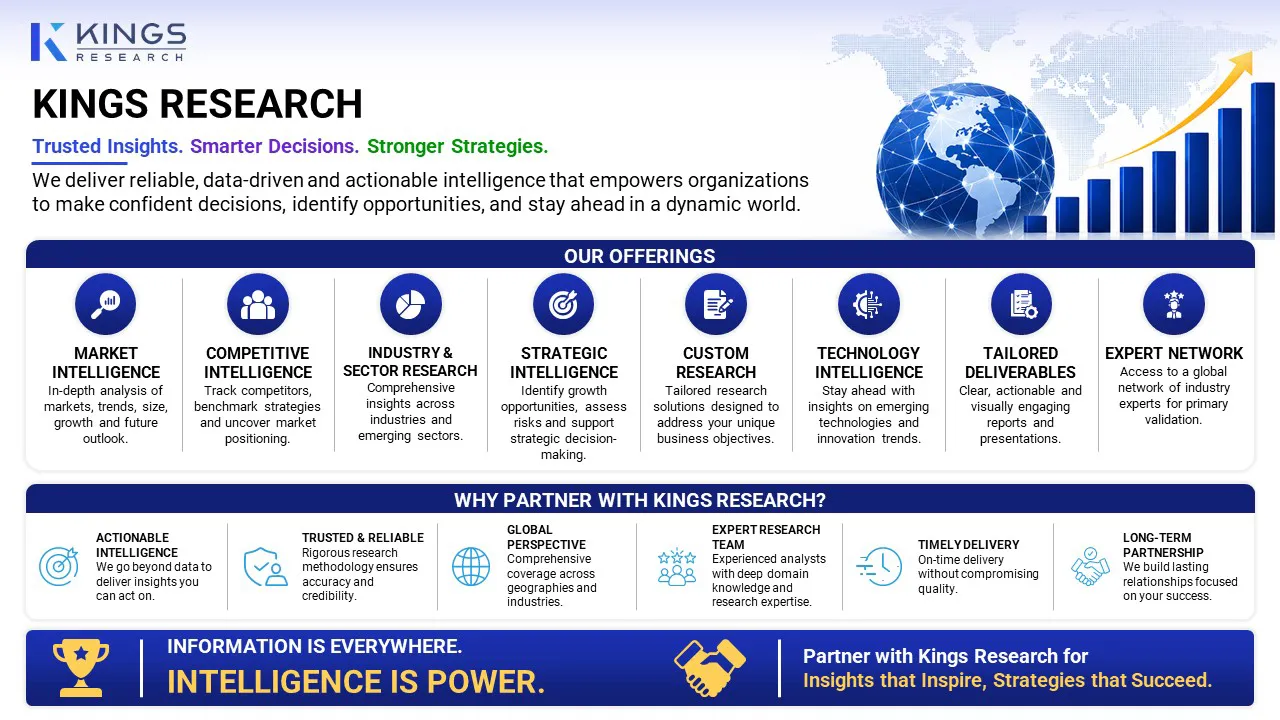
We deliver tailored, data-driven intelligence and strategic guidance to help organizations identify, evaluate, and capitalize on key market opportunities.
Frequently Asked Questions

Omkar is an accomplished research analyst with experience across a wide range of industries, including but not limited to pharmaceuticals, biotechnology, healthcare, chemicals & materials, energy, and consumer goods. His cross-domain expertise allows him to analyze complex market dynamics, uncover actionable insights, and provide high-value research that supports strategic decision-making. Skilled in both qualitative and quantitative analyses, Omkar synthesizes large datasets to create insightful, stakeholder-focused reports. His broad industry knowledge enables him to identify synergies across sectors, adding value to his research. Outside of work, Omkar is a passionate movie enthusiast. His love for cinema fuels his creativity and enhances his ability to think critically-skills that complement his research capabilities. Omkar’s data validation skills and cross-industry expertise make him a partner. He translates complex findings into strategic narratives. His commitment to continuous learning keeps him ahead of evolving markets, while his collaborative nature strengthens team synergy, driving stakeholder confidence and impactful outcomes.
Habi is a seasoned research and consulting leader with renowned experience in guiding clients on strategic growth and transformation initiatives across global markets. He has led high-performing research teams that deliver actionable insights on market expansion, M&A strategies, opportunity assessment, new business development, and product launches. His project portfolio spans large petrochemical producers, electronic device manufacturers, lubricants companies, and other leading enterprises across diverse industrial and consumer sectors. He currently heads the research department at Kings Research, where he is responsible for setting the research agenda, mentoring analysts, and ensuring client-ready deliverables that support executive decision-making. With extensive experience in market intelligence, strategic research, and consulting, Habi brings a strong understanding of evolving industry dynamics, competitive landscapes, emerging opportunities, and business growth challenges. His expertise includes developing research frameworks, translating complex market data into actionable strategic recommendations, and working closely with senior stakeholders to address critical business questions. He has also contributed to building research capabilities, strengthening analytical methodologies, and driving a culture of quality and insight-led decision-making within research teams. His cross-industry exposure enables him to connect market trends with broader business implications and provide perspectives that help organizations identify opportunities, mitigate risks, and make informed strategic decisions.


