

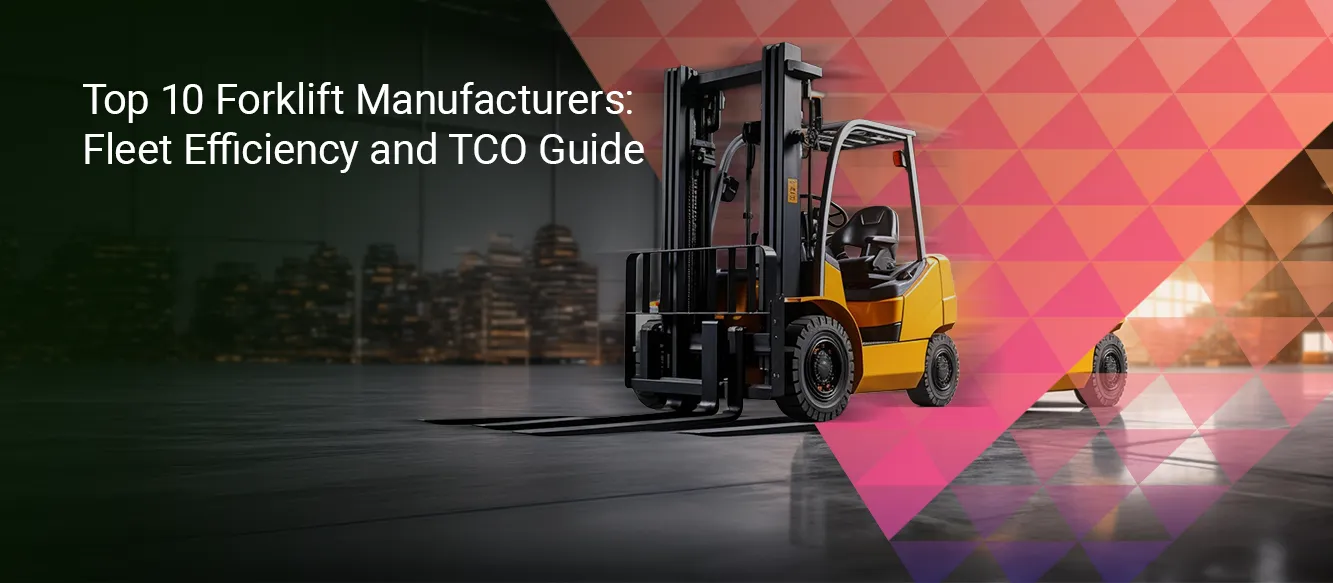
According to the latest analysis from Kings Research, the global forklift market is expected to reach USD 147.91 billion by 2030, driven by significant infrastructure spending and e-commerce growth. Over the anticipated period, this market is expected to grow at a compound annual growth rate of 12.84%.
Supply chain demand is increasing day by day, compelling procurement teams to form strategic alliances with leading manufacturers such as Toyota, KION GROUP AG, and Jungheinrich AG to modernize their fleets. This highlights a shift away from considering equipment as just a hardware purchase. Instead of focusing on initial capital expenditures, chief financial officers are judging these partnerships on long-term operating cost reductions.
The top forklift manufacturers leading the global material handling industry include:
- 1. Toyota Material Handling
- 2. KION Group
- 3. Raymond
- 4. Jungheinrich
- 5. Mitsubishi Logisnext
- 6. Hyster-Yale
- 7. Doosan/Bobcat
- 8. Crown Equipment
- 9. Hangcha Group
- 10.CLARK Material Handling
These premier brands dominate global fleet procurement by driving modern warehouse electrification, advanced telematics integration, and autonomous operations.
Top Forklift Brands Driving Automation and TCO Reduction
The global forklift market is dominated by a blend of legacy industrial leaders and innovation-driven manufacturers that are reshaping material handling through electrification, automation, and digital integration. These companies are setting industry benchmarks by offering advanced fleet management systems, energy-efficient solutions, and scalable logistics capabilities. Their ability to combine engineering excellence with smart technologies makes them preferred partners for enterprises aiming to optimize warehouse efficiency and reduce long-term operational costs.
Below are the top manufacturers that are standing out in the global marketplace. To build this fleet procurement guide, we assessed global material-handling brands based on three core enterprise criteria: global equipment revenue, the breadth of their electric and internal combustion (IC) portfolios, and concrete product innovations launched between 2024 and 2026.
|
Manufacturer |
Electric or hydrogen focus |
Recent move |
Representative equipment/capacity |
|
Toyota Material Handling |
Electric and high-capacity IC portfolio |
Launched an AI-powered cloud service with Fujitsu for forklift driving safety. |
Toyota offers electric and IC lift trucks from 0.5 to over 40 tons. |
|
KION Group |
Lithium-ion batteries and hydrogen fuel cells |
Expanded battery output to up to 30,000 lithium-ion systems per year and added a hydrogen fuel-cell line with up to 5,000 units annually. |
Up to 30,000 lithium-ion battery systems annually; hydrogen fuel-cell systems up to 5,000 units per year. |
|
Raymond |
Lithium-ion warehouse equipment |
Debuted three lithium-ion heavy-duty stackers with iWAREHOUSE connectivity. |
6310, 6410, and 6510 stackers, including 2,200, 3,000, and 4,000 lb capacity variants. |
|
Jungheinrich |
Lithium-ion reach trucks |
Began production of the ETV 2i reach truck series with integrated lithium-ion batteries. |
ETV 214i, 1,400 kg; ETV 216i, 1,600 kg; lift height up to 10,700 mm. |
|
Mitsubishi Logisnext |
Autonomous electric forklifts |
Advanced automation with the PLATTER Auto S Type and SynfoX technology. |
Autonomous forklift line; exact capacity not specified in the draft. |
|
Hyster-Yale |
High-capacity electric forklifts |
Expanded its integrated lithium-ion high-capacity lineup in 2025. |
J230-400XD series, 23,000 to 40,000 lb capacities. |
|
Doosan / Bobcat Industrial Vehicles |
Hydrogen and electric forklifts |
Integrated the industrial vehicle division into the Bobcat brand family and updated hydrogen and electric models. |
Electric and hydrogen models; exact capacities vary by framework configuration. |
|
Crown Equipment |
Lithium-ion energy systems |
Expanded automated solutions with its V-Force Integrated Lithium-Ion Energy Storage System. |
Lithium-ion energy storage system for multi-shift fleets; exact lift capacity not specified in the draft. |
|
Hangcha Group |
New-energy forklifts and smart logistics |
Opened a Thailand production base and launched Hangcha Japan. |
New-energy forklifts and smart logistics equipment; exact capacity not specified in the draft. |
|
CLARK Material Handling |
Lithium-electric crossover forklifts |
Launched the S25-35XE Renegade Lithium Series with at least 20% lower TCO than IC forklifts. |
5,000-, 6,000-, and 7,000-lb capacities. |
Toyota, KION GROUP AG, and Raymond
Toyota Material Handling Japan, a division of Toyota Industries Corporation, and Fujitsu launched Japan’s first AI‑powered cloud service for evaluating forklift driving safety in July 2024. The AI Forklift Driving Analysis platform uses dash‑camera footage processed in the cloud to automatically detect unsafe driving behavior and generate individual operator safety scorecards for logistics sites using the FORKLORE IoT service suite.
KION Group expanded its battery production at its Karlstein am Main site by adding a second production line, raising annual capacity to up to 30,000 lithium-ion battery systems. The company also formed a battery recycling partnership with Li-Cycle in the Magdeburg area, where the process can recover up to 95% of a battery’s mass and valuable minerals. In Hamburg, KION launched a dedicated production line for hydrogen fuel cell systems with a capacity of up to 5,000 units per year.
The Raymond Corporation, a member of the Toyota Industries family of companies, advanced warehouse efficiency in August 2025 by debuting three new lithium‑ion‑powered heavy‑duty stackers. These walkie stackers can connect to the Raymond iWAREHOUSE intelligent tracking suite to provide smart fleet monitoring and reduce operational cost per move.
Jungheinrich AG, Mitsubishi Electric, Hyster-Yale Group, and Doosan Corporation
Jungheinrich AG commenced production of its ETV 2i reach truck series in February 2025, featuring an integrated lithium-ion battery as standard.
Hyster-Yale expanded its integrated lithium-ion high-capacity lineup in 2025 with the J230-400XD series (23,000 to 40,000 lb), targeting heavy-duty electrification applications across demanding industrial operations.
Mitsubishi Logisnext advanced the automation front in 2025 with the PLATTER Auto S Type, an autonomous forklift equipped with proprietary SynfoX technology, designed to address labor shortages in warehouse and cold storage environments.
Doosan Corporation completed a major corporate transition by integrating its industrial vehicle division into the Bobcat brand family. Through this integration, the company has updated its electric and hydrogen models to support the global shift toward clean-energy mandates across warehouse environments.
Crown Equipment Corporation, Hangcha Group, and CLARK
Crown Equipment Corporation expanded its automated solutions by deploying its proprietary V-Force Integrated Lithium-Ion Energy Storage System. This power technology enables multi-shift fleets to utilize frequent opportunity charging during standard operator breaks, delivering massive improvements in energy efficiency over older lead-acid alternatives.
Hangcha Group is executing a major manufacturing expansion, breaking ground on a new production base in Chonburi, Thailand, in April 2025. The company followed this by officially opening Hangcha Japan in Chiba in August 2025, with both facilities focused entirely on new-energy forklifts and smart logistics solutions. Crown and Hangcha continue to expand their global distribution networks, as the Asia Pacific region accounted for 43.03% of the global market in 2022.
Meanwhile, CLARK Material Handling Company expanded its electrification strategy with the launch of the S25-35XE Renegade Lithium Series. This crossover series offers lifting capacities of 5,000, 6,000, and 7,000 lbs. Compared to IC forklifts, the S25-35XE reduces the total cost of ownership by at least 20% through fuel savings.
Global Forklift Industry Outlook
A modern forklift manufacturer provides more than steel and hydraulics. These companies have repositioned themselves as strategic logistics partners, integrating hardware with digital intelligence to optimize material flow across warehouse and distribution operations.
For CXOs, this shifts the procurement conversation from unit cost to total cost of ownership, analyzed alongside telematics infrastructure, predictive maintenance contracts, and fleet management platforms, which determine whether a facility runs at peak efficiency or incurs avoidable downtime. The vendors winning large enterprise contracts today are those that demonstrate measurable reductions in cycle time, labor cost per pallet, and equipment-related operational stoppages.
From Iron to Innovation: Defining the Modern Equipment Partner
Manufacturers have evolved from selling raw machinery to providing logistics and tech solutions. Today, a top partner offers telematics, automated routing, and energy management. This shift allows businesses to treat their fleet as a dynamic asset that improves warehouse throughput rather than a depreciating tool.
Top-Line Valuations and Growth Trajectories
The global forklift market was valued at USD 56.26 billion in 2022. With a projected value of USD 147.91 billion by 2030, the 12.84% CAGR reflects a massive surge in industrial demand. Government infrastructure projects and the rise of mega-fulfillment centers drive this valuation upward.
This growth is structural rather than cyclical. E-commerce expansion is forcing logistics operators to scale warehouse capacity at an unprecedented rate, while manufacturing reshoring across North America, Europe, and Southeast Asia is generating sustained demand in newly commissioned production facilities. For CXOs weighing long-term fleet commitments, both trends reflect durable demand rather than a short-term market cycle.
Why Total Cost of Ownership (TCO) is the New Procurement Benchmark
Assessing fleets based on long-term reductions in operating expenses is now the standard for procurement. Initial capital expenditure accounts for only a fraction of the total cost. Financial leaders prioritize partnerships that reduce maintenance cycles and energy consumption over the vehicle's lifespan.
The CFO’s Framework: Lowering Fleet Costs with the Best Electric Forklift
Weighing Upfront CapEx Against Long-Term OpEx Savings
Electric units carry a higher initial price tag than internal combustion models. However, eliminating fuel, oil, and complex engine repairs yields significant savings. Forklift electrification has a stronger business case when measured with equipment-specific data rather than passenger EV analogies. For instance, CLARK says its lithium-electric S25-35XE Renegade can reduce total cost of ownership by at least 20% compared with internal-combustion forklifts, primarily through lower fuel and maintenance costs.
For warehouse operators running multi-shift operations, these savings compound quickly across a full fleet. Electric forklifts require no oil changes or exhaust servicing and have fewer moving parts overall, reducing unplanned downtime and extending asset life.
The ROI of Lithium-Ion Over Internal Combustion Engines
Lithium-ion fleets are dominating procurement decisions as global carbon mandates tighten. Manufacturer-reported figures put industrial lithium-ion forklift batteries at 3,000 to 5,000 charge cycles and an operational lifespan of 8 to 12 years, compared to 1,000 to 1,500 cycles and 3 to 5 years for lead-acid alternatives. The regulatory pressure is accelerating this shift. California's Air Resources Board plans to ban all internal combustion forklift sales by 2035, with multi-state operators already adopting equivalent standards to simplify national fleet management. At the broader transport level, China’s electric truck sales more than doubled in 2024 to about 75,000 units, accounting for over 80% of global electric truck sales. That trend is more relevant to material-handling procurement than passenger EV growth because it signals accelerating electrification across commercial and industrial vehicle categories.
Factoring in Labor Retention and Operator Ergonomics
Improved usability and reduced mechanical stress directly impact worker retention in a sector defined by persistent churn. According to data from the Bureau of Labor Statistics' Job Openings and Labor Turnover Survey, the total U.S. nonfarm sector recorded a consistent average monthly separation rate of approximately 3.3% throughout 2024, underscoring the intense operational pressures of nationwide labor churn. Ergonomic forklift design directly counteracts the physical strain that drives these separations, helping companies contain the compounding costs of hiring, onboarding, and retraining replacement staff.
Advanced Automation: Calculating the Returns on Telematics and AGVs
Integrating Autonomous Guided Vehicles (AGVs)
Self-driving forklifts help solve the warehouse worker crisis. These machines handle routine material movement with precision. This shift is part of a broader trend toward warehouse automation, in which robots are increasingly deployed to handle repetitive, high-volume tasks. In 2023, around 4.28 million robots were in operation globally, improving operational speed.
Predictive Maintenance via IoT and Telematics
Telematics systems monitor real-time performance indicators such as battery voltage and operating temperatures, triggering alerts before minor faults escalate into unplanned failures. This proactive posture shifts maintenance from reactive repair cycles to planned interventions, extending fleet lifespan and preserving capital that would otherwise be absorbed by emergency servicing costs.
Modeling the Payback Period for Autonomous Fleets
Labor displacement and efficiency gains typically outpace the upfront capital costs of AGV deployments within the first few years in high-volume operations, with larger multi-shift deployments reaching payback the fastest. Automated systems also reduce product damage and improve order fulfillment accuracy, strengthening the financial case beyond direct labor savings alone.
Frequently Asked Questions About Forklift Fleet Procurement
What is the global forklift market size?
According to Kings Research, the global forklift market was valued at USD 56.26 billion in 2022 and is projected to reach USD 147.91 billion by 2030. This rapid expansion represents a compound annual growth rate (CAGR) of 12.84%, driven primarily by the global expansion of mega-fulfillment centers and infrastructure investments.
Who is the largest forklift manufacturer in the world?
Toyota Material Handling stands as a prominent global market leader. Enterprise procurement networks frequently partner with Toyota and other premier brands—such as KION Group and Jungheinrich—to handle automated material routing, deploy advanced lithium-ion fleets, and leverage AI cloud telematics to continuously optimize high-volume warehouse operations.
Are electric forklifts cheaper than internal combustion (IC) forklifts?
Electric models require a higher initial capital expenditure (CapEx) than internal combustion alternatives. However, they significantly reduce long-term operational expenses (OpEx) by eliminating fuel, oil, and engine repair costs. For example, data shows lithium-electric crossover models can decrease your fleet's total cost of ownership by at least 20%.
Kings Research Forklift Market Intelligence Report
Granular Strategic Data for the C-Suite
The full Kings Research forklift market report provides deep insights into the forklift market. Executives can access:
- Regional segmentation for North America and Asia-Pacific.
- Tonnage capacity breakdowns for heavy-duty applications.
- Extended profiles of top global manufacturers.
.webp&w=3840&q=75&dpl=dpl_DPva2LrvfsBdTJm1XZj67UTrvMHL "Recreational Boating Trends Shaping Outboard Engine Demand")