

Printing is not limited to paper sheets anymore. Many industries need large visuals that standard printers cannot handle. This is where wide format printers come in. From billboards and banners to posters and technical drawings, businesses depend on these printers to produce high-quality large graphics.
Retail stores, architects, advertising agencies, and event companies all use them every day. As per Kings Research, the global wide format printers market is estimated to hit $15.02 billion by 2030. In this guide, we will explore wide format printers, how they work, their key benefits, and how businesses choose the right one.
What Are Wide Format Printers?
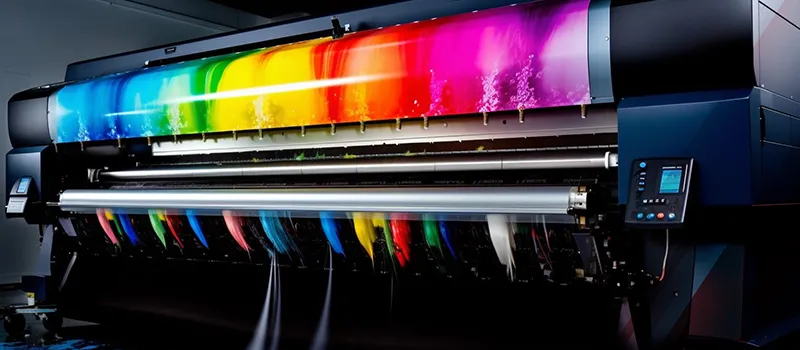
Wide format printers are printers designed to print on materials that are wider than standard office paper. Most traditional printers support paper up to A4 or A3 size. However, wide format printers can print on media that is 18 inches to over 100 inches wide. They are also called large format printers.
These printers are used when a design needs to be printed at a much bigger size without losing quality. They are common in industries that rely heavily on visual communication.
Businesses use wide format printers for:
- Posters and advertising banners
- Retail signage and display graphics
- Vehicle wraps and decals
- Architectural drawings and blueprints
- Trade show graphics
- Wall murals
The ability to print on large media helps companies create visuals that attract attention.
How Wide Format Printers Work
The technology behind wide format printers is advanced but easy to understand. The printer works by applying ink onto large media materials using precise printheads. Most large format printers use one of the following printing technologies.
- Inkjet Technology
Inkjet technology is the most common in wide format printing. The printer sprays microscopic droplets of ink onto the surface. This allows highly detailed graphics and vibrant colors.
Inkjet wide format printers are widely used for:
Photo printing
Advertising graphics
Indoor signage
Poster printing
- Thermal Printing
Some wide format printers use thermal technology. Heat transfers the image onto special paper or film. This method is commonly used for architectural plans and CAD drawings.
- UV Printing
UV wide format printers use ultraviolet light to cure the ink instantly. This makes the print durable and resistant to scratches.
These printers can print on materials like:
Acrylic
Glass
Wood
Metal
Plastic boards
Because of this flexibility, UV large format printers are popular in industrial printing.
Materials Used in Wide Format Printing
One major advantage of wide format printers is their ability to print on different materials. Unlike office printers that use only paper, these printers support many media types.
Common materials include:
Vinyl
Canvas
Fabric
Photo paper
Backlit film
Adhesive sheets
Foam boards
PVC boards
For example, retail stores often use vinyl banner printing for outdoor promotions. Art studios may use canvas for large prints. This versatility is why wide format printing is important across many industries.
Industries That Use Wide Format Printers
Wide format printers are widely used across different sectors.
Advertising and Marketing
Marketing teams rely on large format printing to create impactful visuals.
These include:
Store banners
Billboards
Promotional posters
Event signage
Research published on the National Institutes of Health indicates that signage is effective in influencing human behavior across domains such as retail, safety, and public awareness, reinforcing its importance as a communication tool (Source: pmc.ncbi.nlm.nih.gov). Large prints help brands stand out in crowded spaces.
Architecture and Engineering
Architects and engineers use wide format printers for blueprints and CAD drawings. Large sheets make it easier to view detailed designs and construction plans.
Retail and Visual Merchandising
Retail stores depend heavily on wide format signage printing. Window displays, sale banners, and in-store graphics are printed using large format printers.
The U.S. Census Bureau reports that U.S. retail e-commerce sales alone reached $365.2 billion in the fourth quarter of 2025, highlighting the highly competitive retail environment where visual merchandising and signage play a key role in attracting customers (Source: www.census.gov). These visuals influence customer decisions and increase foot traffic.
Events and Exhibitions
Trade shows and corporate events use large graphics to attract visitors. Wide format printers for banners and posters help event organizers produce professional displays quickly.
According to the U.S. Bureau of Labor Statistics, employment of meeting, convention, and event planners is projected to grow 5% from 2024 to 2034, indicating sustained demand for event-related visual materials such as large-format graphics.
Benefits of Wide Format Printers
Businesses invest in wide format printers because they offer many advantages.
- High-Quality Graphics
Modern wide format printers produce sharp images with excellent color accuracy. This is essential for advertising and photography.
- Large Printing Capability
The biggest advantage is the ability to print large visuals in a single piece. Without large format printing, companies would need to join multiple sheets together.
- Versatile Media Support
Wide format printers can print on many materials such as vinyl, canvas, and fabric. This allows businesses to produce different types of graphics using the same machine.
- Faster Production
Many companies prefer in-house wide format printing because it saves time. Instead of outsourcing prints, businesses can produce banners or posters instantly.
Types of Wide Format Printers
Not all wide format printers are the same. Businesses choose different models depending on their needs.
- Aqueous Printers
These printers use water-based inks. They are mainly used for indoor posters and photo printing. The U.S. Environmental Protection Agency states that water-based inks generally emit lower levels of volatile organic compounds (VOCs), making them safer for indoor environments.
- Solvent Printers
Solvent printers produce durable prints that resist weather. They are commonly used for outdoor banners and vehicle graphics.
- Latex Printers
Latex wide format printers use eco-friendly inks. These prints dry quickly and are suitable for both indoor and outdoor graphics.
- UV Flatbed Printers
UV flatbed printers allow printing on rigid materials such as acrylic or wood. They are widely used in industrial and custom printing applications.
How to Choose the Right Wide Format Printer
Selecting the right wide format printer for business depends on several factors.
Printing Purpose
First, businesses should consider what they will print.
For example:
- Posters and photography require high color accuracy.
- Outdoor banners require weather-resistant ink.
Print Size Requirements
Some printers support 24-inch media, while others support over 60 inches. Companies should choose a printer based on their expected print sizes.
Media Compatibility
Businesses that print on fabric, vinyl, or boards must ensure the printer supports those materials.
Printing Speed
For companies with high printing demand, speed becomes an important factor. Faster printers increase productivity.
Maintenance and Ink Cost
Running costs matter. Ink consumption and maintenance should be considered before investing in a large format printer.
Maintenance Tips for Wide Format Printers
Like any professional equipment, wide format printers require regular maintenance. Basic care can extend the printer’s life and improve print quality.
Important maintenance tips include:
- Cleaning printheads regularly
- Using recommended ink cartridges
- Keeping the printer in a dust-free environment
- Running periodic test prints
These simple steps help maintain consistent printing performance.
The Future of Wide Format Printing
Wide format printing technology continues to evolve. New innovations focus on automation, sustainability, and faster production speeds. Eco-friendly inks are becoming more common. Many manufacturers now develop printers that reduce energy consumption and chemical waste.
Another trend is the growth of customized printing. Businesses increasingly use wide format printers for personalized graphics and short-run prints. As digital advertising grows, physical visuals still play a strong role in marketing.
Large prints remain one of the most effective ways to capture attention in real-world spaces. Because of this, wide format printers will continue to be essential tools for businesses worldwide.
Conclusion
Wide format printers have transformed how businesses produce visual graphics. From banners and posters to architectural drawings, these printers allow companies to create large visuals with excellent quality. Their ability to print on multiple materials, produce vibrant colors, and support large media sizes makes them valuable for many industries.
As technology advances, wide format printing will become even more efficient and versatile. Businesses that rely on strong visual communication will continue to benefit from investing in the right wide format printer.