


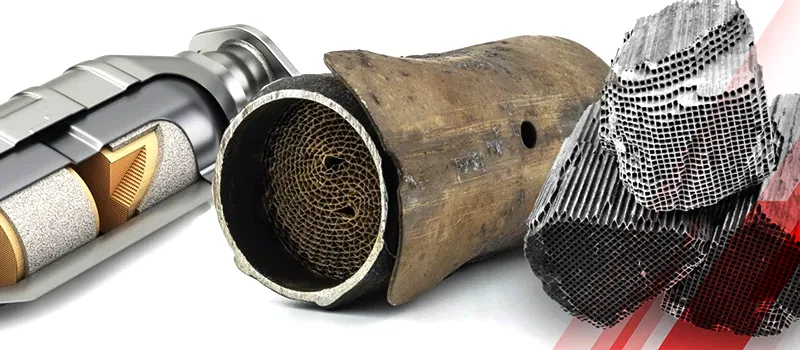
Cleaner mobility is becoming a priority across the automotive industry, and that is driving growing demand for auto catalysts. These systems, which are mainly catalytic converters, reduce harmful emissions by converting toxic exhaust gases into less harmful substances, making vehicles more environmentally responsible.
As per Kings Research, the global auto catalyst market is expected to reach USD 47.78 billion by 2030, showing steady growth as regulations and environmental concerns continue to shape the industry. With stricter emission standards being enforced across many countries, manufacturers are working on improving catalyst efficiency, materials, and overall performance.
At the same time, factors such as rising vehicle production, growing awareness around air pollution, and tighter limits on nitrogen oxides, carbon monoxide, and hydrocarbon emissions are driving adoption. Companies are also focusing on developing more durable, high-performance catalysts using precious metals, while ensuring they work effectively with newer vehicle technologies. In this blog, we break down how auto catalysts work and why they matter for cleaner mobility.
What is an Auto Catalyst?
An automobile catalyst, or auto catalyst, is a catalytic converter that converts toxic byproducts produced by combustion engines to less toxic substances by performing catalyzed chemical reactions. These catalysts are installed in the automotive exhaust system to reduce harmful emissions.
It is typically made of ceramic or metal and is coated with a solution of chemicals and a combination of platinum, rhodium, and/or palladium. The auto catalyst's main function is to convert pollutants from the combustion of fuel into harmless gases.
What is the Role of the Auto Catalyst in the Automotive Industry?
An auto catalyst plays a crucial role in modern vehicles' exhaust systems by reducing vehicle emissions and improving air quality.
In a catalyst system for a gasoline engine, the auto catalyst converts gaseous hydrocarbons (HC), carbon monoxide (CO), and nitrogen oxides (NOx) into water, carbon dioxide (CO2), and nitrogen. In diesel engines, the catalyst system also employs a filter to eliminate fine particulate matter (soot) that can cause lung and cardiovascular diseases. The filter traps the particulate matter and is usually coated with precious metals to help burn them off and regenerate the filter.
3 Main Types of Auto Catalyst
Auto catalysts are categorized depending on their various applications. Their key types include:
-
Two-Way Oxidation
Two-way oxidation converters are commonly utilized in diesel engines to minimize hydrocarbon and carbon monoxide emissions. These converters achieve this by simultaneously oxidizing carbon monoxide to carbon dioxide and hydrocarbons to carbon dioxide and water.
-
Three-Way Oxidation-Reduction
Three-way oxidation-reduction devices are crucial in vehicle emission control systems worldwide. These devices are used on gasoline-powered vehicles to reduce nitrogen oxides and oxidize carbon monoxide and unburnt hydrocarbons. These converters are now highly regarded as a significant invention in automotive history.
-
Diesel Oxidation Catalyst (DOC)
DOCs are mainly used in diesel engines for compression ignition, converting carbon monoxide and hydrocarbons to water and carbon dioxide. These converters have a 90% efficiency rate and effectively eliminate diesel odor while reducing visible particulates.
Top 3 Players in the Auto Catalyst Industry
Here are the top 3 companies in this industry that are making significant advancements.
BASF SE
BASF SE is a leading player in the auto catalyst industry. It has developed impactful innovations in mobile emissions catalysts, automotive catalyst recycling, and associated precious metal services.
BASF has recently spun off its mobile emissions catalyst business into a separate legal entity named BASF Environmental Catalyst and Metal Solutions (ECMS). The company serves customers in various industries, including automotive, aerospace, indoor air quality, semiconductors, and the hydrogen economy. They provide full-loop services with their precious automotive catalysts and recycling offerings.
Heraeus Holding
Heraeus Holding is a global technology company that operates in various industries, including precious metals, materials technology, and chemicals. The company portfolio contains a wide range of catalysts, including three-way catalysts and oxidation catalysts.
These products are known for their higher quality, long-term stability, cost-efficiency, and customizability. Due to their various benefits, they are employed in various industries to protect the environment from harmful gas emissions.
Johnson Matthey, Inc.
Johnson Matthey, Inc. is a leading automotive catalyst producer. It is actively working on innovations in automotive catalysts. The company focuses on developing advanced catalyst technologies to improve the efficiency of emission control systems in vehicles. The company's product line includes diesel and gasoline oxidation catalysts that can reduce CO and HC emissions by more than 90%.
These advanced technology-equipped catalysts allow vehicle and engine manufacturers to meet emission standards, optimize systems, oxidize NO, and efficiently utilize precious metals.
Its diesel oxidation catalysts are specially employed in automobiles, including cars, trucks, hybrids, and buses, to enhance cleanliness during the transition to zero-emission vehicles.
Driving Toward a Greener Future for Auto Catalysts
Auto catalysts have emerged as a game-changer in the automotive industry, reducing harmful emissions from vehicles and preserving the environment. They efficiently convert harmful gases into less toxic substances, contributing to cleaner air and a healthier planet.
The catalyst's composition consists of platinum, palladium, and rhodium, which accelerate chemical reactions. Advances in technology and research have improved the efficiency and longevity of auto catalysts. The auto catalyst has significantly reduced air pollution and improved air quality in cities worldwide. In the future, with continuous research and development, we can witness the enhanced performance of auto catalysts in creating a sustainable future.

.webp&w=3840&q=75&dpl=dpl_DPva2LrvfsBdTJm1XZj67UTrvMHL "Recreational Boating Trends Shaping Outboard Engine Demand")